Loading
Form preview
  • US Legal Forms
  • Other Templates
  • Executive Forms
  • Executive Department HUD Forms
  • Hud-1a

Get Hud-1a

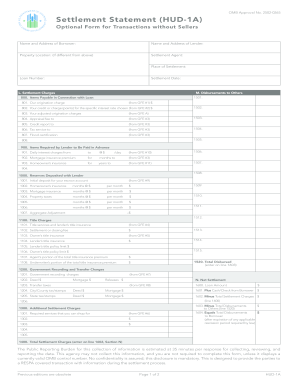
S disclosure is mandatory. This is designed to provide the parties to a RESPA covered transaction with information during the settlement process. Previous editions are obsolete Page 1 of 2 HUD-1A Comparison of Good Faith Estimate (GFE) and HUD-1A Charges Charges That Cannot Increase Good Faith Estimate HUD-1A HUD-1A Line Number Our origination charge # 801 Your credit or charge (points) for the specific interest rate chosen # 802 Your adjusted origination charges # 803 Transfer tax.

How it works

  1. Open form

    Open form follow the instructions

  2. Easily sign form

    Easily sign the form with your finger

  3. Share form

    Send filled & signed form or save

How to fill out the HUD-1A online

The HUD-1A is an optional settlement statement used for transactions that do not involve sellers. Completing this form online is essential for ensuring a clear and accurate understanding of the financial aspects of your mortgage transaction.

Follow the steps to accurately fill out the HUD-1A online

  1. Click the ‘Get Form’ button to obtain the HUD-1A form and open it in the editing interface.
  2. Begin by entering the name and address of the borrower in the designated fields. This identifies the primary party involved in the transaction.
  3. Next, input the name and address of the lender, ensuring that all necessary contact information is accurately recorded.
  4. If the property location differs from the borrower's address, provide the correct property location in the specified section.
  5. Complete the settlement agent information, which identifies who is managing the transaction.
  6. Fill in the place of settlement where the transaction will take place, alongside the loan number and settlement date.
  7. Proceed to section L and enter all relevant settlement charges, ensuring you reference amounts from the Good Faith Estimate where indicated.
  8. Document any disbursements to others in section M, providing detailed figures that relate to closing costs.
  9. Complete the sections outlining items payable in connection with the loan, including origination charges, appraisal fees, and credit report costs.
  10. Input the amounts for required items that the lender mandates be paid in advance, such as mortgage insurance premiums and homeowner's insurance.
  11. Continue through the form detailing title charges, government recording fees, and transfer taxes as applicable to your transaction.
  12. Finalize by reviewing the total calculations for settlement charges, net settlement, loan amount, and any applicable adjustments.
  13. Once all sections are complete, save any changes, and then download, print, or share the completed form as needed.

Complete your HUD-1A online today to ensure a smooth and transparent settlement process.

Get form

Experience a faster way to fill out and sign forms on the web. Access the most extensive library of templates available.
Get form

Related content

Settlement Statement (HUD-1A)
Note: If you have any questions about the Settlement Charges and Loan Terms listed on this...
Learn more
12 CFR § 1024.8 - Use of HUD-1 or HUD-1A...
Either the HUD-1 or the HUD-1A, as appropriate, shall be used for every RESPA-covered...
Learn more
H310M DS2V DDR3
26 Oct 2018 — - Smart HUD. - System Information ... Note: To use this function, you need...
Learn more

Related links form

Brookline College Transcript Request Form 2012 Bryant University Application for Voluntary Official Withdrawal Bubble Map Graphic Organizer Business or Farm Statement 2012

Questions & Answers

Get answers to your most pressing questions about US Legal Forms API.

Contact support

The key difference between HUD-1 and HUD-1A lies in their use: HUD-1 is primarily for residential transactions, while HUD-1A is specific to transactions without a seller. The HUD-1A simplifies reporting and is often used for loans with no seller present at closing. Familiarizing yourself with both forms can help clarify your role in property transactions. Uslegalforms can support you in navigating these differences.

The HUD-1 form is filled out by the settlement agent or closing attorney managing the transaction. They gather data from various parties involved, including lenders, buyers, and sellers, to verify financial details. This ensures all required information is present and accurate. If you need assistance with similar documents, exploring uslegalforms can guide you through the process.

The settlement statement is generally completed by the closing agent or attorney involved in the transaction. This individual compiles all relevant financial information and transaction details to create a comprehensive overview. They will ensure that everything aligns with the applicable laws and regulations. Learning about the HUD-1A through trusted platforms like uslegalforms can enhance your understanding of this critical document.

The HUD statement is typically issued by the settlement agent or title company, who acts as an intermediary in the closing process. This statement outlines all the financial details of the property transaction, ensuring clarity for both the buyer and seller. Engaging with professionals who understand HUD-1A can provide additional insights into your financial obligations. Rely on reliable sources like uslegalforms for more information.

The HUD-1 form is typically prepared by the settlement agent or closing attorney. This professional gathers all the necessary financial information about the real estate transaction. They ensure that the details are accurate and comply with regulations. Trusting the right expert will help you have a smooth experience with the HUD-1A.

HUD Title 1 refers to a specific program that supports home improvement loans for residential properties. This program aims to help homeowners finance renovation or repair projects, allowing for a more appealing living space. Generally, the loans are not secured by the property itself, but rather through the borrower's ability to repay.

1A settlement statement is a document used in real estate transactions that provides a detailed breakdown of all costs and fees associated with a settlement. It is specifically designed for certain types of loans, such as those involving a singlefamily dwelling. This form helps both buyers and sellers understand their financial obligations during the closing process.

1 statement for taxes provides a detailed summary of the financial transactions that occur during a real estate closing. This document outlines all fees, costs, and charges associated with the property transaction, making it essential for tax reporting. It is crucial for buyers and sellers to understand how the HUD1A affects their tax obligations. Using the HUD1 statement helps ensure accurate and compliant tax filings.

You should receive your HUD-1 Settlement Statement at least three days before your closing date. This timeline allows you to review the document and address any discrepancies. It's crucial to understand the details laid out in this statement, and uslegalforms can assist you in ensuring you have the correct information before closing.

The HUD-1 is typically completed by the settlement agent or closing attorney involved in the transaction. This professional works closely with lenders, buyers, and sellers to ensure accurate information is presented. By utilizing uslegalforms, users can gain insight into the process and requirements for completing HUD forms accurately.

Get This Form Now!

Use professional pre-built templates to fill in and sign documents online faster. Get access to thousands of forms.
Get form
If you believe that this page should be taken down, please follow our DMCA take down processhere.
Get HUD-1A
Get form
  • Adoption
  • Bankruptcy
  • Contractors
  • Divorce
  • Home Sales
  • Employment
  • Identity Theft
  • Incorporation
  • Landlord Tenant
  • Living Trust
  • Name Change
  • Personal Planning
  • Small Business
  • Wills & Estates
  • Packages A-Z
  • Affidavits
  • Bankruptcy
  • Bill of Sale
  • Corporate - LLC
  • Divorce
  • Employment
  • Identity Theft
  • Internet Technology
  • Landlord Tenant
  • Living Wills
  • Name Change
  • Power of Attorney
  • Real Estate
  • Small Estates
  • Wills
  • All Forms
  • Forms A-Z
  • Other Templates
  • Legal Hub
  • About Us
  • Help Portal
  • Legal Resources
  • Blog
  • Affiliates
  • Contact Us
  • Delete My Account
  • Site Map
  • Industries
  • Forms in Spanish
  • Localized Forms
  • State-specific Forms
  • Forms Kit
  • Real Estate Handbook
  • All Guides
  • Notarize
  • Incorporation services
  • For Consumers
  • For Small Business
  • For Attorneys
  • USLegal
  • FormsPass
  • pdfFiller
  • signNow
  • altaFlow
  • DocHub
  • Instapage
Form Packages
  • Adoption
  • Bankruptcy
  • Contractors
  • Divorce
  • Home Sales
  • Employment
  • Identity Theft
  • Incorporation
  • Landlord Tenant
  • Living Trust
  • Name Change
  • Personal Planning
  • Small Business
  • Wills & Estates
  • Packages A-Z
Form Categories
  • Affidavits
  • Bankruptcy
  • Bill of Sale
  • Corporate - LLC
  • Divorce
  • Employment
  • Identity Theft
  • Internet Technology
  • Landlord Tenant
  • Living Wills
  • Name Change
  • Power of Attorney
  • Real Estate
  • Small Estates
  • Wills
  • All Forms
  • Forms A-Z
  • Other Templates
Customer Service
  • Legal Hub
  • About Us
  • Help Portal
  • Legal Resources
  • Blog
  • Affiliates
  • Contact Us
  • Delete My Account
  • Site Map
  • Industries
  • Forms in Spanish
  • Localized Forms
  • State-specific Forms
  • Forms Kit
Legal Guides
  • Real Estate Handbook
  • All Guides
Prepared for you
  • Notarize
  • Incorporation services
Our Customers
  • For Consumers
  • For Small Business
  • For Attorneys
Our Sites
  • USLegal
  • FormsPass
  • pdfFiller
  • signNow
  • altaFlow
  • DocHub
  • Instapage
Social Media
Call us now toll free:
+1 833 426 79 33
As seen in:
© Copyright 1999-2026 airSlate Legal Forms, Inc. 17 Station Street, Suite 303, Brookline, MA 02445
  • Your Privacy Choices
  • Terms of Service
  • Privacy Notice
  • Content Takedown Policy
  • Bug Bounty Program