Loading
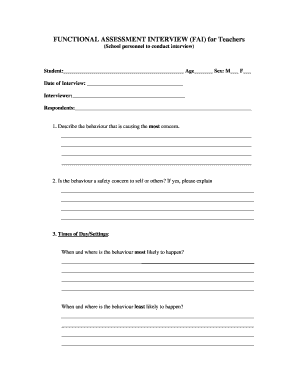
Get Functional Assessment Interview Fai For Teachers - Ed Gov Nl
How it works
-

Open form follow the instructions
-

Easily sign the form with your finger
-

Send filled & signed form or save
How to use or fill out the FUNCTIONAL ASSESSMENT INTERVIEW FAI For Teachers - Ed Gov Nl online
Completing the Functional Assessment Interview (FAI) for Teachers is essential for understanding student behavior and ensuring appropriate support. This guide provides users with clear, step-by-step instructions to successfully fill out the form online.
Follow the steps to fill out the form accurately and effectively.
- Click ‘Get Form’ button to acquire the form and access it in the editing environment.
- Begin by entering the student’s details, including their name, age, and gender. This information is crucial for accurately identifying the student in the assessment process.
- Record the date of the interview along with your name as the interviewer. It is important to have a reference for the date when the assessment was conducted.
- In the first section, describe the behavior that is causing the most concern. Provide detailed observations to assist in understanding the context of the behavior.
- Indicate if the behavior presents a safety concern to the student or others. If applicable, provide explanations or examples to clarify the situation.
- Identify the times of day and settings where the behavior most frequently occurs. This information helps in pinpointing triggers and patterns.
- Document the people with whom the behavior is most likely to occur and those with whom it is least likely. This can help identify social dynamics affecting the behavior.
- In the activity section, describe what activities are most and least likely to provoke the behavior. Consider factors such as task difficulty and whether the activity is preferred or not.
- Reflect on any particular situations or events that may trigger the behavior. List any associated demands or environments that appear to cause stress or discomfort.
- Detail how the student is able to ask for assistance, both verbally and non-verbally. Understanding communication methods is vital for effective support.
- Evaluate how the student responds to requests or instructions. Note the complexity and type of requests they manage effectively.
- Assess the student's awareness of the implications of their actions to gain insight into their understanding of behavior and consequences.
- Record what individuals like and find reinforcing. Include responses related to food, objects, activities, and people to create a holistic view of the student’s preferences.
- Provide a list of activities the student enjoys or excels at. This information can be beneficial for tailoring supportive interventions.
- Once completed, ensure to save any changes made to the form. Users can then download, print, or share the final document as needed.
Start filling out the FUNCTIONAL ASSESSMENT INTERVIEW FAI for Teachers online to document and understand student behavior effectively.
Related links form
In a functional assessment, the purpose of an individual's behaviours is explored by collecting data specific to the individual, their relationships and their environments. Using this information, the specialist is able to develop appropriate teaching and/or intervention strategies that are specific to the individual.