Loading
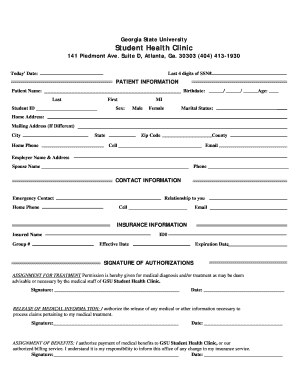
Get Patient Demographic Information
How it works
-

Open form follow the instructions
-

Easily sign the form with your finger
-

Send filled & signed form or save
How to fill out the Patient Demographic Information online
Filling out the Patient Demographic Information form online is an important step for ensuring your medical records are accurate and up-to-date. This guide will walk you through each section of the form, helping you provide the necessary information with ease.
Follow the steps to complete the form accurately
- Press the ‘Get Form’ button to access the form and open it in your preferred editor.
- Enter your patient information accurately. Fill in your name, last four digits of your Social Security Number, birthdate, age, and student ID. Ensure all fields are completed correctly for proper identification.
- Indicate your sex by selecting either 'Male' or 'Female' and specify your marital status if applicable.
- Provide your home address and, if it differs, your mailing address. Include city, state, zip code, and county for both addresses.
- Fill in your contact information including home phone number, cell phone number, and email address to facilitate communication.
- Input your employer's name and address, if applicable, as well as your spouse's name and contact number, if relevant.
- List your emergency contact's name, their relationship to you, and their contact information, including home phone, cell phone, and email.
- Complete the insurance information section by entering the insured person's name, group number, ID number, effective date, and expiration date.
- Sign and date the assignment for treatment, release of medical information, and assignment of benefits sections to authorize necessary actions.
- After completing the form, review all information for accuracy. You may then save changes, download, print, or share the form as needed.
Complete your Patient Demographic Information online today for a seamless health service experience.
Demographics are important because they provide a broad understanding of the different characteristics of a population. ... Non-governmental bodies, corporations and other businesses also use demographics to develop a better understanding of the public and, accordingly, make strategic business and marketing plans.