Loading
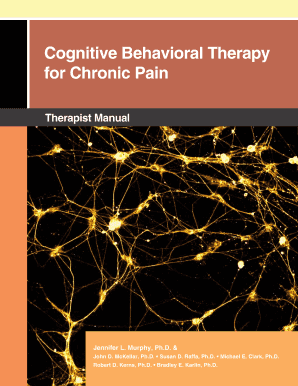
Get Cognitive Behavioral Therapy For Chronic Pain -therapist Manual - Va
How it works
-

Open form follow the instructions
-

Easily sign the form with your finger
-

Send filled & signed form or save
How to fill out the Cognitive Behavioral Therapy For Chronic Pain - Therapist Manual - Va online
This guide is designed to assist therapists in effectively filling out the Cognitive Behavioral Therapy For Chronic Pain - Therapist Manual - Va online. It provides a structured approach and detailed instructions to ensure clarity and ease of understanding.
Follow the steps to successfully complete the form online.
- Press the 'Get Form' button to download the manual and open it in your preferred editing tool.
- Begin with the title page, ensuring your information is accurately entered in the appropriate fields, such as the name of the therapist and date of the session.
- Complete the psychosocial information section, clearly stating the marital status, military background, and vocational status of the client.
- In the pain information section, accurately report the current pain intensity using the scale of 0-10 and provide any relevant details regarding the primary and secondary pain locations.
- Summarize the medical information provided, detailing any acute medical concerns and the overall health background that may affect treatment.
- Review the psychiatric information, confirming any current mood, psychiatric symptoms, and treatment history before proceeding.
- Document the substance use information and ensure a clear account of the patient's substance history, if applicable.
- Finalize the form by thoroughly checking all entries for accuracy and completeness before submitting it online.
- Upon completion, you may save changes, download a copy for your records, print the document, or share it with relevant stakeholders.
Start completing the Cognitive Behavioral Therapy For Chronic Pain - Therapist Manual - Va online today!
What can CBT do for you? Cognitive behavioral therapy helps provide pain relief in a few ways. First, it changes the way people view their pain. CBT can change the thoughts, emotions, and behaviors related to pain, improve coping strategies, and put the discomfort in a better context, Hullett says.