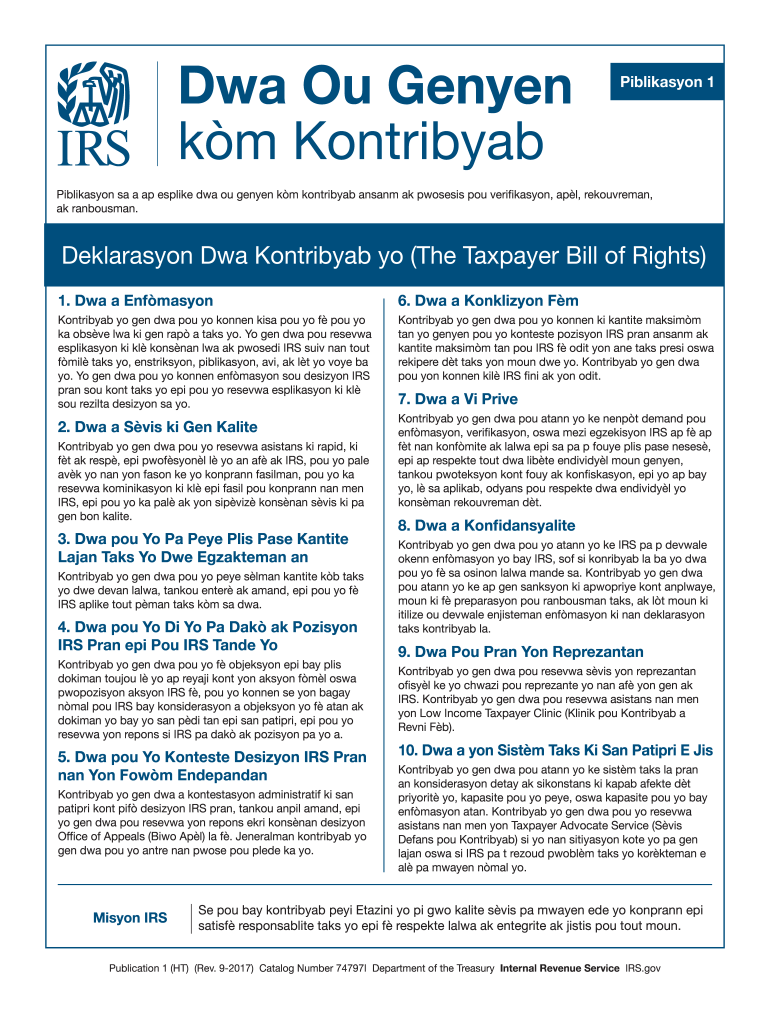
Dwa Ou Genyen km KontribyabPiblikasyon 1Piblikasyon sa a ap esplike dwa ou genyen km kontribyab ansanm ak pwosesis pou verifikasyon, apl, rekouvreman, ak ranbousman.Deklarasyon Dwa Kontribyab yo (The.
Loading

Open form follow the instructions

Easily sign the form with your finger

Send filled & signed form or save
How to fill out the IRS Publication 1 (HT) online
This guide provides comprehensive instructions on how to fill out IRS Publication 1 (HT) online, ensuring that all users, regardless of their legal experience, can complete the form accurately and effectively. Understanding your rights as a taxpayer is crucial, and this guide will walk you through each step of the process.
Follow the steps to complete IRS Publication 1 (HT) online.
- Click the ‘Get Form’ button to access the document and open it in your online editor.
- Begin filling out your personal information in the appropriate fields. Ensure that your name, address, and tax identification number are accurate and clearly written.
- Read through the sections detailing your rights as a taxpayer, including the Taxpayer Bill of Rights. Take note of your entitlements, which may impact how you should respond if contacted by the IRS.
- Continue to the section addressing verification, appeals, and recovery processes. Provide any relevant details that pertain to previous communications with the IRS or specific situations you may want to address.
- Review the guidelines regarding refunds and ensure you understand the timelines and conditions for making claims for overpayment of taxes.
- Once all fields are completed, take the time to review your entries for accuracy and completeness.
- After ensuring that everything is correct, save changes to the form. You may then download it, print it for your records, or share it according to the requirements.
Start filling out your IRS Publication 1 (HT) online today to ensure your rights as a taxpayer are protected.
Experience a faster way to fill out and sign forms on the web. Access the most extensive library of templates available.
Related content
Product Number Publication 1 (HT) · Title Your Rights As A Taxpayer (Haitian Creole...
Every employer making payment of wages shall deduct and withhold upon such wages a tax...
This unit is shipped with a data sheet, a calibration sheet, and a certificate of...
Get answers to your most pressing questions about US Legal Forms API.
Which IRS publication is the main source of information about IRAs?
IRS Publication 1 (HT) is not specifically dedicated to IRAs; however, it provides valuable context about taxpayer rights. For information specifically on Individual Retirement Accounts (IRAs), you should reference IRS Publication 590. By understanding both publications, you can gain a broader perspective on tax implications related to IRAs and other important topics.
How to obtain IRS publications?
You can obtain IRS publications by visiting the IRS website where publications are readily available for download. Additionally, IRS offices and public libraries carry printed copies you can pick up. For a more structured approach, uslegalforms can guide you in accessing the key IRS publications, including IRS Publication 1 (HT), ensuring you have the correct information.
What is Publication 1?
Publication 1 refers to IRS Publication 1 (HT), which outlines the fundamental rights of taxpayers and the procedures followed by the IRS. It details essential information about audits and what taxpayers should expect during interactions with the IRS. This publication is vital for anyone wanting to understand their rights, ensuring they remain informed and prepared.
Can you rely on IRS publications?
Yes, you can rely on IRS publications as authoritative sources of information regarding tax issues. These documents are thoroughly researched and regularly updated to reflect current tax laws and regulations. For further clarity and assistance, you can also consult resources on uslegalforms, which provides access to official and reliable IRS publications like IRS Publication 1 (HT).
What is IRS 1 and IRS 2?
IRS 1 refers specifically to IRS Publication 1 (HT), which highlights taxpayer rights and responsibilities. In contrast, IRS 2 typically points to additional IRS resources or publications that cover various tax topics. Understanding IRS Publication 1 (HT) is vital for gaining insights into how the IRS interacts with taxpayers during audits.
What does IRS stand for?
IRS stands for Internal Revenue Service, the U.S. government agency responsible for tax collection and tax law enforcement. The IRS plays a crucial role in managing taxpayer information and ensuring compliance with federal tax regulations. Familiarizing yourself with the IRS and its publications, like IRS Publication 1 (HT), can help you stay informed about your taxes.
What is IRS Publication 1?
IRS Publication 1 (HT) serves as an essential resource for taxpayers, providing valuable information about taxpayer rights, the IRS audit process, and tax obligations. This publication outlines what you can expect during an audit and details your responsibilities and rights as a taxpayer. Understanding IRS Publication 1 (HT) helps you navigate your tax situation with confidence.
Where can I pick up IRS publications?
You can pick up IRS publications at various locations, including local IRS offices, libraries, and online through the IRS website. For convenience, many people prefer downloading publications like IRS Publication 1 (HT) from the IRS website. Additionally, uslegalforms provides easy access to these publications, helping you find the information you need without hassle.
How to fill out a Schedule 1 tax form?
Filling out a Schedule 1 tax form starts with collecting necessary income and adjustment information. Make sure to gather documents that reflect your additional income or adjustments, as this will make the process smoother. For clarity on how to report different forms of income, consulting IRS Publication 1 (HT) can provide insights on the information you need when completing this form.
How to properly cite an IRS publication?
To properly cite an IRS publication, include the title of the publication, the publication number, and the publication date. For instance, you can cite IRS Publication 1 (HT) by stating it clearly and including the year it was updated. Proper citations ensure you provide accurate information, which is especially important when you share details from IRS Publication 1 (HT) with others.
Use professional pre-built templates to fill in and sign documents online faster. Get access to thousands of forms.
If you believe that this page should be taken down, please follow our DMCA take down process here.