Get Petition By Owner For Restitution New Mexico
How it works
-

Open form follow the instructions
-

Easily sign the form with your finger
-

Send filled & signed form or save
How to fill out the Petition By Owner For Restitution New Mexico online
Filling out the Petition By Owner For Restitution in New Mexico can seem challenging, but it is a straightforward process. This guide will help you navigate each section of the form effectively and ensure that you provide all necessary information.
Follow the steps to complete the Petition By Owner For Restitution online.
- Click ‘Get Form’ button to obtain the form and open it in the editor.
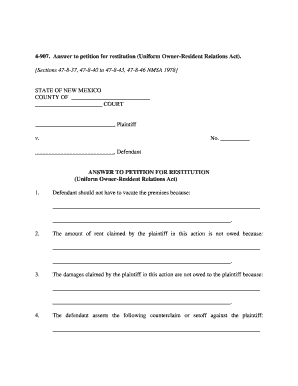
- Begin by filling in the caption section. This includes the county name where the case is filed, the name of the court, and the names of the parties involved, identifying the plaintiff and the defendant.
- In the first field, describe why the defendant should not have to vacate the premises. Make sure to provide a clear and concise explanation.
- Next, address the amount of rent claimed by the plaintiff. Clearly state why you believe this amount is not owed.
- In the following field, outline why the damages claimed by the plaintiff should not be paid. Again, provide specific and clear reasoning.
- If applicable, assert any counterclaims or setoffs against the plaintiff in the next section. Detail your claims thoroughly to support your case.
- Indicate whether you request separate trials for the issues of restitution and damages by marking this section appropriately.
- Finally, sign the document, print your name, and fill in your contact information, including your address and telephone number.
- Once you have completed all sections of the form, review your entries for accuracy. After finalizing your information, you can save changes, download, print, or share the form as necessary.
Take the next step toward completing your document requirements online.
The timeline to obtain a writ of restitution can vary, typically taking a few days to a couple of weeks after the court hearing on the eviction case. Once the landlord files the necessary documents and the court rules in their favor, the writ is usually issued promptly. However, delays can occur depending on court schedules and other factors. For landlords, understanding this process can aid in planning their next steps effectively.