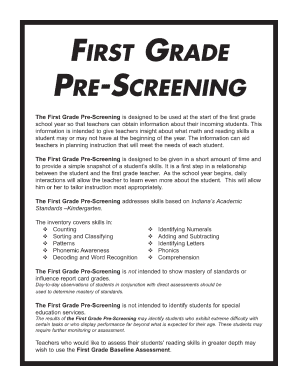
Get First Grade Pre Screening
How it works
-

Open form follow the instructions
-

Easily sign the form with your finger
-

Send filled & signed form or save
How to fill out the First Grade Pre Screening online
Filling out the First Grade Pre Screening is an essential step in preparing for your child's educational journey. This guide provides clear, step-by-step instructions to help you complete the form accurately and efficiently.
Follow the steps to successfully complete the First Grade Pre Screening form.
- Click ‘Get Form’ button to obtain the form and open it in the editor.
- Begin by entering the student's personal information in the designated fields. This includes their full name, date of birth, and current grade level. Ensure all details are accurate.
- Next, proceed to the contact information section. Fill in the primary guardian's name, relationship to the student, and preferred phone number. This ensures that communication regarding the screening will reach the appropriate individual.
- In the health history section, provide details about any medical conditions, allergies, or relevant health information. This is vital for understanding the student's needs and ensuring their safety during the screening process.
- Proceed to the educational background section. List any previous preschool or kindergarten experiences your child has. This helps the evaluators understand the child's educational journey.
- Finally, review all information for accuracy. Make any necessary corrections and ensure that all required fields are completed before proceeding to submit the form.
- Once everything is correctly filled out, you have the option to save changes, download, print, or share the completed form as needed.
Complete your First Grade Pre Screening form online today for a smooth enrollment experience.
Assessing a grade 1 student involves multiple approaches, including interactive activities and targeted evaluations. Teachers can use First Grade Pre Screening to understand a student’s level of proficiency in vital subjects such as reading and math. These assessments can take various forms, from worksheets to hands-on projects. Regular assessments help monitor ongoing progress and adapt teaching methods to suit each learner's needs.