Get Nh Iea
How it works
-

Open form follow the instructions
-

Easily sign the form with your finger
-

Send filled & signed form or save
How to fill out the Nh Iea online
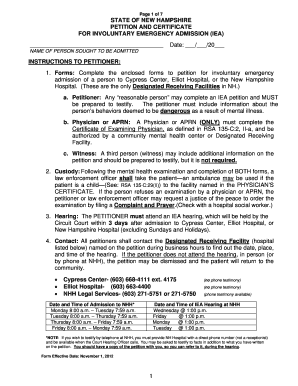
The Nh Iea form is a crucial document for initiating the involuntary emergency admission process for individuals experiencing mental health crises. This guide will provide you with clear, step-by-step instructions to fill out the form accurately and effectively.
Follow the steps to complete the Nh Iea form online.
- Click the ‘Get Form’ button to access the Nh Iea document and open it in the online editor.
- Fill in the required date at the top of the form to document when the petition is being submitted.
- Provide the name of the person sought to be admitted in the designated field.
- Complete the section labeled 'Instructions to Petitioner,' focusing on the behaviors that led to the petition. Ensure you include detailed, specific examples of behaviors deemed dangerous.
- Indicate your relationship to the person being admitted in the 'Petitioner's name' section, followed by your address, contact information, and agency if applicable.
- Describe the dangerous acts or behaviors observed within the last 40 days, and provide context regarding your awareness of these actions.
- If applicable, have a witness fill in their information and provide descriptions of dangerous acts or behaviors they observed within the same timeframe.
- Ensure that a physician or APRN completes the physical and mental examination sections, detailing the examinations performed and the observations made.
- After all sections are completed, review the form to ensure accuracy and completeness.
- Save your changes, and proceed to download, print, or share the completed form as needed.
Complete the Nh Iea document online to ensure timely support for those in need.
Get form
Involuntary emergency admission is a process for admitting individuals to a mental health facility without their consent due to imminent risk of harm. This admission takes place under strict legal guidelines to ensure the individual's rights are protected while also prioritizing their health and safety. Understanding the implications and processes involved can help families navigate similar situations more effectively.