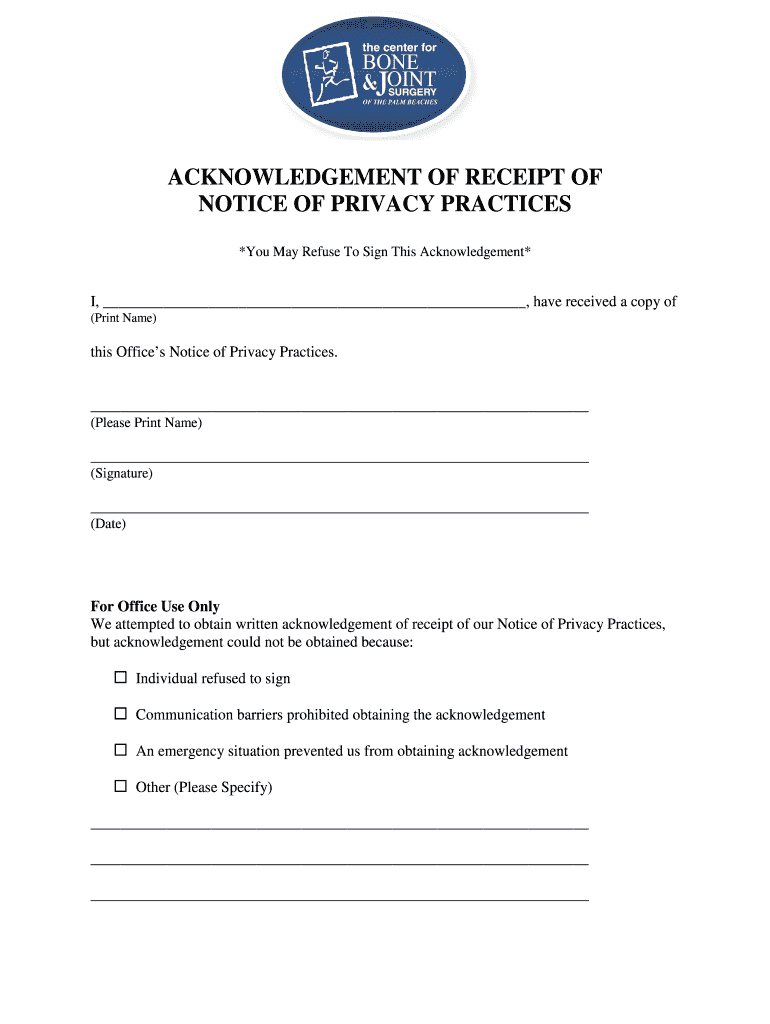
Patient s Name: (Last) (First) (Middle Initial) Street Address: City: State: Zip: Home Phone: Cell P.
Loading

Open form follow the instructions

Easily sign the form with your finger

Send filled & signed form or save
How to fill out the Bone & Joint Surgery New Patient Packet online
Completing the Bone & Joint Surgery New Patient Packet online is a straightforward process designed to help you provide essential information for your upcoming appointment. This guide will walk you through each section and field of the form to ensure that you complete it accurately and efficiently.
Follow the steps to successfully complete your new patient packet.
- Click ‘Get Form’ button to access the New Patient Packet and open it in the editor to begin filling it out.
- In the 'Patient Information' section, fill in your account number, today's date, primary care physician details, and your full name, ensuring that you include your last name, first name, and middle initial appropriately.
- Complete your address by entering the street address, city, state, and zip code. Include your home and cell phone numbers as well as your email address for communication purposes.
- Indicate your primary language spoken and check if you require translation or communication assistance.
- Provide your age, date of birth, social security number, height, weight, gender, and marital status by selecting the appropriate options.
- Select your race and ethnicity from the provided options, circling one for each category.
- In the 'Emergency Contact' section, include the name and phone number of an individual to notify in case of emergency.
- Fill out your current employer information including the employer’s name, phone number, and address.
- Provide information regarding the area to be treated, the onset of the problem, and a detailed description of your condition.
- If applicable, answer questions regarding conditions related to employment or automobile accidents, filling in relevant dates and details.
- Complete the 'Medical History Questionnaire' section, listing any allergies, current medications, and any significant health conditions you may have.
- Sign the 'Consent for Treatment' section, acknowledging your understanding of the risks associated with your treatment.
- Review the financial agreement and privacy notices, sign as needed, and finalize your form.
- Once completed, save any changes made to the form. You can then download, print, or share the completed form as needed.
Take the first step towards your appointment by completing your New Patient Packet online today.
Experience a faster way to fill out and sign forms on the web. Access the most extensive library of templates available.
Related content
This booklet is intended to provide general information. It is not a substitute for...
UCI School of Medicine in Huntington, Irvine, Orange, Costa Mesa, Tustin and Laguna Hills...
Users are advised to read and understand the surgical technique manual and instructions...
Get answers to your most pressing questions about US Legal Forms API.
What is bone and its function?
Bone is a mineralized connective tissue that exhibits four types of cells: osteoblasts, bone lining cells, osteocytes, and osteoclasts [1, 2]. Bone exerts important functions in the body, such as locomotion, support and protection of soft tissues, calcium and phosphate storage, and harboring of bone marrow [3, 4].
What are 5 functions of bones?
It gives the body its shape, allows movement, makes blood cells, provides protection for organs and stores minerals. The skeletal system is also called the musculoskeletal system.
What is bone made up of?
Made mostly of collagen, bone is living, growing tissue. Collagen is a protein that provides a soft framework, and calcium phosphate is a mineral that adds strength and hardens the framework. This combination of collagen and calcium makes bone strong and flexible enough to withstand stress.
What are the 6 types of bones?
There are six types of bones in the human body: long, short, flat, irregular, sesamoid and sutural.
What are the 5 types of bone?
So, what are the different types of bones? How are they categorized? There are five types of bones in the skeleton: flat, long, short, irregular, and sesamoid. Let's go through each type and see examples.
What is in a bone?
Made mostly of collagen, bone is living, growing tissue. Collagen is a protein that provides a soft framework, and calcium phosphate is a mineral that adds strength and hardens the framework. This combination of collagen and calcium makes bone strong and flexible enough to withstand stress.
What are the 7 functions of bones?
The skeletal system is the body system composed of bones and cartilage and performs the following critical functions for the human body: supports the body. facilitates movement. protects internal organs. produces blood cells. stores and releases minerals and fat.
What are the 6 functions of bone?
The human skeleton serves six major functions: support, movement, protection, production of blood cells, storage of ions, and endocrine regulation.
Use professional pre-built templates to fill in and sign documents online faster. Get access to thousands of forms.
If you believe that this page should be taken down, please follow our DMCA take down process here.