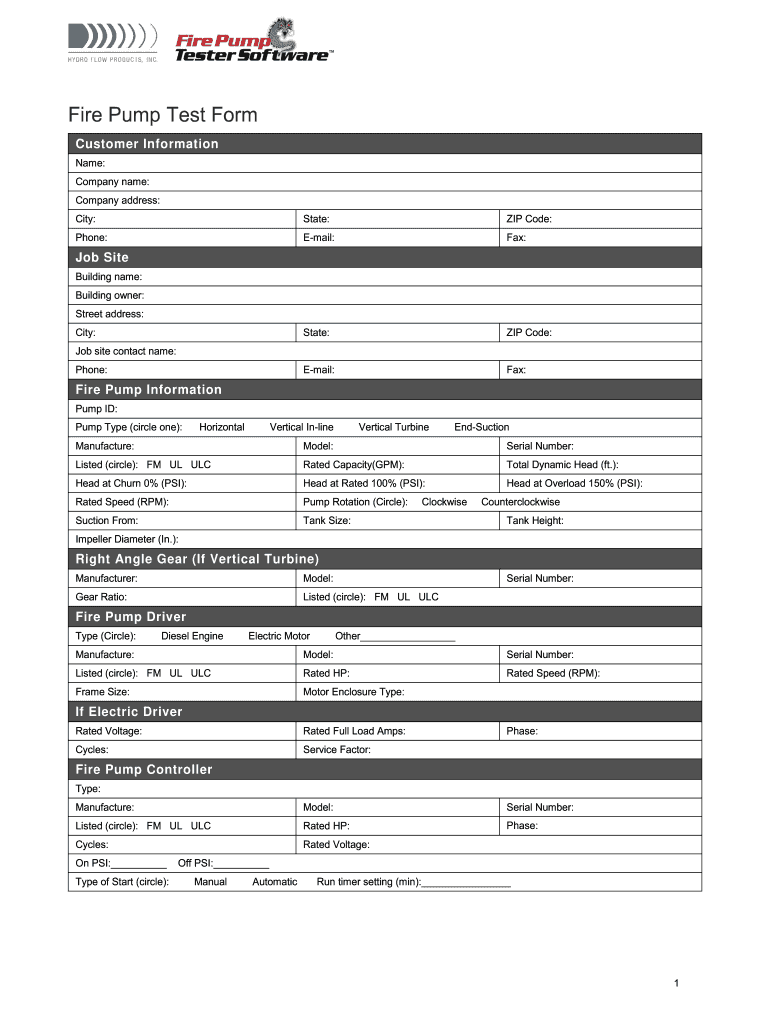
Wner: Street address: City: Job site contact name: Phone: Fire Pump Information Pump ID: Pump Type (circle one): Horizontal E-mail: Manufacture: Fax: Listed (circle): FM UL ULC Vertical In-line Vertical Turbine End-Suction Model: Serial Number: Rated Capacity(GPM): Total Dynamic Head (ft.): Head at Churn 0% (PSI): Head at Rated 100% (PSI): Rated Speed (RPM): Pump Rotation (Circle): Suction From: Tank Size: Clockwise Head at Overload 150% (PSI): Counterclockwise Tank Height: Impe.

Open form follow the instructions

Easily sign the form with your finger

Send filled & signed form or save
How to fill out the Fire Pump Test Form - Hose Monster online
Completing the Fire Pump Test Form - Hose Monster is essential for documenting fire pump tests accurately. This guide will walk you through each section of the form, ensuring you can fill it out effectively and efficiently.
Follow the steps to fill out the form correctly.
- Press the ‘Get Form’ button to access the Fire Pump Test Form and open it in the designated viewer.
- Begin by filling out the customer information section. Enter your name, company name, company address, city, state, ZIP code, phone number, email address, and fax number in the provided fields.
- Proceed to the job site section. Input the building name, building owner's name, street address, city, job site contact name, and their phone number.
- In the fire pump information section, fill in the pump ID and select the pump type. Provide additional details including manufacturer, model, serial number, rated capacity, total dynamic head, and other specifications as requested.
- Complete the fire pump driver section by selecting the type of driver used and entering manufacturer details, rated horsepower, and other relevant specifications.
- Continue with the fire pump controller section. Specify the type, manufacturer, model, rated horsepower, and various other details pertaining to the controller.
- Fill in the jockey pump details, including manufacturer, model, rated horsepower, and other specifications as required.
- In the test results section, input the date of the test and the type of test performed, along with the flow device(s) utilized.
- Ensure that all necessary signatures are collected from the fire department attendee, building representative attendee, pump manufacturer attendee, and testing firm attendee.
- Finally, check the table of fire pump test results and complete any calculated fields as needed before reviewing your entries.
- Once you have filled out all sections of the form and verified the information, save your changes. You may choose to download, print, or share the completed form as required.
Start filling out your Fire Pump Test Form online today to ensure compliance and accuracy.
Experience a faster way to fill out and sign forms on the web. Access the most extensive library of templates available.
Related content
Fire pump test bundle, little hose monster ... Note: There have been new actions to this...
Weekly/monthly inspection checklists should also be followed during the annual testing. B...
Test pump pressure up to 3000 PSI, and water temperature to 176°F. 3/8” quick connects...
Get answers to your most pressing questions about US Legal Forms API.
How to conduct a pump test?
Conducting a pump test involves systematic evaluation of the pump's performance under various conditions. First, you need to prepare and fill out the Fire Pump Test Form - Hose Monster. Then, record all relevant data, including flow rates and pressure, to maintain a thorough record of performance metrics. This documentation is vital for compliance and future reference.
How does a hose monster work?
A hose monster connects easily to fire pump systems, allowing accurate testing and measurement. It integrates seamlessly into your existing setup, simplifying data collection during fire pump tests. By utilizing the Fire Pump Test Form - Hose Monster, users can ensure standardized processes while increasing operational efficiency.
What is the 10 times rule for fire pumps?
The 10 times rule for fire pumps indicates that the maximum discharge from the pump should be ten times the required flow rate for the fire protection system. This setup ensures adequate pressure and flow during emergencies. Using the Fire Pump Test Form - Hose Monster allows you to steadily monitor and record this data for safety compliance.
How do you conduct a fire pump test?
To conduct a fire pump test, gather all necessary tools and the Fire Pump Test Form - Hose Monster. Begin by performing a visual inspection of the pump; then, start the system, recording flow rate and pressure. Document your findings on the form, which helps maintain compliance with safety regulations and ensures the pump operates correctly.
How to test an emergency fire pump?
Testing an emergency fire pump involves checking its functionality in case of power failure. Using the Fire Pump Test Form - Hose Monster, follow specific guidelines to simulate an emergency scenario, ensuring the pump activates and maintains proper pressure and flow. Regular maintenance checks are crucial to ensure reliability during actual emergencies.
What is the performance test of a fire pump?
The performance test of a fire pump evaluates its ability to deliver water at the required flow and pressure levels as specified by regulations. Using the Fire Pump Test Form - Hose Monster helps you document these parameters systematically. This test validates that the fire protection system meets safety standards and operates effectively when needed.
How to perform a fire pump test?
To perform a fire pump test, first ensure you have the necessary equipment and documentation, such as the Fire Pump Test Form - Hose Monster. Begin by checking the fire pump system for any visible issues. Start the pump and record the flow rates and pressure readings at different intervals to ensure compliance with applicable standards.
What is the code for fire pump testing?
The applicable code for fire pump testing varies by location but often includes standards from NFPA 20, which outlines fire pump installations and tests. Adhering to these codes is essential for compliance and safety. Utilizing the Fire Pump Test Form - Hose Monster can help ensure that your testing meets local codes efficiently.
How to properly test fire hose?
To properly test a fire hose, inspect it for any signs of wear, damage, or kinks first. Then, connect it to a water supply and pressurize it to the recommended levels, monitoring for leaks. Utilizing the Fire Pump Test Form - Hose Monster during this process allows you to keep accurate records and ensure your equipment's reliability.
What is the NFPA standard for fire pump testing?
The NFPA standards for fire pump testing are outlined in NFPA 20. This standard mandates regular testing to ensure all fire pumps function as intended. Following these guidelines helps safeguard lives and property, making the Fire Pump Test Form - Hose Monster an essential tool for accurate compliance reporting.
Use professional pre-built templates to fill in and sign documents online faster. Get access to thousands of forms.
If you believe that this page should be taken down, please follow our DMCA take down process here.