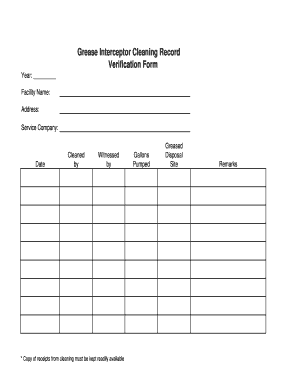
Grease Interceptor Cleaning Record Verification Form Year: Facility Name: Address: Service Company: Date Cleaned by Witnessed by * Copy of receipts from cleaning must be kept readily available Gallons.
Open form follow the instructions
Easily sign the form with your finger
Send filled & signed form or save
How to fill out the Grease Interceptor Cleaning Record - Lcats online
Filling out the Grease Interceptor Cleaning Record - Lcats online is essential for maintaining compliance with grease interceptor cleaning regulations. This guide will walk you through the steps needed to complete the form accurately and efficiently.
Follow the steps to fill out the Grease Interceptor Cleaning Record - Lcats online
- Press the ‘Get Form’ button to access the Grease Interceptor Cleaning Record - Lcats and open it in your preferred online editor.
- In the 'Year' field, enter the year during which the cleaning occurred.
- Fill in the 'Facility Name' section with the name of the facility being serviced.
- Provide the full 'Address' of the facility to ensure proper identification.
- Enter the name of the 'Service Company' that performed the cleaning service.
- Record the 'Date Cleaned' by selecting or entering the date on which the cleaning was completed.
- In the 'Cleaned by' field, write the name of the person who performed the cleaning.
- For the 'Witnessed by' section, include the name of the individual who verified the cleaning.
- Specify the total 'Gallons Pumped' during the cleaning process.
- Identify the 'Greased Disposal Site' where the grease was disposed of.
- Add any additional comments or important details in the 'Remarks' section.
- Once all fields are completed, you may save changes, download the form, print it for your records, or share it with relevant parties.
Complete your Grease Interceptor Cleaning Record - Lcats online today to ensure compliance and proper documentation.
Experience a faster way to fill out and sign forms on the web. Access the most extensive library of templates available.
Related content
The Tools and Parts Attendant does the following keeps records of tools issued to and...
Aug 28, 2024 — RECORD ... COORDINATE GREASE INTERCEPTOR LOCATION WITH CONCESSION...
Get answers to your most pressing questions about US Legal Forms API.
How to clean a grease trap interceptor?
To clean a grease trap interceptor, start by removing the lid and carefully scooping out the grease and solid waste. Next, use hot water mixed with a degreaser to flush the interior, ensuring all surfaces are cleaned. Following this procedure and recording your actions accurately will help maintain an up-to-date Grease Interceptor Cleaning Record - Lcats, contributing to smoother operations.
How to record grease trap cleaning?
Recording grease trap cleaning is essential for compliance and maintenance tracking. Make sure to document the date, service details, and the amount of waste removed. Utilizing our platform helps you easily maintain your Grease Interceptor Cleaning Record - Lcats, automating the process and ensuring all information is organized and accessible.
How often do grease interceptors need to be cleaned?
Grease interceptors typically require cleaning every one to three months, depending on their size and usage. High-volume restaurants may need more frequent service. By keeping a consistent cleaning schedule, you maintain a proper Grease Interceptor Cleaning Record - Lcats, which can help avoid costly fines and plumbing issues down the road.
How to inspect a grease interceptor?
Inspecting a grease interceptor involves visually checking for signs of blockage or buildup. First, look at the access ports to evaluate the grease layer. Next, remove the lid and use a dipstick to measure the depth of the grease and water layers. Regular inspections are crucial to maintaining your Grease Interceptor Cleaning Record - Lcats, ensuring compliance with local regulations.
How often does a grease interceptor need to be cleaned?
The frequency of cleaning a grease interceptor typically depends on its size and usage. Generally, it should be cleaned every 1 to 3 months to prevent blockages and odors. Regular maintenance ensures optimal performance and compliance with local regulations. Keeping a Grease Interceptor Cleaning Record - Lcats will allow you to track cleaning dates and assess when additional cleanings may be necessary.
How to get rid of the smell of grease trap?
Eliminating odors from a grease trap involves regular cleaning and proper ventilation. After cleaning, you can use a mixture of baking soda and vinegar to neutralize lingering smells. Additionally, placing absorbent materials around the area may help absorb unwanted odors. Keeping an updated Grease Interceptor Cleaning Record - Lcats will help track your cleaning efforts and ensure you manage odors effectively.
How often should a grease interceptor be cleaned?
Create a Maintenance CycleHow often you need to clean your grease trap will depend on the size of your trap and the volume of grease your cooking produces. On average though, they need cleaning between one and three months. Regularly check your grease trap so you can learn how quickly it fills up.
How do you clean a grease interceptor?
Remove the lid from the grease trap. ... Stick a ruler into the grease trap and note how many inches of grease are in the trap. ... Remove the water from your grease trap, either with a bucket or a small pump. ... Start scooping out the grease from your trap.
How do you clean a grease trap at Home?
Make sure you know all the parts of your grease trap. ... Remove the lid from the grease trap. ... Use a small bucket to remove any water from the grease trap. ... Use the same bucket to scoop out any waste. ... Scrape down the lid and sides of your trap. Clean your trap with soap and water.
How do you inspect a grease trap?
Inlet and outlet fittings. Baffle walls and their configuration. The pre-rinse sink to ensure it is not going into your grease traps (70-80 percent of fats, oil, and grease go through the pre-rinse sink) Which fixtures are going to the grease traps.
Use professional pre-built templates to fill in and sign documents online faster. Get access to thousands of forms.
If you believe that this page should be taken down, please follow our DMCA take down process here.