Loading
Form preview
  • US Legal Forms
  • Other Templates
  • More Forms
  • More Multi-State Forms
  • Rule 19(8) 2020

Get Rule 19(8) 2020-2026

How it works

  1. Open form

    Open form follow the instructions

  2. Easily sign form

    Easily sign the form with your finger

  3. Share form

    Send filled & signed form or save

How to fill out the Rule 19(8) online

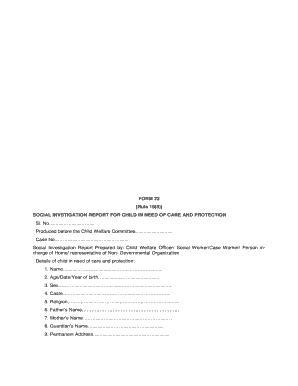
Filling out the Rule 19(8) form for the social investigation report is a crucial step in ensuring the well-being of a child in need of care and protection. This guide will provide you with clear, step-by-step instructions to complete the form accurately and efficiently.

Follow the steps to complete the online form.

  1. Click ‘Get Form’ button to obtain the form and open it in the editor.
  2. Begin by filling out the case details, which includes the case number and the committee before which the report is being produced.
  3. Provide detailed information about the child, including their name, age, sex, caste, religion, and parental details. This information is vital for the committee's understanding of the child's background.
  4. Indicate whether the child has any disabilities by selecting the appropriate options. Specify if the child has hearing, speech, or physical impairments.
  5. Fill out the family details section. Here, you should include names, ages, genders, educational backgrounds, occupations, and health statuses of family members.
  6. Assess and record the relationships among family members with terms such as 'cordial,' 'non cordial,' or 'not known.' This insight is important for understanding the family dynamics.
  7. Document any history of involvement in offenses by family members, including their addiction issues or crimes, and specify the legal status of those cases.
  8. Next, describe the child’s living conditions, habits, educational background, and any extra-curricular interests, providing as much detail as possible.
  9. Evaluate the child's mental and physical conditions, noting any health issues or disorders they may have faced. This will include assessments of addiction, past history with violence, or any other relevant information.
  10. Finally, review all the information entered to ensure accuracy. Save changes to your filled form and choose to download, print, or share the completed document.

Take the next step in supporting a child in need by completing the Rule 19(8) form online today.

Get form

Experience a faster way to fill out and sign forms on the web. Access the most extensive library of templates available.
Get form

Related content

regulation 8 organic compounds rule 19 surface ...
Oct 16, 2002 — Rule 19 limits volatile organic compound emissions from surface...
Learn more
Rule 8. General Rules of Pleading | LII
Rule 8 requires a claim to state jurisdiction, claim, and relief. Defenses must be stated...
Learn more
1988 Personnel Rules With
May 16, 1988 — The 1988 rules establish procedures for personnel activities, including...
Learn more

Related links form

AMAZING STAMP PROGRAM 6533 EXT 4 52 Wwdiv Tranont Overview

Questions & Answers

Get answers to your most pressing questions about US Legal Forms API.

Contact support

Rule 18 outlines the permissive joinder of claims, allowing parties to bring multiple claims in a single action if they arise out of the same transaction or occurrence. This rule simplifies the litigation process by combining related issues and parties, which can lead to faster resolution times. Recognizing how to effectively apply Rule 19(8) in conjunction with Rule 18 can provide a significant advantage in managing legal challenges. Additionally, resources on USLegalForms can offer guidance in navigating these connections.

Rule 8 B of the SC Rules of Civil Procedure addresses the form and content of pleadings in civil cases. This rule requires that all parties present their claims clearly and concisely, promoting a more efficient legal process. Incorporating Rule 19(8) helps to ensure that every relevant party is included in these pleadings as necessary, preventing future claims of inadequate representation. Utilizing services like USLegalForms can simplify your understanding and application of these procedural rules.

The simple procedure rule under Part 8 allows for a streamlined process aimed at resolving straightforward disputes without extensive legal arguments. This provision makes it easier for individuals to represent themselves and reduces the need for intricate legal maneuvers. By leveraging the rules specified in Rule 19(8), parties can efficiently navigate their cases. For more clarity on how to apply these rules, consider using resources from USLegalForms.

The primary difference between Part 7 and Part 8 proceedings lies in the complexity and adversarial nature of the cases. Part 7 is designed for more complex disputes that often require detailed arguments, while Part 8 is geared toward simpler or non-contentious matters. Understanding these distinctions enhances your ability to choose the proper route for your legal issues. Exploring these differences in the context of Rule 19(8) can be particularly beneficial for individuals and businesses.

Rule 19 emphasizes the importance of including all necessary parties in a lawsuit. This inclusion helps prevent future legal complications and ensures that all relevant voices are heard in the proceedings. Familiarizing yourself with Rule 19(8) facilitates better preparation for legal action. Legal resources, such as those on USLegalForms, empower you with the knowledge to navigate these complexities effectively.

Rule #19 pertains to the necessity of joining parties in legal proceedings to ensure fairness and justice. This rule aims to prevent multiple lawsuits over the same issue and encourages all interested parties to be part of the case. Grasping the principles within Rule 19(8) can streamline court processes and enhance legal outcomes. For further insights on this rule, platforms like USLegalForms offer valuable resources and templates.

Part 8 of the civil procedure rules outlines how certain types of legal claims must proceed in court. This part includes specific provisions for straightforward and non-contentious matters, allowing for a smoother legal process. By clarifying procedures, Part 8 helps parties resolve issues efficiently while adhering to the guidelines. Understanding Rule 19(8) within this framework is crucial for those navigating civil litigation.

Ignoring a summons in South Africa can lead to significant legal consequences, including a default judgment against you. This judgment may impose penalties or enforceable decisions without your input. It's vital to respond appropriately in light of Rule 19(8) to ensure your rights are protected and to avoid unforeseen repercussions.

When responding to a letter of claim, it’s crucial to acknowledge receipt and address the issues stated in the claim clearly and professionally. You should also provide any relevant information or documentation to support your defense or rebuttal. Effectively managing this process aligns with the stipulations of Rule 19(8) and helps you prepare for potential legal actions.

Rule 8 of the West Virginia Rules of Civil Procedure outlines the requirements for pleadings in civil cases, including how parties should present their claims and defenses. It ensures clarity, which aligns with the principles of Rule 19(8) about involving all necessary parties. Consulting resources on Rule 8 can simplify your legal process and foster better communication.

Get This Form Now!

Use professional pre-built templates to fill in and sign documents online faster. Get access to thousands of forms.
Get form
If you believe that this page should be taken down, please follow our DMCA take down processhere.
Get Rule 19(8)
Get form
  • Adoption
  • Bankruptcy
  • Contractors
  • Divorce
  • Home Sales
  • Employment
  • Identity Theft
  • Incorporation
  • Landlord Tenant
  • Living Trust
  • Name Change
  • Personal Planning
  • Small Business
  • Wills & Estates
  • Packages A-Z
  • Affidavits
  • Bankruptcy
  • Bill of Sale
  • Corporate - LLC
  • Divorce
  • Employment
  • Identity Theft
  • Internet Technology
  • Landlord Tenant
  • Living Wills
  • Name Change
  • Power of Attorney
  • Real Estate
  • Small Estates
  • Wills
  • All Forms
  • Forms A-Z
  • Other Templates
  • Legal Hub
  • About Us
  • Help Portal
  • Legal Resources
  • Blog
  • Affiliates
  • Contact Us
  • Delete My Account
  • Site Map
  • Industries
  • Forms in Spanish
  • Localized Forms
  • State-specific Forms
  • Forms Kit
  • Real Estate Handbook
  • All Guides
  • Notarize
  • Incorporation services
  • For Consumers
  • For Small Business
  • For Attorneys
  • USLegal
  • FormsPass
  • pdfFiller
  • signNow
  • altaFlow
  • DocHub
  • Instapage
Form Packages
  • Adoption
  • Bankruptcy
  • Contractors
  • Divorce
  • Home Sales
  • Employment
  • Identity Theft
  • Incorporation
  • Landlord Tenant
  • Living Trust
  • Name Change
  • Personal Planning
  • Small Business
  • Wills & Estates
  • Packages A-Z
Form Categories
  • Affidavits
  • Bankruptcy
  • Bill of Sale
  • Corporate - LLC
  • Divorce
  • Employment
  • Identity Theft
  • Internet Technology
  • Landlord Tenant
  • Living Wills
  • Name Change
  • Power of Attorney
  • Real Estate
  • Small Estates
  • Wills
  • All Forms
  • Forms A-Z
  • Other Templates
Customer Service
  • Legal Hub
  • About Us
  • Help Portal
  • Legal Resources
  • Blog
  • Affiliates
  • Contact Us
  • Delete My Account
  • Site Map
  • Industries
  • Forms in Spanish
  • Localized Forms
  • State-specific Forms
  • Forms Kit
Legal Guides
  • Real Estate Handbook
  • All Guides
Prepared for you
  • Notarize
  • Incorporation services
Our Customers
  • For Consumers
  • For Small Business
  • For Attorneys
Our Sites
  • USLegal
  • FormsPass
  • pdfFiller
  • signNow
  • altaFlow
  • DocHub
  • Instapage
Social Media
Call us now toll free:
+1 833 426 79 33
As seen in:
© Copyright 1999-2026 airSlate Legal Forms, Inc. 17 Station Street, Suite 303, Brookline, MA 02445
  • Your Privacy Choices
  • Terms of Service
  • Privacy Notice
  • Content Takedown Policy
  • Bug Bounty Program