Get Indiana Form 49559 2020-2026
How it works
-

Open form follow the instructions
-

Easily sign the form with your finger
-

Send filled & signed form or save
How to fill out the Indiana Form 49559 online
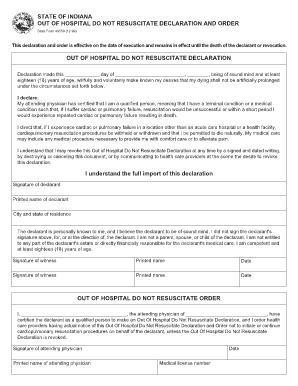
Filling out the Indiana Form 49559, the Out of Hospital Do Not Resuscitate Declaration and Order, is an essential step for many individuals who wish to communicate their medical care preferences. This guide will walk you through the process of completing this form online, ensuring that your wishes are respected.
Follow the steps to complete the Indiana Form 49559 online
- Click ‘Get Form’ button to obtain the form and open it in the editor.
- In the declaration section, enter the date when you are making this declaration. Ensure you are of sound mind and at least eighteen years of age before proceeding.
- Provide your name in the printed name field as you wish it to appear on the document. This identifies you as the declarant.
- Fill in your city and state of residence. This information is essential for legal purposes.
- Review the declaration statement carefully. Ensure you understand and agree with the terms regarding your health care preferences in case of cardiac or pulmonary failure.
- Sign the document to indicate your agreement with the declaration. This signature confirms your intent.
- Designate two witnesses by having them sign and print their names, ensuring they meet the criteria stated in the form regarding their relationship to you.
- The attending physician should complete the order section. This includes signing, printing their name, and including their medical license number.
- After completing all sections, review the form to ensure all information is accurate and complete.
- Save any changes, and choose to download, print, or share the completed form as needed.
Complete your documents online today for easier management of your health care decisions.
If CPR is performed on an individual with a valid DNR order, it may violate the patient’s wishes as stated in Indiana Form 49559. Healthcare providers and first responders are trained to respect these orders, so it is crucial that the DNR is accessible and clearly identified. Performing CPR against someone's wishes can result in unnecessary trauma and distress for the patient and their family. Always communicate your preferences to ensure they are honored.