
Open form follow the instructions

Easily sign the form with your finger

Send filled & signed form or save
How to fill out the Omb 2502 0265 online
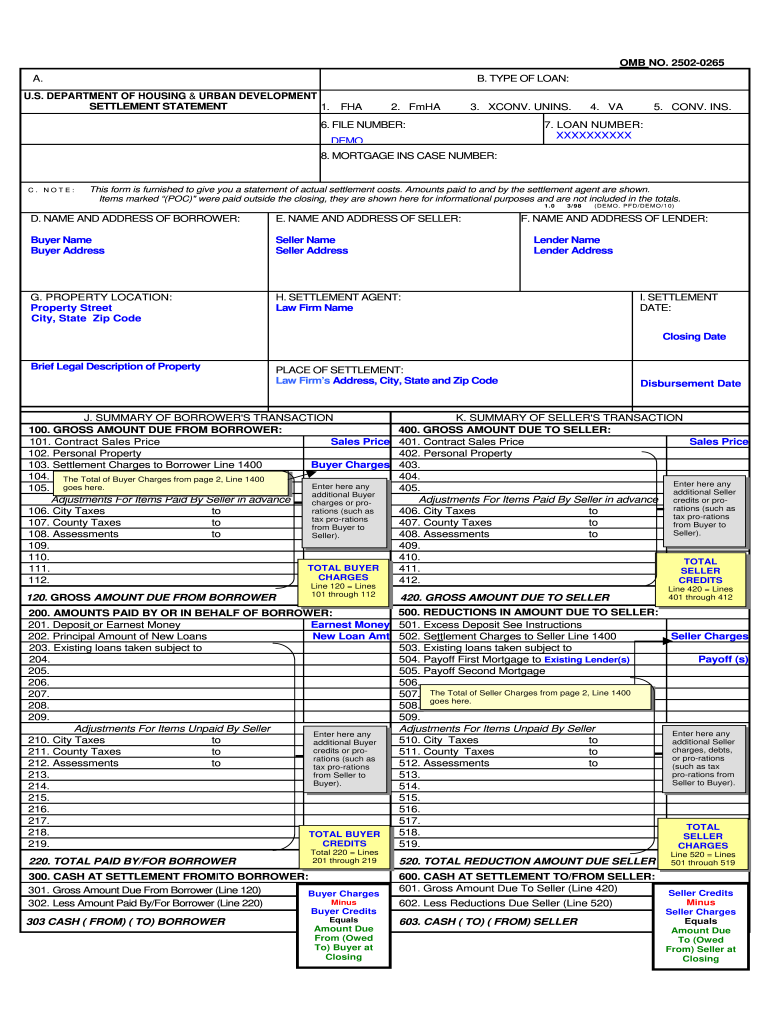
Filling out the Omb 2502 0265, also known as the settlement statement, can seem complex. This guide is designed to walk you through each section of the form, ensuring you understand how to provide the required information accurately and efficiently.
Follow the steps to successfully complete the Omb 2502 0265 online.
- Click the ‘Get Form’ button to access the form and open it in your preferred digital editor.
- Begin by filling out section B, where you need to indicate the type of loan. Choose from the options provided, such as FHA, VA, or conventional loans, and ensure you fill in the loan number and mortgage insurance case number if applicable.
- In section D, input the name and address of the borrower. Clearly list the buyer's details to avoid any errors in identification.
- Next, fill in section E with the name and address of the seller. Accuracy in this section is crucial for transaction records.
- Section G requires the property's location, including the street address and city, state, and zip code. Make sure this information matches public records.
- In section F, provide the name and address of the lender. This helps in identifying the financing party involved in the settlement.
- Fill out section I by entering the settlement date, which indicates when the closing process will take place.
- Complete section J, which summarizes the borrower's transaction. Carefully input the gross amount due from the borrower, detailing sales price, personal property, and any settlement charges.
- When you move to section K, summarize the seller's transaction. Include all relevant amounts due to the seller, similar to the previous section, ensuring all adjustments for items paid by the seller are clearly noted.
- Proceed to enter any reductions due to the seller in section 500 and the cash at settlement in section 600.
- Finally, review sections L and 1400 for total settlement charges and ensure all necessary charges have been included accurately.
- Once all fields are completed, save your changes, and choose to download, print, or share the form as needed.
Complete your documents online today for a smoother transaction process.
Experience a faster way to fill out and sign forms on the web. Access the most extensive library of templates available.
Related content
OMB Approval No. 2502-0265. The Public Reporting Burden for this collection of information...
Page 1. Omb Approval No 2502 0265 Settlement. Statement Hud 1a.
Get answers to your most pressing questions about US Legal Forms API.
What is a closing disclosure?
A Closing Disclosure is a five-page form that provides final details about the mortgage loan you have selected. It includes the loan terms, your projected monthly payments, and how much you will pay in fees and other costs to get your mortgage (closing costs).
What are the two closing disclosures?
There will be two Closing Disclosures issued during the process: the “Initial CD” and the “Final CD”. The Initial CD is the most time-sensitive document throughout the mortgage loan process because it requires e-signatures a minimum of three days before closing.
What is OMB No 2502 0265?
OMB 2502-0265. Document. Name. Form HUD 1 Real Estate Settlement Procedures Act (RESPA) Disclosures. Form and Instruction.
What is the difference between a HUD settlement statement and a closing disclosure?
While closing disclosures provide information about a borrower's loan, settlement statements do not include loan information. Settlement statements are used for commercial transactions and cash closings.
Is HUD-1 same as closing disclosure?
Now, for most kinds of mortgage loans, borrowers receive a form called the Closing Disclosure instead of a HUD-1 form. Either form must be reviewed by the borrower before the closing, in order to prevent errors or any unplanned expenses.
What is the difference between HUD-1 and Alta settlement statement?
ALTA statements are comprehensive and used in commercial transactions, while HUD statements are regulated by federal law and used in residential transactions. Understanding these differences is crucial for buyers, sellers, and real estate professionals lenders to ensure smooth and compliant real estate transactions.
Use professional pre-built templates to fill in and sign documents online faster. Get access to thousands of forms.
If you believe that this page should be taken down, please follow our DMCA take down process here.