Loading

Open form follow the instructions

Easily sign the form with your finger

Send filled & signed form or save
How to fill out the Patient Discharge online
Completing the Patient Discharge form online is an essential step in ensuring a smooth transition for users from treatment to post-care. This guide will provide you with clear and practical instructions for navigating each section of the form effectively.
Follow the steps to successfully complete the form online.
- Click the ‘Get Form’ button to access the document and open it in your preferred editing tool.
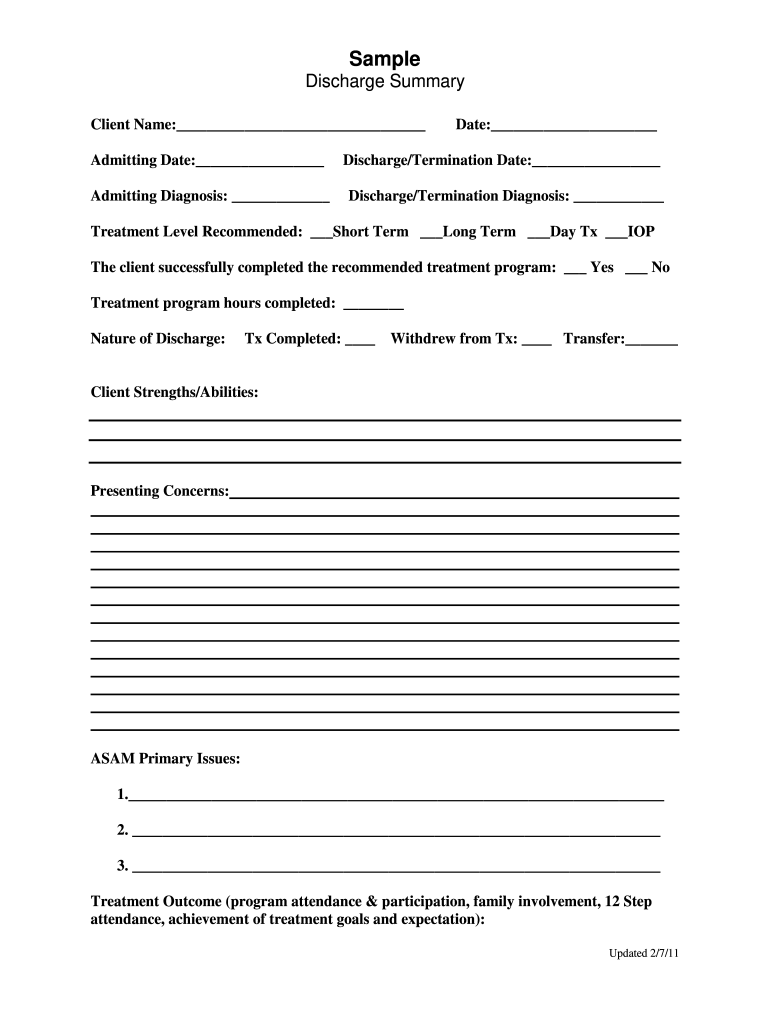
- Begin by entering the client's name in the space provided at the top of the form. Ensure you fill in the correct full name for accurate identification.
- Provide the admitting date. This is the date when the user was admitted for treatment. Format it as month/day/year.
- Indicate the admitting diagnosis. This should reflect the initial diagnosis upon admission.
- Enter the discharge or termination date in the appropriate field, formatted similarly to the admitting date.
- Fill in the discharge or termination diagnosis, which should be the diagnosis at the time the user is being discharged.
- Select the recommended treatment level by marking one of the options: Short Term, Long Term, Day Treatment, or Intensive Outpatient Program (IOP).
- Indicate whether the client successfully completed the recommended treatment program by checking 'Yes' or 'No'.
- Input the total number of treatment program hours completed by the user.
- Describe the nature of discharge by marking if treatment was completed, the user withdrew from treatment, or if there was a transfer.
- List the client's strengths and abilities in the designated area, which helps personalize their discharge plan.
- Document the presenting concerns of the user, which could be crucial for future providers.
- Specify the ASAM primary issues by listing up to three significant issues that were addressed during treatment.
- Summarize the treatment outcome by commenting on factors such as program attendance, participation, family involvement, 12-Step attendance, and treatment goal achievement.
- Write the discharge plan that outlines next steps and any recommendations for follow-up care.
- Include relevant referrals if any were made during the discharge process.
- Complete the discharge diagnosis section, entering the appropriate information for Axis I, II, III, IV, and V as necessary.
- Have the client sign the form in the designated area to acknowledge their understanding.
- Require the therapist's signature to validate the discharge form.
- Enter the dates for both the client and therapist signatures to finalize the document.
- Once all fields are accurately completed, you can save your changes, download a copy, print, or share the form as needed.
Complete your patient discharge documents online to ensure a seamless transition!
Experience a faster way to fill out and sign forms on the web. Access the most extensive library of templates available.
Related content
by PR Patel · 2023 · Cited by 63 — Discharge planning is the process of transitioning...
A hospital will discharge you when you no longer need to receive inpatient care and can go...
退院 / discharge. Patients who are admitted to the hospital completed their hospital...
Get answers to your most pressing questions about US Legal Forms API.
What are the 4 types of discharge from hospital?
The four types of discharge from a hospital are planned discharge, unplanned discharge, against medical advice discharge, and discharged to another facility. Planned discharge occurs when a patient is prepared for release following treatment. Unplanned discharge can happen due to sudden changes in the patient’s condition, while against medical advice discharge occurs when a patient decides to leave without following the medical recommendation. Discharged to another facility involves transferring the patient to receive additional care based on their ongoing needs.
What is a definition of discharge?
Discharge, in a medical context, refers to the formal release of a patient from a healthcare facility after treatment. It signifies that the patient has met specific health criteria necessary for them to continue their recovery outside the hospital. Discharge is an important part of the patient care journey.
What is a patient discharge?
A patient discharge is when a patient is released from a healthcare facility after completing their treatment or surgery. This event is based on the medical team’s assessment of the patient’s condition and their readiness to return home. Discharge includes providing instructions for any follow-up care and medications.
What is a client discharge?
A client discharge refers to the formal process of releasing a client from a healthcare service after their treatment is complete. This process involves assessing the client’s readiness and providing critical information about their care post-discharge. It is crucial for maintaining the client’s health and ensuring continuity of care.
What is a client discharge summary?
A client discharge summary is a comprehensive document that outlines a client’s treatment, progress, and next steps after their discharge from care. It typically includes details about their condition at discharge, any medications prescribed, and recommendations for further treatment. This summary is essential for coordinating ongoing care and ensuring a smooth transition.
How do I discharge a client?
To discharge a client, first, review their treatment progress and ensure they meet the criteria for safe discharge. Next, provide a detailed discharge plan outlining their ongoing care needs and any necessary follow-up appointments. Ensure the client understands their instructions and has access to support resources.
What does it mean when a patient has been discharged?
When a patient has been discharged, it indicates they have officially left the hospital or healthcare setting after receiving medical treatment. This can involve various steps, including meeting specific health benchmarks and receiving instructions on follow-up care. Discharge may also include arrangements for any necessary support at home.
What does it mean when a patient is discharged?
When a patient is discharged, it means they have completed the necessary treatment and are ready to leave the healthcare facility. The medical team evaluates their condition to ensure they are stable for a safe return home. This process often includes providing discharge instructions for ongoing care.
How are you discharged from the hospital?
Being discharged from the hospital involves a systematic approach led by healthcare professionals who assess your recovery. They will provide you with essential information, including prescriptions, home care instructions, and follow-up appointments. This ensures you are prepared and confident to continue your recovery at home.
How do patients get discharged?
Patients get discharged through a structured assessment in which medical professionals evaluate their readiness to leave. This includes reviewing your healthcare plan and ensuring you have the necessary information for recovery. Your team will assist you in understanding what to expect post-discharge.
Use professional pre-built templates to fill in and sign documents online faster. Get access to thousands of forms.
If you believe that this page should be taken down, please follow our DMCA take down process here.