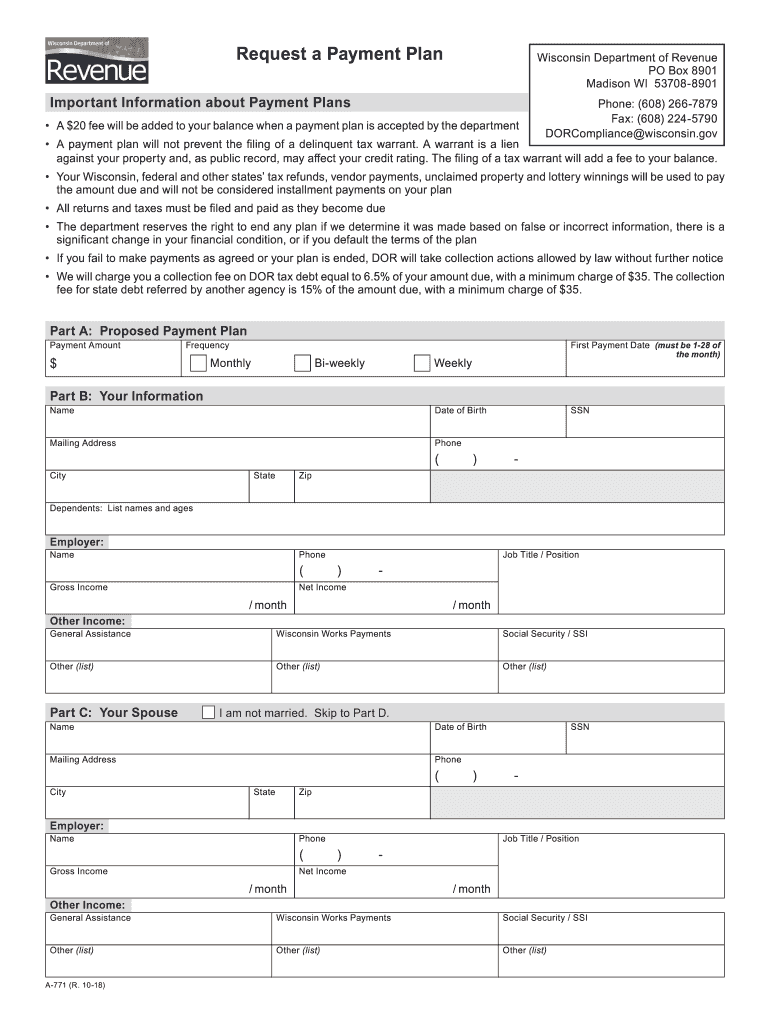
When a payment plan is accepted by the department Phone: (608) 266-7879 Fax: (608) 224-5790 DORCompliance wisconsin.gov A payment plan will not prevent the filing of a delinquent tax warrant. A warrant is a lien against your property and, as public record, may affect your credit rating. The filing of a tax warrant will add a fee to your balance. Your Wisconsin, federal and other states tax refunds, vendor payments, unclaimed property and lottery winnings will be used to pay the am.
Loading

Open form follow the instructions

Easily sign the form with your finger

Send filled & signed form or save
How to fill out the WI A-771 online
Completing the WI A-771 form is an important step for people seeking a payment plan with the Wisconsin Department of Revenue. This guide provides you with clear, step-by-step instructions to complete the form accurately, ensuring you provide all necessary information for consideration.
Follow the steps to fill out the WI A-771 online.
- Click the ‘Get Form’ button to obtain the WI A-771 form and open it in your preferred editor.
- In Part A, propose your payment plan by specifying the payment amount, frequency (monthly, bi-weekly, or weekly), and the first payment date (which should be between the 1st and 28th of the month).
- Fill out Part B with your information, including your name, date of birth, mailing address, phone number, and Social Security Number (SSN). Additionally, list your dependents' names and ages, and provide details about your employer, gross and net income, job title, and any other income sources.
- If applicable, complete Part C regarding your spouse’s information. If you are not married, indicate that and skip to Part D. If married, include your spouse's name, mailing address, date of birth, SSN, phone number, and employment information as previously detailed.
- In Part D, list all banks and financial institutions, specifying their names, types (checking, savings, etc.), and current balances.
- In Part E, provide information about any motor vehicles, boats, motorcycles, snowmobiles, or ATVs you own. For each vehicle, list the year, make, model, fair market value, lien holder, and balance owed.
- In Part F, document any real estate properties you own, including their location, fair market value, mortgage holder, and balance due.
- When filling out Part G, list your monthly expenses, including payments for mortgage or rent, vehicle payments, utilities, insurance, and any additional expenses, noting any that are behind.
- Review the information you provided for accuracy before signing in Part H. Confirm your understanding of the payment plan terms and include your signature and date. If applicable, have your spouse sign as well.
- Once completed, save your changes, and you can download, print, or share the form as needed.
Start completing your WI A-771 form online today to request your payment plan.
Experience a faster way to fill out and sign forms on the web. Access the most extensive library of templates available.
Related content
A $20 fee will be added to your balance when a payment plan is accepted by the department...
Dec 31, 2019 — To obtain the Payment Plan Request (Form A-771), go to...
Esta lista reúne os mortos e desaparecidos políticos no regime militar de 1964. Os...
Get answers to your most pressing questions about US Legal Forms API.
What is the filing requirement?
The filing requirement for Wisconsin indicates the conditions under which individuals must submit a tax return. This includes various thresholds based on income type and residency status. Understanding these requirements is essential for compliance, and resources like WI A-771 are valuable in navigating the specifics. For personalized tax assistance, check out uslegalforms, which provides relevant resources.
How do I set up a payment plan for my Wisconsin state taxes?
To set up a payment plan for Wisconsin state taxes, you need to contact the Wisconsin Department of Revenue directly. They will provide you with the necessary steps to establish a plan that fits your financial situation. Ensure you review WI A-771 for helpful guidelines on payment options. Additionally, uslegalforms can support you in managing your tax responsibilities effectively.
Who is exempt from Wisconsin income tax?
Certain individuals may qualify for exemptions from Wisconsin income tax, including some seniors, disabled individuals, and those under specific income thresholds. Understanding these exemptions can simplify your tax scenario significantly. Refer to WI A-771 for detailed information on eligibility criteria. For further clarification, uslegalforms offers tailored guidance to help identify exemptions.
What happens if you don't file taxes in Wisconsin?
Not filing your taxes in Wisconsin can lead to consequences such as penalties and interest on unpaid amounts. The state takes tax compliance seriously, and failing to file can also result in legal action. Stay informed about your responsibilities through resources like WI A-771. If you need help resolving tax issues, uslegalforms offers practical support.
What does filing requirements mean?
Filing requirements refer to the obligations individuals have to submit their income information to the state. These requirements vary depending on factors like income level, residency status, and filing status. Understanding these aspects is crucial, and resources like WI A-771 provide clarity. For thorough insights and form preparation, visit uslegalforms for tailored solutions.
Where to file Wisconsin tax forms?
Wisconsin tax forms can typically be filed electronically, or you can mail them to the Department of Revenue. Ensure you use the correct mailing address based on the type of form you are submitting. For a smooth filing process, refer to WI A-771, which offers insights and links to the necessary forms. You can also check uslegalforms for a streamlined filing experience.
Do I need to file a nonresident Wisconsin tax return?
If you earn income in Wisconsin but reside in another state, you may need to file a nonresident tax return. This requirement applies if your Wisconsin-sourced income exceeds the state's filing threshold. Make sure to refer to WI A-771 for further details on this aspect of filing. You can easily find guidance and necessary forms on uslegalforms.
What is Wisconsin filing requirements?
The Wisconsin filing requirements outline what taxpayers need to submit to comply with state tax laws. Generally, individuals must file a tax return if they meet specific income thresholds set by the Wisconsin Department of Revenue. Utilizing resources like WI A-771 can simplify your understanding of these requirements. For personalized assistance, consider visiting uslegalforms for comprehensive tools.
Can I set up a payment plan for my taxes?
Yes, you can set up a payment plan for your taxes in Wisconsin. The Wisconsin Department of Revenue offers this service to help taxpayers manage their tax debt. Make sure to provide all necessary information regarding your financial circumstances. This approach can lead to a realistic repayment strategy under WI A-771, allowing you to regain control over your finances.
How do I set up a payment plan for taxes owed?
Establishing a payment plan for taxes owed in Wisconsin involves contacting the Department of Revenue or visiting their online portal. You will need to provide details about your current financial condition to determine a manageable payment schedule. This plan can help you avoid penalties and keep your tax situation under control. Remember, options under WI A-771 can assist you in better managing your obligations.
Use professional pre-built templates to fill in and sign documents online faster. Get access to thousands of forms.
If you believe that this page should be taken down, please follow our DMCA take down process here.