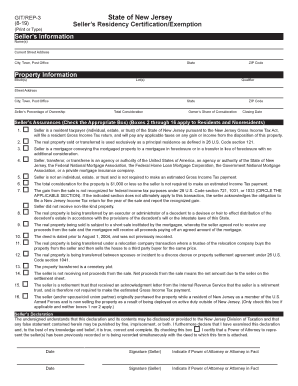
Der 26 U.S. Code section 1041. 13. The property transferred is a cemetery plot. 14. The seller is not receiving net proceeds from the sale. Net proceeds from the sale means the net amount due to the seller on the settlement sheet. 15. The seller is a retirement trust that received an acknowledgment letter from the Internal Revenue Service that the seller is a retirement trust, and is therefore not required to make the estimated Gross Income Tax payment. 16. The seller (and/or spouse/ci.
Open form follow the instructions
Easily sign the form with your finger
Send filled & signed form or save
How to fill out the NJ DoT GIT/REP-3 online
Filling out the NJ DoT GIT/REP-3 form is essential for individuals or entities selling property in New Jersey who wish to certify their residency or claim an exemption from Gross Income Tax obligations. This guide provides you with step-by-step instructions to easily complete the form online.
Follow the steps to efficiently complete the NJ DoT GIT/REP-3 online.
- Press the ‘Get Form’ button to access the form and open it in the editor.
- Begin by entering the seller's name(s) as it appears on identification documents. If there are multiple sellers, each individual needs to complete a separate form unless they file taxes jointly as a married or civil union couple.
- Fill in the current street address, city, town, or post office of the seller’s primary residence. Note that this should not be the address of the property being sold.
- Next, provide the property information. Enter the block and lot numbers as specified on the property deed, along with the state and ZIP code.
- Indicate the seller's percentage of ownership in the property and the total consideration, which represents the total monetary value exchanged during the transaction. Signify your share of this consideration and the planned closing date.
- Review the Seller’s Assurances section. Check the correct box(es) that apply to the seller’s situation regarding residency and income tax obligations. Ensure that any claims for exemptions are properly supported.
- Complete the Seller’s Declaration by signing and dating it. If a Power of Attorney or representative is involved, ensure that they have the necessary authority to submit the declaration.
- Finally, save changes to your completed form, download a copy for your records, and print or share the document as needed for submission.
Start filing documents online today for a smoother transaction process.
Experience a faster way to fill out and sign forms on the web. Access the most extensive library of templates available.
Related content
Apr 9, 2025 — GIT/REP-1, Nonresident Seller's Tax Declaration. GIT/REP-2, Nonresident...
by GC Rozzi — This paper presents njtr1, an R package that enables road safety and urban...
by N Dowlin · 2015 · Cited by 62 — Significant improvements have been made by encoding...
Get answers to your most pressing questions about US Legal Forms API.
Who is eligible for property tax reimbursement in NJ?
In New Jersey, property tax reimbursement is typically available for senior citizens and disabled persons who meet specific income requirements. It's important to file the proper forms, such as the NJ DoT GIT/REP-3, to ensure you receive any eligible benefits. Using the uslegalforms platform can streamline this process, helping you find the right documents to maximize your reimbursements smoothly.
Can you avoid NJ exit tax?
While it's challenging to completely avoid the NJ exit tax, there are certain exemptions that may apply, depending on your individual circumstances. Familiarizing yourself with the NJ DoT GIT/REP-3 form helps clarify which exemptions you may qualify for. Consulting with a tax professional can provide guidance tailored to your situation, potentially minimizing your tax burden.
What is New Jersey Git-Er tax?
The New Jersey Git-Er tax is synonymous with the state's Gross Income Tax applied during property sales. This specific type of tax aims to collect revenue on the profits realized from such transactions. Completing the NJ DoT GIT/REP-3 correctly can help you avoid any misunderstandings or errors in tax obligations, ensuring a smoother sale.
What is a git tax?
A git tax specifically refers to taxes assessed on capital gains from the sale of property. In the context of New Jersey, this means understanding how the NJ DoT GIT/REP-3 affects your financial responsibilities when selling real estate. Being aware of these tax implications can help you plan for them in advance, making your financial management easier.
What is git tax in NJ?
The NJ DoT GIT/REP-3 refers to the state's Gross Income Tax. This tax applies to property transfers in New Jersey, ensuring that any capital gains on the sale are claimed. Understanding this tax can help you navigate your financial obligations more effectively. It's essential to be informed about your responsibilities under New Jersey tax laws to avoid unexpected costs.
What is NJ DSF tax?
The NJ DSF tax refers to the New Jersey Division of Taxation's deposit stress fund tax. This tax applies specifically to businesses who need to manage their financial obligations. Using the NJ DoT GIT/REP-3, you can track and report your tax liabilities accurately.
What is git er tax in NJ?
The git er tax, or New Jersey Gross Income Tax on estates and trusts, is a tax on the income generated from estates. This tax ensures that income accumulated in trusts or estates is reported under the NJ DoT GIT/REP-3 form. Understanding this tax is vital for proper estate management and compliance.
How to get git repo url?
To get the URL for a Git repository, you typically access the repository through your preferred Git hosting service. Look for the 'Clone' option on the repository page; this usually provides the HTTPS or SSH URL. While this information is relevant to developers, keep in mind that understanding NJ DoT GIT/REP-3 is vital for real estate transactions. If you have legal questions, US Legal Forms can help you navigate them with ease.
What is New Jersey Git tax?
New Jersey's Git tax, often referred to as Gross Income Tax, encompasses various income types and applies to both residents and non-residents. The tax rate can vary depending on your income bracket. Understanding this tax is essential for compliance with the NJ DoT GIT/REP-3 requirements. The USLegalForms platform is a useful resource for obtaining detailed information about the Git tax and filing procedures.
How to fill out a st3 form NJ?
To fill out the ST3 form in New Jersey, first gather all necessary information, including your property details and the nature of your exemption. Follow the instructions carefully, making sure to input your address, the reason for the exemption, and any relevant supporting documentation. Once completed, submit your ST3 form to your local tax assessor's office. Consider using the USLegalForms platform for helpful resources and guidance in navigating the NJ DoT GIT/REP-3 process.
Use professional pre-built templates to fill in and sign documents online faster. Get access to thousands of forms.
If you believe that this page should be taken down, please follow our DMCA take down process here.
This form is available in several versions. Select the version you need from the drop-down list below.