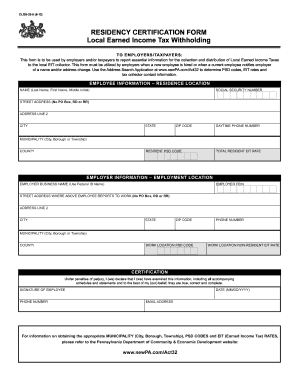
CLGS-32-6 6-13 RESIDENCY CERTIFICATION FORM Local Earned Income Tax Withholding TO E M P L O Y E R S / TA X PAY E R S This form is to be used by employers and/or taxpayers to report essential information for the collection and distribution of Local Earned Income Taxes to the local EIT collector. This form must be utilized by employers when a new employee is hired or when a current employee notifies employer of a name and/or address change. Use the Address Search Application at www. newPA. com/Ac.

How it works
  • Open form

    Open form follow the instructions

  • Easily sign form

    Easily sign the form with your finger

  • Share form

    Send filled & signed form or save

How to fill out the PA DCED CLGS-32-6 online

Filling out the PA DCED CLGS-32-6 online is essential for employers and taxpayers to accurately report local earned income tax information. This guide will provide a comprehensive step-by-step approach to ensure that the form is completed correctly and efficiently.

Follow the steps to complete the residency certification form

  1. Press the ‘Get Form’ button to retrieve the form and have it open in your chosen platform for editing.
  2. Begin by entering the employee information. Fill out the last name, first name, and middle initial. Next, provide the employee's social security number.
  3. Proceed to fill out the employer information. Start with the employer business name as per the federal ID.
  4. After all information is filled out, review the form thoroughly to ensure accuracy.

Complete your documents online today for a smoother filing process!

Get form

Experience a faster way to fill out and sign forms on the web. Access the most extensive library of templates available.

Related content

RESIDENCY CERTIFICATION FORM Local Earned ...

please refer to the Pennsylvania Department of Community & Economic Development website:...

Learn more
RESIDENCY CERTIFICATION FORM Local Earned Income...

please refer to the Pennsylvania Department of Community & Economic Development website:...

Learn more
Questions & Answers

Get answers to your most pressing questions about US Legal Forms API.

Contact support

How do I get my underpayment penalty waived?

To have your underpayment penalty waived, you must demonstrate reasonable cause for not meeting payment obligations. The IRS may consider your previous compliance history and specific circumstances. It can be beneficial to consult PA DCED CLGS-32-6 resources or seek professional assistance for a thorough understanding of the process.

You need to file PA Schedule A if you are itemizing deductions on your state tax return. This form allows taxpayers to specify deductible expenses and may reduce your taxable income. Familiarizing yourself with PA DCED CLGS-32-6 can guide you through the necessary steps.

To avoid a PA underpayment penalty, make sure your tax payments match the estimated annual tax obligation. This involves keeping track of your income and adjusting withholdings or estimated payments as necessary. Following the PA DCED CLGS-32-6 guidelines can help you stay compliant and avoid penalties.

To apply for a PA withholding account, complete the online registration available on the Pennsylvania Department of Revenue website. This process is straightforward and allows you to manage your tax obligations efficiently. Ensure compliance with PA DCED CLGS-32-6 requirements during your application.

You must file a PA state tax return if your income exceeds the threshold set by the Pennsylvania Department of Revenue. Additionally, if you had any taxable income or are owed a refund, filing is necessary. Consulting the PA DCED CLGS-32-6 guidelines can provide clarity on your specific obligations.

If you forget to file your local taxes in Pennsylvania, you may face penalties and interest on the unpaid taxes. It's essential to file your return as soon as you realize the oversight. Utilizing resources like uslegalforms can help you navigate the PA DCED CLGS-32-6 requirements and rectify the situation effectively.

To avoid an underpayment penalty, ensure your tax payments meet the required thresholds set by the IRS. File your returns accurately and on time, and consider working with professionals familiar with PA DCED CLGS-32-6 requirements. You can also make estimated tax payments throughout the year to stay on track.

In Pennsylvania, anyone who inherits property or assets from a decedent must file a PA inheritance tax return. This obligation applies to heirs, beneficiaries, and estate representatives. It is crucial to be aware of the PA DCED CLGS-32-6 guidelines to determine specific filing requirements related to tax liability.

Failing to file local taxes in Pennsylvania can lead to serious consequences, including penalties, interest, and potentially even legal action. Tax authorities may initiate collection efforts if you neglect your responsibilities. To avoid these outcomes, consider using resources like the US Legal Forms platform for assistance with the PA DCED CLGS-32-6 and local tax filing. Taking prompt action can help you stay compliant and avoid stress.

In Pennsylvania, taxable income for local earned income tax includes wages, salaries, and commissions. Self-employment income is also subject to this tax. It's essential to account for all sources of income when calculating your local tax obligations under the PA DCED CLGS-32-6 framework. By understanding your taxable income, you can ensure that your filings are accurate and complete.

Get This Form Now!

Use professional pre-built templates to fill in and sign documents online faster. Get access to thousands of forms.

If you believe that this page should be taken down, please follow our DMCA take down process here.

PA DCED CLGS-32-6 Form

This form is available in several versions. Select the version you need from the drop-down list below.

Get PA DCED CLGS-32-6