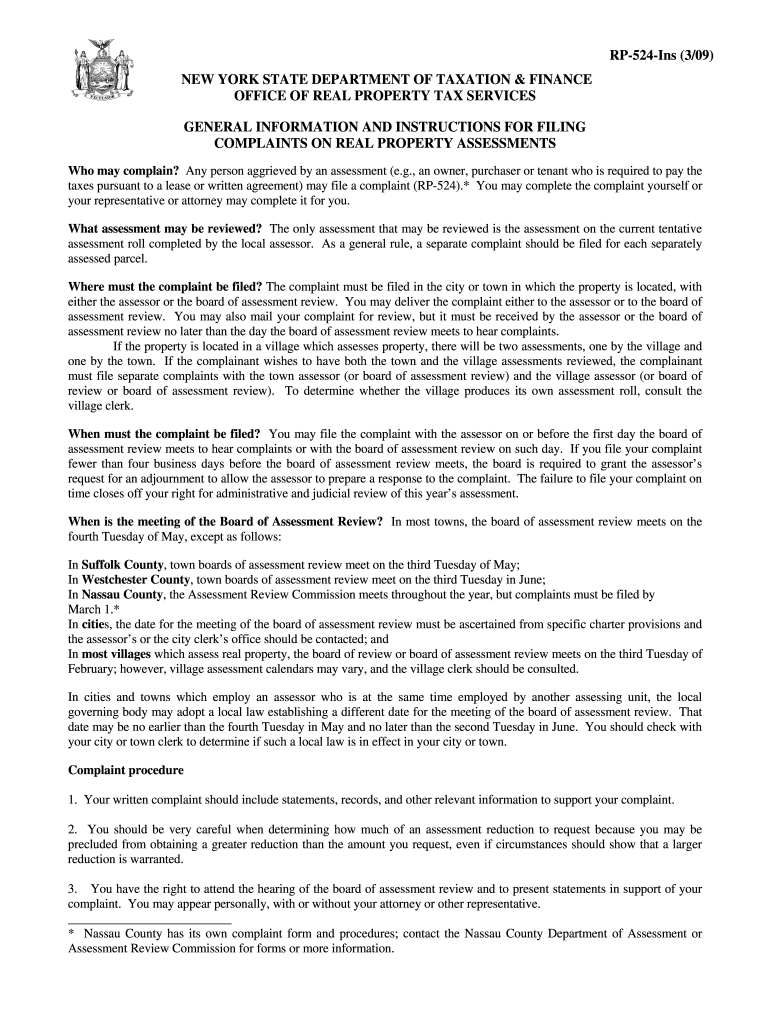
CTIONS FOR FILING COMPLAINTS ON REAL PROPERTY ASSESSMENTS Who may complain? Any person aggrieved by an assessment (e.g., an owner, purchaser or tenant who is required to pay the taxes pursuant to a lease or written agreement) may file a complaint (RP-524).* You may complete the complaint yourself or your representative or attorney may complete it for you. What assessment may be reviewed? The only assessment that may be reviewed is the assessment on the current tentative assessment roll completed.
Loading

Open form follow the instructions

Easily sign the form with your finger

Send filled & signed form or save
How to fill out the NY RP-524-Ins online
Filing a complaint regarding real property assessments in New York requires careful attention to the NY RP-524-Ins form. This guide provides step-by-step instructions for completing the form online, ensuring that you provide all necessary information to support your complaint effectively.
Follow the steps to complete your complaint form accurately.
- Click ‘Get Form’ button to access the NY RP-524-Ins form online. This will allow you to open the document in an editable format.
- Begin by completing Part One of the form, which includes general information. Enter your personal identifying details, such as name, address, and the estimated market value of your property as of the valuation date.
- Proceed to Part Two, where you must provide proof to establish the value of your property. Include any relevant documentation such as recent sale prices, appraisals, or rental income information.
- In Part Three, outline the grounds for your complaint. Clearly state whether you are claiming unequal, excessive, or unlawful assessment and provide details to support your position.
- Complete any additional parts of the form that apply to your situation, including any required authorizations if you are having someone else represent you.
- Before submitting, ensure that all fields are filled out accurately and completely, as incomplete forms may be dismissed, preventing future judicial review.
- Finally, save your changes, download a copy of the completed form, and print or share it as needed. Ensure you file the complaint with the appropriate authority before the deadline.
Get started on your property assessment complaint by filling out the NY RP-524-Ins online today.
Experience a faster way to fill out and sign forms on the web. Access the most extensive library of templates available.
Related content
Complaints in relation to assessments on city, town and village assessment rolls must be...
This endorsement insures the lender against loss in the event that a court holds that...
This document provides technical and regulatory guidance for in situ chemical oxidation...
Get answers to your most pressing questions about US Legal Forms API.
What is the best evidence to protest property taxes?
The best evidence to protest property taxes includes comparable property sales, current photographs, and appraisal reports. Utilize the information available through NY RP-524-Ins, which can guide you on what’s acceptable. This evidence should clearly demonstrate that your property's assessed value exceeds its actual market value. Being thorough and organized in your presentation increases your chances for success.
Can an assessor come on my property without permission in NY?
In New York, assessors generally must have permission to enter your property. However, they can conduct exterior inspections without consent. Understanding your rights under the NY RP-524-Ins is essential to ensure assessors follow proper protocol. If you have concerns, you may want to communicate directly with your local assessor's office.
How to grieve property taxes in NY?
To grieve property taxes in NY, you must first communicate with your local assessor about your assessment details. Using the NY RP-524-Ins, you can find relevant forms for filing a grievance. Collect evidence that shows your property's value is overstated, which will help in your appeal. Documenting everything carefully is crucial for a successful outcome.
How to challenge assessed value in NYC?
Challenging your assessed value in NYC involves filing a petition with the NYC Tax Commission. Utilize the NY RP-524-Ins to guide you through the process and understand the necessary documentation. Providing comprehensive evidence, such as comparable sales and photographs of your property, supports your case. This systematic approach increases the likelihood of a favorable outcome.
How do I grieve my taxes in New York?
To grieve your taxes in New York, you must file a grievance application with your local assessment review board. The NY RP-524-Ins provides a structured process for this, including deadlines and required documentation. Be prepared to present evidence supporting your claim. Familiarizing yourself with local rules can enhance your chances of approval.
How can I lower my property taxes in NY?
To lower your property taxes in NY, consider applying for exemptions such as the STAR program or the NY RP-524-Ins. These programs can significantly reduce your taxable assessment. Additionally, reviewing your property assessment for accuracy may reveal overcharges. Contacting your local tax assessor for guidance might also help in understanding available options.
Who is exempt from property taxes in NY?
In New York, various groups may be exempt from property taxes, including certain senior citizens, veterans, and individuals with disabilities. Additionally, properties used for religious, educational, or municipal purposes may also qualify for exemption. Determining eligibility can be complex, so it's helpful to consult detailed resources or seek assistance from platforms like USLegalForms.
Can a tax assessor go on your property in NY without permission?
A tax assessor in New York may go on your property without permission to fulfill their duties. They often conduct external assessments as part of their responsibilities to evaluate property values accurately. While they have this right, they usually notify property owners about their intentions. If you have further questions, platforms like USLegalForms can provide additional clarity.
What happens if you don't let a tax assessor in your house?
If you do not allow a tax assessor into your house, they may still assess your property based on external observations or previous records. However, this could lead to an inaccurate assessment, potentially impacting your property taxes. Engaging in open communication with the assessor may yield better results. For guidance, check resources on USLegalForms.
Can a building inspector come on your property without permission in NY?
Yes, in New York, building inspectors can enter your property without permission for inspections, especially during construction or renovations. They often do this to ensure compliance with safety and building codes. However, they typically notify property owners prior to the inspection. Understanding your rights may help you feel more informed and prepared.
Use professional pre-built templates to fill in and sign documents online faster. Get access to thousands of forms.
If you believe that this page should be taken down, please follow our DMCA take down process here.