Loading
Get Ny Et-20 2004-2026
How it works
-

Open form follow the instructions
-

Easily sign the form with your finger
-

Send filled & signed form or save
How to fill out the NY ET-20 online
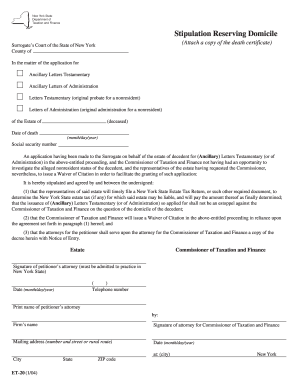
The NY ET-20 form is used for stipulating the domicile of a deceased individual in the context of probate proceedings in New York. This guide provides a step-by-step walkthrough to help users fill out the form accurately and effectively.
Follow the steps to complete the NY ET-20 form online.
- Click ‘Get Form’ button to obtain the form and open it in the editor.
- Enter the county name where the Surrogate’s Court is located in the designated field.
- Complete the section regarding the application for 'Ancillary Letters Testamentary' or 'Letters of Administration,' as appropriate for your case.
- Fill in the name of the deceased individual in the 'Estate of' section.
- Input the date of death in the format month/day/year in the provided field.
- Provide the social security number of the deceased in the specific field designated for it.
- Review the stipulation section, confirming that all agreements related to filing the New York State Estate Tax Return are understood and agree to them.
- Ensure that the signature section is completed, including the signature of the petitioner’s attorney, their telephone number, and the date.
- Fill in the attorney's printed name and their firm's name after the signature.
- Complete the attorney for the Commissioner of Taxation and Finance section, including their signature, mailing address, and date.
- Once all fields are completed, you can save changes, download the form, print it, or share it as necessary.
Complete your NY ET-20 form online today to streamline your probate process.
Waiver and consent refer to a legal agreement where individuals forgo their rights to be notified about certain legal actions while agreeing to the terms set forth in the document. This concept is crucial in estate management as it allows for smoother transitions and less formal obstruction in legal processes. When you understand these terms, especially concerning NY ET-20, you can better navigate estate-related matters.