Loading
Get Nc E-590 1992-2026
How it works
-

Open form follow the instructions
-

Easily sign the form with your finger
-

Send filled & signed form or save
How to fill out the NC E-590 online
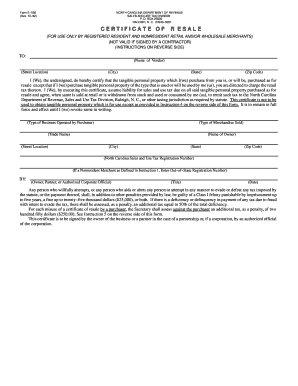
The NC E-590 form is a vital document for brokers and merchants in North Carolina, facilitating tax exemptions on resale purchases. This guide provides a step-by-step approach to completing the NC E-590 online, ensuring clarity and compliance with tax regulations.
Follow the steps to complete the NC E-590 form online effectively.
- Click the ‘Get Form’ button to access the NC E-590 form, making sure to open it in a digital editor that supports form completion.
- Begin by entering the name of the vendor from whom you are purchasing the goods in the designated field.
- Fill in the street address, city, state, and zip code of the vendor to ensure accurate identification.
- In the certification section, you will need to state that the tangible personal property you are purchasing is for resale. You may also specify if there will be instances where you will be charged retail tax.
- Indicate the type of business you operate in the appropriate field.
- Specify the type of merchandise you will be selling, ensuring it clearly describes your business offerings.
- Include your trade name, the address of your business, and your title.
- Provide your North Carolina Sales and Use Tax Registration Number.
- If you are a nonresident merchant, enter your out-of-state registration number as instructed.
- Ensure the form is signed by either the owner, partner, or an authorized corporate official and add the date of signing.
- Once all information is complete, review the form for accuracy, and proceed to save changes. You can then download, print, or share the completed NC E-590 form.
Complete your NC E-590 form online today for a smoother resale process!
Related links form
No, a resale certificate is not the same as an Employer Identification Number (EIN). The resale certificate, specifically the NC E-590, is used for sales tax exemption on purchases intended for resale. In contrast, an EIN is a unique identifier required by the IRS for tax purposes. Each serves a different purpose in business operations.