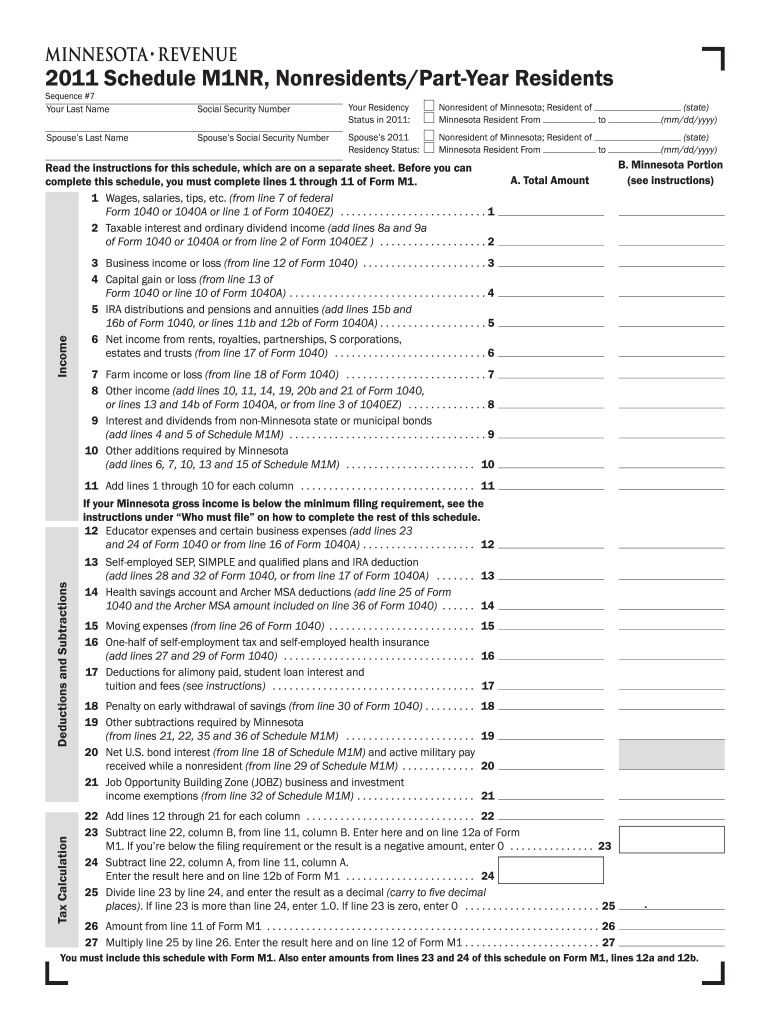
Half of self-employment tax and self-employed health insurance (add lines 27 and 29 of Form 1040) . . . . . . . . . . . . . . . . . . . . . . . . . . . . . . . . . . . 16 Deductions for alimony paid, student loan interest and tuition and fees (see instructions) . . . . . . . . . . . . . . . . . . . . . . . . . . . . . . . . . . . . . 17 15 16 17 18 Penalty on early withdrawal of savings (from line 30 of Form 1040) . . . . . . . . . 19 Other subtractions required by Minn.
Loading

Open form follow the instructions

Easily sign the form with your finger

Send filled & signed form or save
How to fill out the MN DoR Schedule M1NR online
Filling out the MN Department of Revenue Schedule M1NR online can help nonresidents and part-year residents accurately report their income and deductions in Minnesota. This guide provides clear, step-by-step instructions to assist users in completing the form correctly.
Follow the steps to complete the MN DoR Schedule M1NR online.
- Click ‘Get Form’ button to obtain the form and open it in your preferred editor.
- Enter your last name and Social Security number in the designated fields at the top of the form.
- Indicate your residency status for 2011 by selecting either 'Nonresident of Minnesota' or 'Resident of Minnesota' and provide the corresponding dates if applicable.
- Provide your spouse's last name and Social Security number if you are married, then indicate their residency status.
- Proceed to the 'Income' section and fill out lines 1 through 11 according to your income sources, ensuring to include any amounts from your federal tax forms.
- In the 'Deductions and Subtractions' section, input any educator or business expenses you qualify for based on your residency status.
- Calculate total additions and subtractions as outlined in the instructions, ensuring to assign amounts accurately to Minnesota according to the guidelines.
- Complete the calculations on lines 23 and 24, and ensure you understand if your income meets the filing requirements.
- Review all entries for accuracy before saving your changes. You can then download, print, or share the completed form if necessary.
Complete your documents online to ensure accuracy and efficiency in filing.
Experience a faster way to fill out and sign forms on the web. Access the most extensive library of templates available.
Related content
Minnesota Taxable Income | Minnesota Department of Revenue year resident All of your...
It provides for the allocation of federal income and deductions, and Minnesota additions...
Get answers to your most pressing questions about US Legal Forms API.
How do I get a Schedule E?
You can get a Schedule E form from the Minnesota Department of Revenue's website or a tax preparation software program. Additionally, tax professionals can help you obtain the form and ensure it is filled out correctly. If you are preparing your taxes with the MN DoR Schedule M1NR, make sure to include Schedule E if your income qualifies.
What qualifies for schedule E?
Schedule E is used to report income from rental real estate, royalties, partnerships, S corporations, and trusts. If you receive income from any of these sources, you will likely need to file this form. Properly completing Schedule E is essential for accurately reporting your income on your tax return. Make sure to review the MN DoR Schedule M1NR for any complementary requirements.
Who must file a Minnesota tax return?
Individuals who earn income in Minnesota, regardless of residency status, are generally required to file a Minnesota tax return. This includes residents, part-year residents, and nonresidents who have Minnesota-source income. The filing process may vary based on your specific situation, and you can find guidance through the MN DoR Schedule M1NR to ensure accurate completion.
How do I get a schedule e form?
You can obtain a Schedule E form from the Minnesota Department of Revenue's website or your tax professional. The form is essential if you receive income from rental properties or certain partnerships. Make sure to carefully follow the instructions provided with the form. Additionally, if you're filing with the MN DoR Schedule M1NR, you may want to check if you need Schedule E based on your income sources.
What is schedule M1NR?
Schedule M1NR is the form that nonresidents in Minnesota use to report their income and calculate taxes owed. It is specifically designed for individuals who earned income from Minnesota sources while residing in another state. Completing the MN DoR Schedule M1NR accurately is crucial to ensure compliance with Minnesota tax laws.
Does Minnesota tax nonresident income?
Yes, Minnesota does tax nonresident income earned within the state. If you have income from Minnesota sources, you are subject to the state's tax rules, even if you live elsewhere. It's important to file appropriately to meet your tax obligations. The MN DoR Schedule M1NR will guide you through the filing process for nonresident income.
What is the new social security tax break in Minnesota?
Recently, Minnesota has introduced a tax break related to social security income, providing financial relief for retirees. This adjustment can significantly lower your taxable income if you receive social security benefits. Check the MN DoR Schedule M1NR for details on how this change may apply to your situation and potential deductions.
Does everyone have a schedule e-tax form?
Not everyone is required to have a Schedule E tax form. This form is typically used by individuals who have income from rental properties or certain partnerships. If you do not have rental income or partnership income, you may not need this form. However, assessing your individual situation with the guidance of the MN DoR Schedule M1NR can clarify your needs.
Who must file a Minnesota nonresident tax return?
If you earned income from Minnesota sources as a nonresident, you are required to file a Minnesota nonresident tax return. Income could come from wages, property sales, or business activities conducted within the state. Filing is essential to ensure compliance and apply any applicable credits or deductions. Use the MN DoR Schedule M1NR to help organize your filing.
Who is exempt from Minnesota income tax?
In Minnesota, certain individuals may be exempt from paying income tax. Generally, you may qualify for an exemption if your income falls below a specific threshold, or if you are a dependent of someone who files taxes. Additionally, some military personnel and their families may receive exemptions. For more personalized guidance, consider consulting the MN DoR Schedule M1NR or a tax professional.
Use professional pre-built templates to fill in and sign documents online faster. Get access to thousands of forms.
If you believe that this page should be taken down, please follow our DMCA take down process here.
This form is available in several versions. Select the version you need from the drop-down list below.