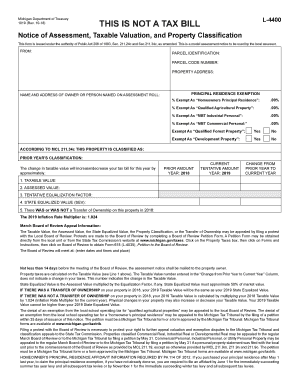
Reset Form Michigan Department of Treasury 1019 Rev. 10-14 L-4400 THIS IS NOT A TAX BILL Notice of Assessment Taxable Valuation and Property Classification This form is issued under the authority of Public Act 206 of 1893 Sec. 211.
Open form follow the instructions
Easily sign the form with your finger
Send filled & signed form or save
How to fill out the MI Form 1019 online
Filling out the MI Form 1019 online can streamline the process of assessing your property valuation and classification. This guide offers detailed, step-by-step instructions to ensure you complete the form accurately and efficiently.
Follow the steps to fill out the MI Form 1019 online
- Press the ‘Get Form’ button to access the MI Form 1019 and open it in your document editor.
- Enter the parcel identification details, including the parcel code number and the property address. Ensure this information is accurate to avoid delays.
- Fill in the name and address of the owner or the person listed on the assessment roll.
- Input the principal residence exemption percentages for categories such as 'Homeowners Principal Residence', 'Qualified Agricultural Property', and 'MBT Industrial Personal'. If any exemptions apply, provide the respective percentages.
- Answer the exemption questions regarding 'Qualified Forest Property' and 'Development Property' by selecting 'Yes' or 'No'.
- Review the classification of the property according to the current regulations, which may include the prior year's classification.
- Provide details regarding the change in taxable value that will affect your tax bill.
- Complete sections on taxable value, assessed value, tentative equalization factor, and state equalized value. Ensure that these entries are correct and reflect any transfers of ownership.
- Prior to submitting the form, double-check all entries for accuracy.
- Once completed, save your changes, and utilize options to download, print, or share the form with relevant parties.
Start filling out your MI Form 1019 online to ensure accurate property assessment today!
Experience a faster way to fill out and sign forms on the web. Access the most extensive library of templates available.
Related content
Guidance regarding Form 1019,. Notice of Assessment, Taxable Valuation, and Property...
Feb 25, 2014 — All property owners in Michigan should receive a “Notice of Assessment...
IMPORTANT: The word “IMPORTANT” is used to in- form the reader of specific procedures...
Get answers to your most pressing questions about US Legal Forms API.
What forms do I need to file Michigan taxes?
To file Michigan taxes, you generally need forms including MI Form 1019, along with your federal tax forms. It’s vital to gather all necessary documentation to ensure a smooth filing process. Missing information can delay your tax return. Online platforms like USLegalForms can simplify this by providing the forms and guidance you need for successful filing.
How often are property taxes assessed in Michigan?
In Michigan, property taxes are assessed annually, with assessments typically occurring on December 31st of each year. This timing allows for a review of property values based on market conditions. As a property owner, staying informed about changes can help you plan financially. Using tools like USLegalForms can help you ensure that your MI Form 1019 is filled out accurately each year.
What is the difference between assessed value and taxable value in Michigan?
The assessed value is the market value estimate of your property, while the taxable value is the assessed value adjusted by certain limitations set by state laws. This distinction is crucial because your taxable value directly influences your property tax bill. Understanding these values can help you better manage your expenses. Utilizing USLegalForms can provide guidance on the MI Form 1019 to clarify these terms even further.
Do you have to let the assessor in your house in Michigan?
In Michigan, property owners are required to grant assessors access to their property during the assessment process. However, you can refuse entry if you feel uncomfortable or if there's a legitimate reason. It is essential to maintain clear communication with your local assessing office for any inquiries. Familiarizing yourself with the MI Form 1019 can help streamline this interaction.
What does assessment notice mean?
An assessment notice is a communication from your local assessor that outlines the value assigned to your property for tax purposes. This notice is important as it can impact your financial responsibilities. By reviewing the information carefully, you can contest the assessment if necessary. Finding resources, such as USLegalForms, can simplify your understanding of the MI Form 1019 and related processes.
What is a notice of assessment in Michigan?
A notice of assessment in Michigan is an official document that informs property owners about the assessed value of their property. This notice plays a crucial role in understanding your property tax obligations. If discrepancies arise, you have the right to dispute the assessment. Seeking assistance through platforms like USLegalForms can provide clarity on how to address any issues related to the MI Form 1019.
What is an example of a tax assessment?
A tax assessment involves evaluating a property's value to determine property taxes owed. For instance, when a property is assessed at a value of $200,000, this figure establishes the basis for calculating taxes. Proper understanding of your assessment can influence your financial planning, especially if you receive a notice regarding MI Form 1019. Utilize resources like USLegalForms to manage this aspect efficiently.
What is form 1019?
The MI Form 1019 is a critical documentation used in Michigan for property tax assessment purposes. It ensures that property owners provide accurate information to local assessing officers. Understanding this form can help you navigate your property taxes more effectively and make informed decisions. For a smooth filing process, consider using platforms like USLegalForms, which can guide you through the documentation needed.
How do you calculate taxable value?
To calculate the taxable value, first determine the assessed value of your property, which reflects the current market value. From there, apply any relevant deductions or exemptions as defined by Michigan's tax laws. With this information, you will be ready to effectively complete the MI Form 1019.
How to calculate taxable value of property in Michigan?
Calculating the taxable value of property in Michigan involves taking the assessed value and applying a 50% formula, then adjusting for any special cases under state law. Changes due to potential exemptions or tax caps also apply. For accurate calculations, make sure to reference your local regulations and utilize tools available on platforms like uslegalforms when completing MI Form 1019.
Use professional pre-built templates to fill in and sign documents online faster. Get access to thousands of forms.
If you believe that this page should be taken down, please follow our DMCA take down process here.
This form is available in several versions. Select the version you need from the drop-down list below.