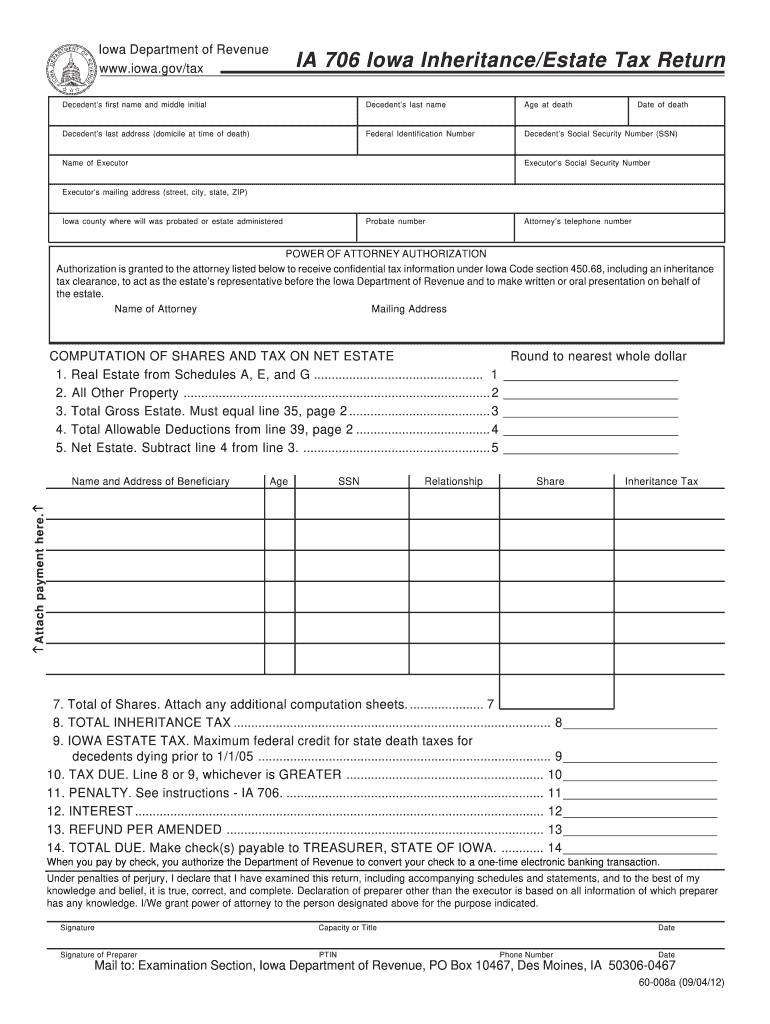
Domicile at time of death) Federal Identification Number Decedent s Social Security Number (SSN) Name of Executor Date of death Executor s Social Security Number Executor s mailing address (street, city, state, ZIP) Iowa county where will was probated or estate administered Probate number Attorney s telephone number POWER OF ATTORNEY AUTHORIZATION Authorization is granted to the attorney listed below to receive confidential tax information under Iowa Code section 450.68, includ.
Loading

Open form follow the instructions

Easily sign the form with your finger

Send filled & signed form or save
How to fill out the IA DoR 706 online
Filling out the IA DoR 706, the Iowa inheritance/estate tax return, can be a straightforward process with the right guidance. This guide provides step-by-step instructions for completing the form online, catering to users with varying levels of legal experience.
Follow the steps to successfully complete the IA DoR 706 online.
- Click 'Get Form' button to obtain the IA DoR 706 and open it in the designated editor.
- Begin by entering the decedent's first name, middle initial, last name, age at death, and last address at the time of death. Ensure accurate spelling and details to avoid processing delays.
- Provide the decedent’s Federal Identification Number and Social Security Number (SSN) accurately. This information is crucial for identifying the correct tax responsibilities.
- Enter the executor's name and Social Security Number. Include their mailing address, which should cover street, city, state, and ZIP code.
- Input the Iowa county where the will was probated, along with the probate number, if applicable. Providing these details helps in the administrative process.
- Complete the section for Power of Attorney Authorization by entering the attorney's name and mailing address. This grants them authority to represent the estate.
- Move on to the Computation of Shares and Tax section. Fill out each line according to the value of real estate, other property, total gross estate, allowable deductions, and net estate calculations.
- Attach any required payment documents as indicated. Also, calculate the total inheritance tax and other applicable fees, then ensure totals are correct.
- Select the marital status of the decedent at death, indicating whether they were married, single, or otherwise. Check any applicable fields regarding children born or adopted after the will was executed.
- Review all provided information for accuracy, including the summary of the gross estate, deductions, and any property located outside of Iowa.
- Lastly, sign the form, entering your capacity or title, as well as the date and preparer's PTIN if applicable. Save the form changes before proceeding.
- Once everything is complete, users can download, print, or share the IA DoR 706 as needed.
Complete your IA DoR 706 online today and ensure accurate and timely submission.
Experience a faster way to fill out and sign forms on the web. Access the most extensive library of templates available.
Related content
May 28, 2024 — This designation allows for the designee to receive the estate's...
by M Fernandes · 2002 · Cited by 135 — queixas de saúde e achados audiológicos de...
This MIG welding machine is factory set for welding low-carbon steel. Use a mixed gas...
Get answers to your most pressing questions about US Legal Forms API.
What amount is exempt from estate tax?
The amount exempt from estate tax under the IA DoR 706 varies depending on the annual legal adjustments set by the IRS. Generally, estates below this exemption limit will not owe federal estate taxes. It is essential to periodically review these amounts, as they can change each tax year. For a clearer understanding, consider using reliable resources to navigate this complexity.
What is the federal estate tax exemption amount for 2025?
As we look towards 2025, the federal estate tax exemption amount is subject to change based on legislation and inflation adjustments. Currently, it is advisable to stay informed about legislative updates regarding the IA DoR 706, as these can significantly affect estate planning. Consult with a tax professional to understand how these changes may impact your estate. Staying ahead of these updates can be beneficial.
Who fills out form 706?
The IA DoR 706 form is typically completed by the estate executor or administrator. If there is no official executor, a designated personal representative can take on this task. It's important that the individual filling out the form understands estate laws and tax implications. For guidance, platforms like uslegalforms can provide necessary resources and templates.
What is the threshold for filing Form 706?
The threshold for filing the IA DoR 706 is typically based on the total value of the estate. If the estate's value surpasses the exemption limit, filing is usually required. It’s crucial to assess your estate's worth accurately, so be sure to gather all relevant information before proceeding. Professional assistance can help in accurately determining your filing status.
What is the exemption amount for form 706?
The exemption amount for the IA DoR 706 form reflects the current federal estate tax exemption limits. As of 2023, the exemption limit has been set to allow a certain value of the estate to pass without incurring taxes. Keep in mind this amount can change annually with adjustments for inflation. To ensure compliance, utilizing the IA DoR 706 is recommended.
How much inheritance is exempt from federal tax?
Under the IA DoR 706 guidelines, the federal tax exemption for inheritance varies based on the estate's value. Generally, if the estate’s value falls below a certain amount, no federal inheritance tax is owed. It's crucial to check the latest limits, as they can change with new legislation. Using the IA DoR 706 form can help clarify your tax obligations.
How to avoid Iowa inheritance tax on property?
Avoiding Iowa inheritance tax on property often involves proper estate planning strategies, such as utilizing certain exemptions and deductions available under Iowa law. Gifts given prior to death or establishing trusts can also help reduce tax liability related to the IA DoR 706. It’s important to consult with a tax professional familiar with Iowa laws to optimize your strategy. UsLegalForms can provide valuable resources and documents to assist in effective estate planning.
How do I get a closing letter from the IRS form 706?
To obtain a closing letter for the IRS Form 706, you need to complete and submit the form as part of the estate tax return process. Once the IRS processes your Form 706 and determines the tax due, they will issue the closing letter. This letter formally confirms that the estate has settled its tax obligation related to the IA DoR 706. If you encounter issues, consider using UsLegalForms for guidance on the necessary documentation.
What to do if there is no executor?
If no executor is named, the court can appoint an administrator to manage the estate. This administrator then takes responsibility for filing necessary forms such as the IA DoR 706. It is a critical step to ensure that the estate is settled properly and in accordance with state law. For further assistance with estate management and documentation, platforms like uslegalforms offer tools and resources tailored to your needs.
Who signs 706 if there is no executor?
In the absence of an executor, a personal representative or an heir who handles the estate can sign form 706. This person takes on the responsibility of filing the estate tax return on behalf of the deceased. It is crucial to ensure that they have the authority to act in this capacity, as mistakes could lead to complications with the IRS. Resources like uslegalforms can provide the necessary guidance for this process.
Use professional pre-built templates to fill in and sign documents online faster. Get access to thousands of forms.
If you believe that this page should be taken down, please follow our DMCA take down process here.
This form is available in several versions. Select the version you need from the drop-down list below.