42. TAX DUE: Enter total from Tax Due Worksheet below. If you did not have any activity for the period enter 0 here . . . . . . . . . . . . . . . . . . . . . . . . . . . . . . . . 42. 43. PENALTY:. . . . . . . . . . . . . . . . . . . . . . . . . . . . . . . . . . . . . . . . . . . . . . . . . . . . . . . . . . . . . . . . . . . . . . . . . . . 43. 44. INTEREST: . . . . . . . . . . . . . . . . . . . . . . . . . . . . . . . . . . . . . . . . . . . . . . . . . . . . . . . . . . . . . . . .

How it works
  • Open form

    Open form follow the instructions

  • Easily sign form

    Easily sign the form with your finger

  • Share form

    Send filled & signed form or save

How to fill out the GU GRT-1 online

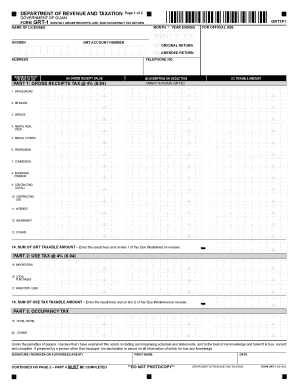
Completing the GU GRT-1 form is essential for accurately reporting your monthly gross receipts, use, and occupancy taxes. This guide will provide you with clear instructions to help you fill out the form confidently and correctly.

Follow the steps to successfully complete the GU GRT-1 form online.

  1. Press the ‘Get Form’ button to obtain the form and open it in your chosen editor.
  2. Begin by entering the name of the licensee in the designated field. This is the individual or business responsible for submitting the tax return.
  3. Select the month and year ending for the reporting period. Input the correct MM YYYY format.
  4. Provide the Employer Identification Number (EIN) or Social Security Number (SSN) corresponding to the business.
  5. Enter your GRT account number in the designated field to uniquely identify your tax record.
  6. Fill in the business address where the licensed operations occur.
  7. Indicate the primary business activity or type of tax you are reporting by selecting the appropriate option from the listed categories.
  8. Complete the Gross Receipts Tax section by entering the gross receipt value, any exemptions or deductions, and calculating the taxable amount.
  9. Proceed to fill out the Use Tax section for any applicable importation, local purchases, or inventory used.
  10. Complete the Occupancy Tax section by entering data related to hotel/motel or other occupancy activities.
  11. Review all sections for accuracy before signing. Ensure you declare the truthfulness of the information under penalties of perjury.
  12. Sign the form, print your name, and date it. If someone else prepared the return, provide their information as well.
  13. Once completed, save the changes, and you can choose to download, print, or share the form as needed.

Complete your GU GRT-1 form online today for accurate tax filing.

Get form

Experience a faster way to fill out and sign forms on the web. Access the most extensive library of templates available.

Related content

Payments

All payments listed below can be made immediately after registering. · All other payments...

Learn more
Seismic imaging with the generalized Radon...

by MV de Hoop · Cited by 82 — A large class of these imaging and inverse scattering...

Learn more
SK Návod na obsluhu 1

1. Dôle ité ...................................................1 ... * +;, "> " G-U;...

Learn more
Questions & Answers

Get answers to your most pressing questions about US Legal Forms API.

Contact support

What is the penalty for GRT in Guam?

In Guam, penalties for failing to comply with GRT regulations can include monetary fines and interest on unpaid amounts. The severity of penalties often depends on the duration of non-compliance and amount owed. Staying informed about GU GRT-1 can help you avoid these penalties. Resources available through uslegalforms can assist in maintaining compliance and guiding you through potential issues.

Several states, including New Mexico, Washington, and Nevada, implement GRT taxes. Each state has its unique structure and rates, so it's essential to investigate local regulations. If your business operates across state lines, understanding GU GRT-1 and how it varies can provide significant benefits. Consult detailed resources to navigate these complexities.

Filing GRT tax in Guam involves completing specific forms required by the Guam Department of Revenue and Taxation. Ensure you gather all relevant financial documentation, as accurate reporting is vital. You can utilize platforms like uslegalforms to access user-friendly templates and guidance for filing GU GRT-1. They simplify the process, helping you meet compliance deadlines.

GRT stands for Gross Receipts Tax. This tax applies to businesses based on their gross income rather than their net profit. It’s important to understand this difference, especially if you operate in areas where GU GRT-1 is applicable. Familiarizing yourself with GRT can help you navigate your tax responsibilities efficiently.

The GRT rate in Guam is currently set at 4%. This rate applies to most gross receipts earned by businesses operating within the territory. It's essential to stay informed about any changes to this rate to ensure that you or your business remains compliant with tax regulations related to the GU GRT-1.

GRT tax refers to the Gross Receipts Tax, a tax imposed on the total revenue generated by a business, regardless of whether that income is taxable. In the context of the GU GRT-1, it specifically applies to transactions in Guam, affecting both local businesses and visitors. Understanding GRT is crucial for compliance and budget planning.

If you are wondering about your refund status in Guam, you can check it through the Department of Revenue and Taxation's online portal. Enter your details to track the progress of your refund. Being informed about your refund status is crucial for financial planning. Remember to keep GU GRT-1 handy to help manage your taxes efficiently.

In accounting, GRT stands for Gross Receipts Tax. It represents a tax on the total revenue of a business before any deductions for costs or expenses are made. Understanding GRT is essential for business owners in Guam as it directly impacts their financial reporting and tax obligations. By utilizing GU GRT-1, businesses can ensure accurate accounting related to GRT.

The Guam Business Privilege Tax, commonly referred to as GRT, is assessed at a standard rate of 4% on gross receipts. This means that businesses must calculate and remit this tax on their total income from sales. Staying compliant with GRT regulations is crucial for any business operating in Guam, and tools such as GU GRT-1 can simplify this process.

In Guam, the statute of limitations on debt typically spans six years from the date the debt became due. This period applies to most types of debt, including contracts and promissory notes. After this time, creditors may face challenges when attempting to collect the debt. Understanding this timeline can help you manage your financial obligations effectively, especially when considering services like GU GRT-1.

Get This Form Now!

Use professional pre-built templates to fill in and sign documents online faster. Get access to thousands of forms.

If you believe that this page should be taken down, please follow our DMCA take down process here.

GU GRT-1 Form

This form is available in several versions. Select the version you need from the drop-down list below.

Get GU GRT-1