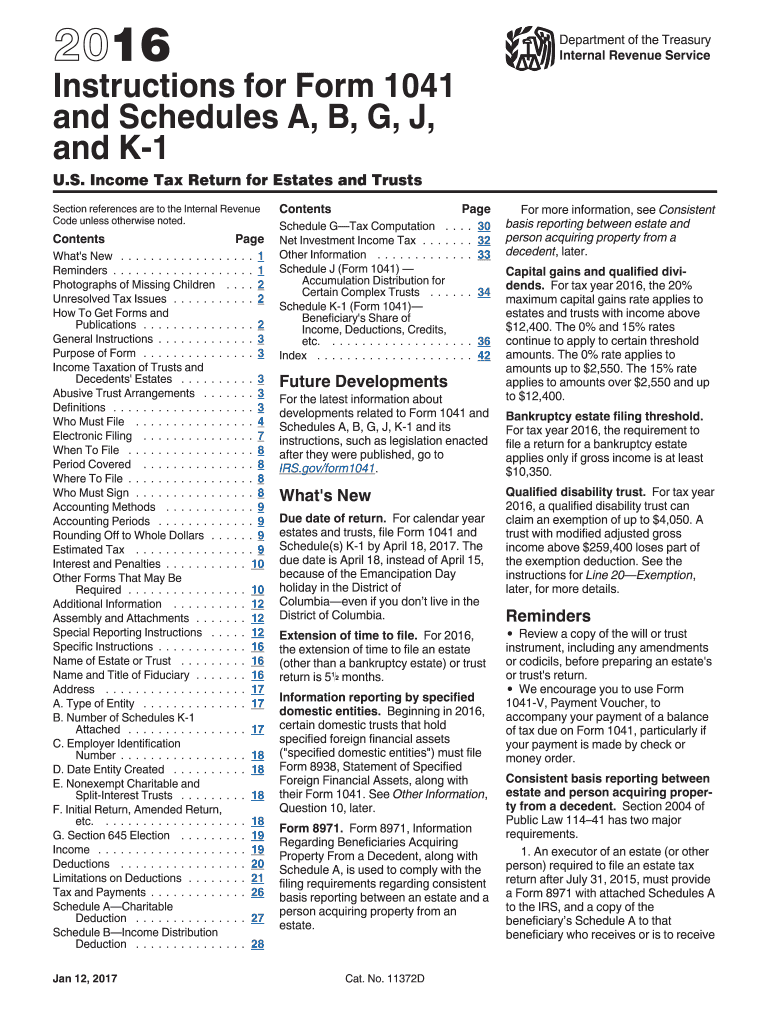
Ter they were published, go to IRS.gov/form1041. What's New Due date of return. For calendar year estates and trusts, file Form 1041 and Schedule(s) K-1 by April 18, 2017. The due date is April 18, instead of April 15, because of the Emancipation Day holiday in the District of Columbia even if you don t live in the District of Columbia. Extension of time to file. For 2016, the extension of time to file an estate (other than a bankruptcy estate) or trust return is 51 2 months. Information re.
Loading

Open form follow the instructions

Easily sign the form with your finger

Send filled & signed form or save
How to use or fill out the IRS Instruction 1041 online
Filling out the IRS Instruction 1041 online can be a straightforward process when you have clear guidance. This guide provides a step-by-step approach to help you accurately complete the form for estates and trusts.
Follow the steps to effectively complete the IRS Instruction 1041 online.
- Click ‘Get Form’ button to obtain the form and open it in the editor.
- Identify the name of the estate or trust at the top of the form. Ensure you enter the name exactly as it appears on the application for Employer Identification Number (EIN).
- Complete the fiduciary information. Enter the name and title of the fiduciary responsible for the estate or trust.
- In the address section, include the full address of the estate or trust, including suite or room numbers.
- Select the type of entity. Check the appropriate boxes to indicate the type of estate or trust you are filing for.
- Enter the Employer Identification Number (EIN) obtained for the estate or trust.
- Provide the date the entity was created, or, in the case of a decedent's estate, the date of death of the decedent.
- Fill out the income section. Report all taxable income received by the estate or trust during the tax year.
- Record all deductions for the estate or trust, including any administrative costs and distributions to beneficiaries.
- Calculate and report any tax liability, ensuring to follow the specified tax rate schedule.
- Complete the signature area, ensuring that the fiduciary or authorized representative signs and dates the form.
- Once all information is entered correctly, save changes, and consider the options to download, print or share the completed form.
Start completing your IRS Instruction 1041 online today to ensure timely and accurate filing!
Experience a faster way to fill out and sign forms on the web. Access the most extensive library of templates available.
Related content
Due date of return. Calendar year estates and trusts must file Form 1041 by April 15...
9. 9. 10. Interest. Check if Form 4952 is attached ©. 10. 11. Taxes. 11. 12. Fiduciary...
Apr 15, 2015 — Instructions for Form 1041, line 15c. When those line instructions refer...
Get answers to your most pressing questions about US Legal Forms API.
How to fill out a 1041 estate tax return?
Filling out Form 1041 for an estate tax return involves accurately reporting all income, deductions, and distributions per IRS Instruction 1041. You begin by providing basic information about the estate. Follow the form's sections methodically, ensuring all figures are correct and justified. Utilizing platforms like uslegalforms can simplify this process by offering templates and guidance tailored for your needs.
What is deductible on a 1041 for an estate?
Deductions on Form 1041 for an estate can include administrative expenses, attorney fees, and certain distributions to beneficiaries, as guided by IRS Instruction 1041. These deductions can significantly reduce the taxable income of the estate. It's crucial to document all expenses carefully to ensure they meet IRS criteria. Leveraging professional guidance can help maximize your deductions accurately.
How much is the exemption for an estate on a 1041?
The exemption amount for an estate on a Form 1041 can vary based on current tax regulations as mentioned in IRS Instruction 1041. Generally, there are specific amounts that apply depending on the year and type of income. Tax laws are subject to change, so it's essential to stay informed by checking the IRS website or consulting with a tax advisor. Ensure you claim the correct exemption to minimize tax liability.
Can I file IRS Form 1041 electronically?
Yes, you can file IRS Form 1041 electronically, as indicated in IRS Instruction 1041. Using e-filing offers a convenient way to submit your tax forms. Many online tax services, including platforms like uslegalforms, provide solutions for filing Form 1041 with ease. E-filing also speeds up processing times, allowing for quicker refunds.
Do I have to file a 1041 for an estate with no income?
Even if an estate has no income, you may still need to file Form 1041 following IRS Instruction 1041. Certain circumstances require a filing, such as being a fiscal year entity or having gross income exceeding specific thresholds. It's always best to consult with a tax professional to ensure compliance. They can clarify requirements specific to your situation.
What is the IRS form 1041 for dummies?
IRS Form 1041 is essentially a tax return for estates and trusts, as outlined in IRS Instruction 1041. It reports income, deductions, and distributions from the estate or trust. Understanding this form is crucial for complying with tax laws. Various resources are available to simplify the process, including guides specifically designed for beginners.
How do I close a trust with the IRS?
To close a trust with the IRS, you must file a final Form 1041 under IRS Instruction 1041. This form details the trust's income and distributions. After settling all taxes and obligations, you can distribute any remaining assets. Make sure to keep a copy of your filing for your records.
Do I need to file a 1041 with no income?
Filing IRS form 1041 is not necessary if the estate does not generate any income. However, specific situations may still require attention, so reviewing IRS Instruction 1041 is crucial for determining your next steps. When in doubt, seeking advice can help you make informed decisions.
Who must file a form 1041 for an estate?
An executor or administrator responsible for an estate that generates income must file IRS form 1041. If the estate earns more than the established threshold, the fiduciary must report this income to the IRS. Relying on IRS Instruction 1041 can guide you through this filing process.
What is the threshold for estate 1041?
The threshold for filing IRS form 1041 depends on the gross income of the estate or trust. Specifically, if the gross income is $600 or more, the fiduciary is generally required to file this return. This is an essential aspect of IRS Instruction 1041, helping ensure compliance with tax laws.
Use professional pre-built templates to fill in and sign documents online faster. Get access to thousands of forms.
If you believe that this page should be taken down, please follow our DMCA take down process here.
This form is available in several versions. Select the version you need from the drop-down list below.