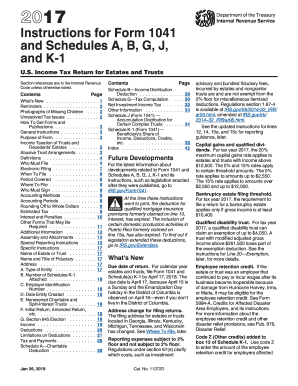
/Form1041. At the time these instructions went to print, the deduction for CAUTION qualified mortgage insurance premiums formerly claimed on line 10, Interest, has expired. The inclusion of certain domestic production activities in Puerto Rico formerly claimed on line 15a, has also expired. To find out if legislation extended these deductions, go to IRS.gov/Extenders. ! What's New Due date of return. For calendar year estates and trusts, file Form 1041 and Schedule(s) K-1 by April 17, 2018. Th.
Open form follow the instructions
Easily sign the form with your finger
Send filled & signed form or save
How to fill out the IRS Instruction 1041 online
Filling out the IRS Instruction 1041 online can seem daunting. This guide provides step-by-step instructions to help you complete the form correctly and efficiently.
Follow the steps to complete the IRS Instruction 1041 online.
- Click the ‘Get Form’ button to access the IRS Instruction 1041 and open it for editing.
- Begin by entering the name of the estate or trust in the designated field. Ensure accuracy to avoid processing delays.
- Provide the name and title of the fiduciary responsible for the estate or trust. This should be done in the specified section.
- Fill in the address of the estate or trust, including any suite or room number, to ensure proper delivery of any correspondences.
- Select the type of entity by checking the appropriate box or boxes that correspond to the entity structure of the trust or estate.
- Report the Employer Identification Number (EIN) for the estate or trust. If you do not yet have an EIN, write 'Applied for' along with the date of your application.
- Indicate the date the trust was created, or for an estate, the date of the decedent’s death, as this information is critical for official records.
- For each type of income and deduction applicable to the estate or trust, enter the figures in the respective sections on the form. This includes taxable income, exemptions, and deductions.
- Complete Schedule B if the estate or trust is required to distribute income, as this will help determine the income distribution deduction.
- After all fields have been accurately filled out, review the document for any errors before saving your changes.
- Select the options to download, print, or share the completed IRS Instruction 1041 form as necessary.
Start filling out the IRS Instruction 1041 online today to ensure compliance with federal tax regulations.
Experience a faster way to fill out and sign forms on the web. Access the most extensive library of templates available.
Related content
Due date of return. Calendar year estates and trusts must file Form 1041 by April 15...
9. 9. 10. Interest. Check if Form 4952 is attached ©. 10. 11. Taxes. 11. 12. Fiduciary...
Apr 15, 2015 — Instructions for Form 1041, line 15c. When those line instructions refer...
Get answers to your most pressing questions about US Legal Forms API.
How to calculate tax due on form 1041?
Calculating tax due on form 1041 involves determining the taxable income of the estate or trust and applying the appropriate tax rates. IRS Instruction 1041 provides guidelines on how to correctly calculate all relevant figures, ensuring you meet your obligations. For assistance, you may want to explore our user-friendly templates at uslegalforms.
Should I file a 1041 if I have no income?
It is generally unnecessary to file form 1041 if there is no income, but you should check IRS Instruction 1041 for any exceptions. Certain conditions may require a filing even without generated income, so being informed is key. Utilizing resources like uslegalforms can provide clarity on your specific situation.
How to fill out schedule D form 1041?
Filling out Schedule D on form 1041 involves reporting capital gains and losses from the estate or trust. You will need to summarize transactions and apply the rules outlined in IRS Instruction 1041. Using our platform, uslegalforms, can streamline this process by guiding you through each step and providing helpful templates.
Do you have to file a final 1041 if there is no income?
If there is no income generated by the estate or trust, you may not be required to file a final form 1041. However, it's crucial to review IRS Instruction 1041 and consult a tax professional, as certain situations could necessitate filing, even if income is absent. Knowing the requirements can help you avoid potential issues.
How much is the exemption for an estate on a 1041?
The exemption amount for an estate on form 1041 varies based on the tax year, but the IRS typically provides a basic exemption amount that can be claimed. It's important to consult the current IRS Instruction 1041, as it will offer the most up-to-date information regarding exemptions and eligibility. This can help ensure you maximize benefits on your return.
How to fill out form 1041?
To fill out form 1041, begin by gathering all necessary financial information, including income generated by the estate or trust and deductible expenses. Carefully follow IRS Instruction 1041, filling in each section accurately to ensure compliance with tax regulations. Consider using our platform, uslegalforms, to access user-friendly templates and guidance.
What is tax form 1041 for dummies?
Tax form 1041 is the U.S. Income Tax Return for Estates and Trusts. It is used to report income, deductions, and taxes owed for estates or trusts that generated income during the tax year. Understanding IRS Instruction 1041 can help simplify the process of filing this important form.
What is the IRS Rule 1041?
IRS Rule 1041 encompasses the regulations governing the filing of tax returns for estates and trusts. It outlines what income must be reported, when to file, and the responsibilities of the fiduciary in managing these filings. Staying informed on IRS Instruction 1041 ensures that you meet all legal requirements confidently.
Who must file an IRS form 1041?
The obligation to file IRS Instruction 1041 falls on the fiduciary or executor of the estate managing its financial affairs. This includes ensuring that any income generated is reported to the IRS. Understanding your responsibilities can protect you and the estate from potential issues.
Do I need to file a 1041 with no income?
If the estate has no income, usually, you do not need to file IRS Instruction 1041. That said, there may be other considerations, such as the value of the estate and potential tax implications of its assets. Consulting with a tax expert can help clarify your responsibilities.
Use professional pre-built templates to fill in and sign documents online faster. Get access to thousands of forms.
If you believe that this page should be taken down, please follow our DMCA take down process here.
This form is available in several versions. Select the version you need from the drop-down list below.