Get Irs 8332 2010
How it works
-

Open form follow the instructions
-

Easily sign the form with your finger
-

Send filled & signed form or save
How to fill out the IRS 8332 online
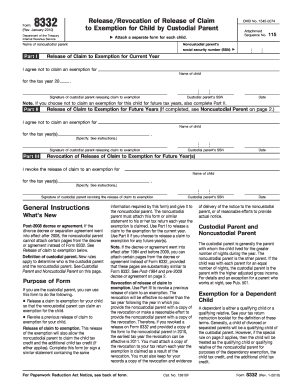
Filling out the IRS 8332 form is essential for custodial parents who wish to release their claim to a child's tax exemption. This guide provides clear, step-by-step instructions for completing the form online, ensuring a smooth experience for users with varying levels of tax knowledge.
Follow the steps to successfully complete the IRS 8332 form online.
- Use the ‘Get Form’ button to obtain the IRS 8332 form and open it in your editor.
- Begin with Part I of the form. Here, enter the name of the noncustodial parent, followed by their social security number (SSN). This section requires you to acknowledge that you are agreeing not to claim an exemption for your child for the specified tax year.
- Complete the name of the child for whom you are releasing the claim and indicate the tax year by filling in the year in the appropriate field.
- Provide your signature as the custodial parent, along with your SSN and the date. This confirms your agreement to release the exemption claim for that child.
- If you prefer to release the claim for one or more future tax years, move on to Part II. Specify the future year(s) or choose 'all future years' in the designated space.
- If you need to revoke a previous release of an exemption, proceed to Part III. Enter the name of the child and specify the tax year(s) for which you are revoking the claim.
- Sign and date Part III as the custodial parent, making sure to keep a copy for your records.
- Once all parts are completed, save your changes, and you can opt to download, print, or securely share the form as needed.
Get started now and complete your IRS 8332 form online for a hassle-free tax filing experience.
Get form
The IRS determines who the custodial parent is based on the living arrangement of the child for the majority of the year. The custodial parent's status often influences the tax deductions related to children. Form 8332 can further clarify any claims regarding exemptions, as it outlines agreements between parents. By accurately completing this form, both parents can avoid conflicts with the IRS concerning the custody determination.