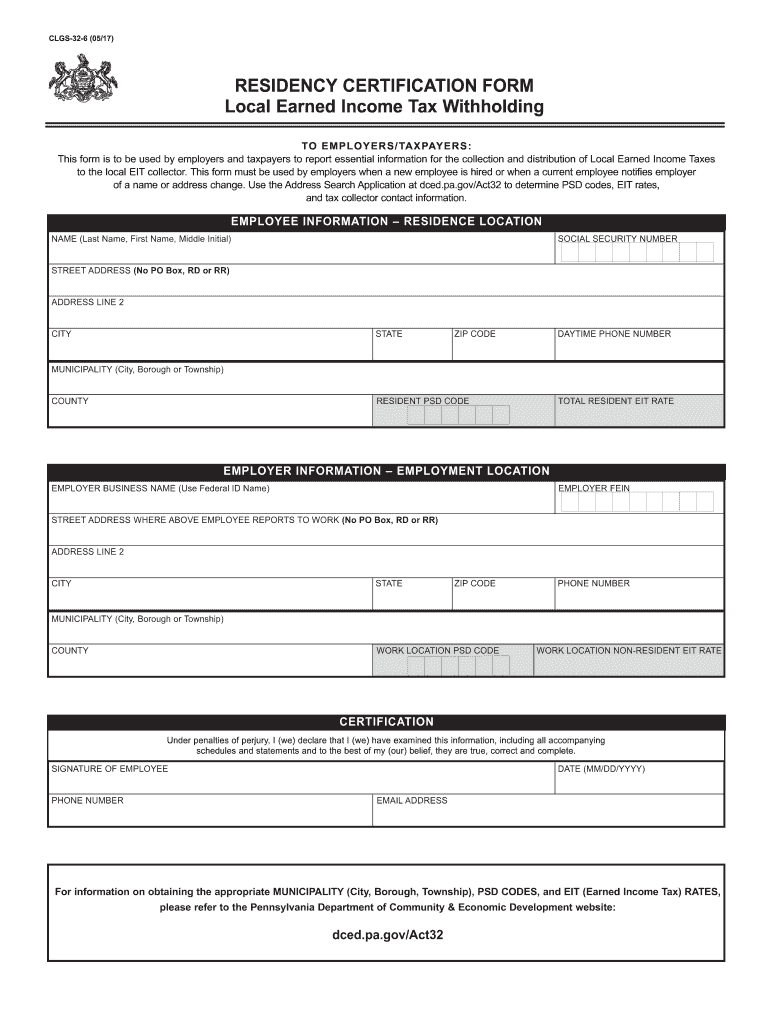
CLGS-32-6 6-13 RESIDENCY CERTIFICATION FORM Local Earned Income Tax Withholding TO E M P L O Y E R S / TA X PAY E R S This form is to be used by employers and/or taxpayers to report essential information for the collection and distribution of Local Earned Income Taxes to the local EIT collector. This form must be utilized by employers when a new employee is hired or when a current employee notifies employer of a name and/or address change. Use the Address Search Application at www. newPA. com/Ac.
Loading

Open form follow the instructions

Easily sign the form with your finger

Send filled & signed form or save
How to fill out the PA DCED CLGS-32-6 online
The PA DCED CLGS-32-6 form is a residency certification form used by employers and taxpayers for reporting crucial information related to Local Earned Income Taxes. This guide provides comprehensive, step-by-step instructions to help you fill out this form accurately and effectively.
Follow the steps to complete the PA DCED CLGS-32-6 form online.
- Click ‘Get Form’ button to access the form and open it in your editor.
- Begin with the Employee Information section. Fill in the employee's name using the format: Last Name, First Name, Middle Initial. Ensure that you also provide the Social Security Number, street address (avoid using PO Box, RD, or RR), city, state, and zip code.
- Continue by entering the daytime phone number, municipality (City, Borough, or Township), county, resident PSD code, and the total resident EIT rate. This information is essential for tax collection purposes.
- Move to the Employer Information section. Provide the employer's business name as registered with the Federal ID. Include the Employer FEIN, the street address where the employee reports to work (again, avoid PO Box, RD, or RR), along with city, state, and zip code.
- Next, fill in the employer's phone number, municipality (City, Borough, or Township), county, work location PSD code, and the non-resident EIT rate applicable for the work location.
- In the Certification section, the responsible person must declare that the information is true and complete. They should provide their signature, phone number, the date in MM/DD/YYYY format, and a valid email address for any further communication.
- After completing the form, review all entries for accuracy. Save any changes, and you will have the option to download, print, or share the completed form as needed.
Start filling out the PA DCED CLGS-32-6 form online to ensure compliance with local earned income tax regulations.
Experience a faster way to fill out and sign forms on the web. Access the most extensive library of templates available.
Related content
please refer to the Pennsylvania Department of Community & Economic Development website:...
please refer to the Pennsylvania Department of Community & Economic Development website:...
Get answers to your most pressing questions about US Legal Forms API.
Do I have to file a local tax return?
Whether you need to file a local tax return in Pennsylvania depends on your income level and the jurisdiction in which you work or reside. In many cases, if you earn income that is subject to local taxes, you must file a return. To ensure compliance with local laws, reviewing your specific situation and consulting resources like the PA DCED CLGS-32-6 form is advisable. This form can help clarify your filing requirements based on your circumstances.
What is PA local earned income tax?
The PA local earned income tax is a tax levied by local municipalities on salaries, wages, and compensation earned by residents and workers within those jurisdictions. This tax supports local services, such as schools and infrastructure. Knowing how this tax affects you is essential for accurate financial planning. Consult the PA DCED CLGS-32-6 form for comprehensive information about rates and regulations concerning the local earned income tax.
What is exempt from the local earned income tax?
Certain income is exempt from the local earned income tax in Pennsylvania, including income from pensions, Social Security, and some unemployment compensation. It's vital to review the guidelines closely to determine what qualifies for exemptions. Keeping abreast of these details can help reduce your tax liability. You can find more detailed information in the PA DCED CLGS-32-6, which outlines specific exemptions clearly.
What income is subject to PA income tax?
Pennsylvania income tax applies to various forms of income, including wages, salaries, business income, and interest. Unlike some other states, Pennsylvania does not impose tax on Social Security benefits or certain retirement income. Understanding what qualifies as taxable income is crucial for accurate filing. The PA DCED CLGS-32-6 form provides resources to ensure you report your income correctly.
What if I accidentally forgot to file my taxes?
If you accidentally forgot to file your taxes, you should initiate your filing as soon as you remember. Pennsylvania allows for late filings, but you may incur penalties and interest on any taxes owed. Submitting your return promptly can help mitigate these additional charges. The PA DCED CLGS-32-6 form can assist you in the filing process and help clarify any tax-related concerns.
What form do I file for PA non-resident?
Non-residents required to file taxes in Pennsylvania should use Form PA-40, along with any necessary schedules. This form helps you report income earned in Pennsylvania while excluding income from outside the state. It's important to provide accurate and complete information to ensure proper processing. Further guidance can be found in the PA DCED CLGS-32-6, which outlines the filing requirements for non-residents.
Where do I file a PA extension?
To file for an extension in Pennsylvania, submit Form REV-427 along with the required payment to the appropriate local tax office. Make sure you check the specifics for your municipality, as filing locations may vary. An extension allows you extra time to prepare your tax return without incurring penalties, as long as it meets the local guidelines. Consider referencing the PA DCED CLGS-32-6 for assistance with the extension process.
What happens if I forgot to file local taxes in PA?
If you forget to file local taxes in Pennsylvania, you may face penalties and interest on any unpaid taxes. The state allows for late filings, but it is crucial to address the oversight promptly. You can often resolve this by submitting your tax return as quickly as possible to minimize additional charges. The PA DCED CLGS-32-6 form can guide you through the process of correcting your filing status.
What income is taxable for PA local earned income tax?
In Pennsylvania, local earned income tax applies to wages, salaries, commissions, and other forms of compensation. This tax concerns individuals who work in the state, regardless of their residency status. It's vital to differentiate between taxable and non-taxable income, as this can affect your overall tax liability. Utilizing resources like the PA DCED CLGS-32-6 form can provide clarity on what constitutes taxable income in your specific case.
What is the deadline for filing local taxes in PA?
The deadline for filing local taxes in Pennsylvania is typically April 15 each year. If this date falls on a weekend or a holiday, the deadline extends to the next business day. It's essential to stay informed about these dates to avoid penalties. For those needing more guidance, the PA DCED CLGS-32-6 form serves as a helpful resource in understanding local tax deadlines.
Use professional pre-built templates to fill in and sign documents online faster. Get access to thousands of forms.
If you believe that this page should be taken down, please follow our DMCA take down process here.