. . . . . . . . . . . . . 29 2018 Net 965 Tax Liability Paid from Form 965-B, Part II, column (k), line 2 . . . . . . . 30a 2017 overpayment credited to 2018 30a b 2018 estimated tax payments . 30b ) d Bal 30d c 2018 refund applied for on Form 4466 30c ( e Tax deposited with Form 7004 . . . . . . . . . . . . 30e f Credits: (1) Form 2439 (2) Form 4136 30f g Refundable credits from Form 8827, line 8c . . . . . . . . 30g h Section 1383 adjustment (see instructions) . . . . . . . . 30h i 2018.
Open form follow the instructions
Easily sign the form with your finger
Send filled & signed form or save
How to fill out the IRS 1120-C online
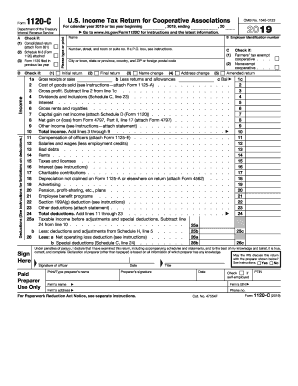
This guide provides a clear and structured approach to completing the IRS 1120-C form for cooperative associations. By following these steps, users can ensure that their online filing is accurate and complete.
Follow the steps to effectively fill out the IRS 1120-C form.
- Click ‘Get Form’ button to obtain the form and open it in the editor.
- Fill in the basic information fields including the name of the cooperative, employer identification number, and address. Ensure all details are accurate to avoid processing delays.
- Indicate if the return is initial, final, or if there has been a name or address change by checking the appropriate boxes.
- Complete the income section by reporting gross receipts or sales, cost of goods sold, and various sources of income including dividends and interest. Ensure figures are totaled correctly.
- Fill out the deductions section accurately, listing expenses such as salaries, taxes, and other costs associated with running the cooperative. Follow the instructions for any limitations on deductions.
- Calculate taxable income by subtracting total deductions from total income. Proceed to check if there are any net operating loss deductions or special deductions applicable.
- Complete any required schedules, including Schedule C for dividends and inclusions, Schedule G for income allocation, and ensure computations shown on Schedule J for tax computations are accurate.
- Finish by reviewing the entire form for accuracy. Add the signature of the authorized officer, date it, and check if the IRS can discuss the return with the preparer.
- Once all fields are filled, save changes, download a copy for your records, and print the completed form if necessary.
Complete your IRS 1120-C form online for a streamlined filing experience.
Experience a faster way to fill out and sign forms on the web. Access the most extensive library of templates available.
Related content
Dec 3, 2024 — Corporations operating on a cooperative basis file this form to report...
Enter the letters "C," or. "C or M," immediately before the amount column on lines (a) and...
Any corporation that overpaid its estimated tax for the tax year may apply for a quick...
Get answers to your most pressing questions about US Legal Forms API.
Can I file 1120 myself?
Yes, you can file IRS 1120-C yourself if you have a good understanding of your corporation's finances. However, the form can be complex, and mistakes could be costly. Many prefer to use accounting software or hire professionals. If you feel uncertain, uslegalforms provides valuable templates and guidance to facilitate self-filing.
What happens if I don't file form 1120?
Failing to file IRS 1120-C can lead to significant penalties, including fines and interest on unpaid taxes. Additionally, your corporation could face increased scrutiny from the IRS, leading to audits. To avoid these issues, it's essential to file on time and accurately. If you need assistance, uslegalforms offers the resources necessary to ensure timely filing.
What is IRS form 1120 used for?
IRS form 1120 is utilized by regular C corporations to report their income, calculate tax liability, and disclose various financial details. Filing this form ensures your corporation complies with federal tax regulations. It acts as an annual check-in with the IRS regarding your financial situation. Resources available on uslegalforms can aid in understanding its intricacies.
What is the IRS form 1120 C?
The IRS form 1120-C is specifically designed for C corporations to report their financial performance to the IRS. This form includes sections for income, deductions, and calculations of tax owed. It is essential for maintaining compliance with corporate tax laws. To make this task easier, consider using uslegalforms, which offers templates and helpful advice.
What is form 1120 C used for?
Form IRS 1120-C is used by C corporations to report income, gains, losses, deductions, and credits. This form needs to be filed annually to calculate corporate tax liability. Additionally, it helps comply with federal tax regulations. For detailed guidance, uslegalforms provides tools that simplify understanding and completing the form.
How do I file my final tax return for C Corp?
To file your final tax return for a C Corporation using IRS 1120-C, indicate that this is your final return on the form. Complete all relevant sections, including the income and deductions. Ensure that you report any distributions to shareholders accurately. Utilizing resources from uslegalforms can help streamline this process and ensure accuracy.
How to fill out an 1120 tax form?
To fill out the IRS 1120-C tax form, start with basic information about your C corporation, including name and address. Next, input financial details such as income, deductions, and credits. Use clear worksheets available online to guide you through each section. If needed, uslegalforms can provide templates and easy-to-follow instructions to simplify the process.
What is the difference between 1120 H and 1120 C?
IRS 1120-H is designed for homeowners associations, while 1120-C is for certain cooperatives. The 1120-H focuses on the unique tax concerns of homeowners associations, allowing them to declare income and deductions in a specific manner. This distinction is important for compliance, as using the correct form ensures accurate reporting and tax benefits.
What is the difference between 1120C and 1120S?
The main difference between IRS 1120-C and 1120-S lies in their taxation structures. While 1120-C is for C corporations subject to corporate tax, 1120-S is for S corporations that allow income to pass through to shareholders to avoid double taxation. Understanding these distinctions helps you choose the best tax structure for your business.
Who should file a schedule C?
Schedule C is for sole proprietors who report income or loss from a business they operated or a profession they practiced. If you run a business and are responsible for reporting its profits or losses, you should file Schedule C alongside your IRS 1120-C if applicable. This form helps track your business's financial performance and tax obligations.
Use professional pre-built templates to fill in and sign documents online faster. Get access to thousands of forms.
If you believe that this page should be taken down, please follow our DMCA take down process here.
This form is available in several versions. Select the version you need from the drop-down list below.