Reporting federal audit changes to an estate tax return for an estate of a decedent with a date of death after May 25, 1990, have been changed. The new procedures take effect upon the issuance of this notice. Accordingly, the following forms which were previously used to report federal audit changes have been discontinued: Form ET-115, New York State Estate Tax Report of Federal Audit Changes (For the estate of a decedent who died after May 25, 1990, but before February 1, 2000), and Fo.
Open form follow the instructions
Easily sign the form with your finger
Send filled & signed form or save
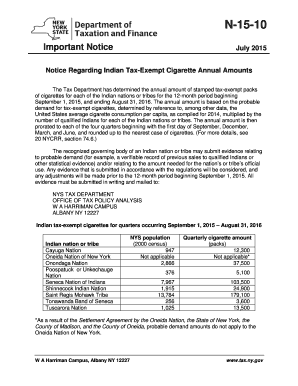
How to fill out the NY DTF N-14-10 online
This guide provides a comprehensive overview of how to fill out the NY DTF N-14-10 form online. Whether you are familiar with tax forms or handling them for the first time, this step-by-step guide will help you navigate the process efficiently and effectively.
Follow the steps to complete the NY DTF N-14-10 online
- Press the ‘Get Form’ button to access and open the NY DTF N-14-10 form in the appropriate online editor.
- Review the form carefully before filling it out to familiarize yourself with the required information and format.
- Begin with Section 1, where you will need to provide your name and contact information. Ensure all details are accurate and up to date.
- Move to Section 2 to enter pertinent identification details. This may include your Social Security number or employer identification number, as required.
- In Section 3, provide any financial information requested. Be precise in your entries to avoid delays in processing.
- Proceed to Section 4 to review any additional information or declarations you need to submit. This may include acknowledgments or signatures.
- After completing all fields, double-check your entries for accuracy. This is crucial to avoid any errors which could delay your submission.
- Finally, you can save your changes, download the completed form, print it for your records, or share it as needed.
Start completing your NY DTF N-14-10 online now!
Experience a faster way to fill out and sign forms on the web. Access the most extensive library of templates available.
Related content
Jul 30, 2025 — Current year forms by form number, current year forms by tax type, past...
The law authorizes the commissioner to allocate the State low-income housing tax credit...
R140 can measure return loss up to. 35 dB from 85 MHz to 4.8 GHz and 25 dB from 4.8 GHz...
Get answers to your most pressing questions about US Legal Forms API.
Who is required to file NYC 3L?
The NYC 3L form must be filed by partnerships engaging in any business activity that generates income in New York City. If your partnership has a primary place of business in NYC or derives income from NYC sources, this form is essential. Accurate filing ensures compliance with local tax regulations and prevents potential tax liabilities. Consulting the NY DTF N-14-10 will provide clarity on your obligations.
What is the 15 percent small business modification in NY?
The 15 percent small business modification in New York allows qualifying businesses to reduce their income tax liability. This modification benefits businesses that actively engage in qualified activities or meet certain income thresholds. It is designed to promote business growth within the state and support small enterprises. The NY DTF N-14-10 will guide you through the criteria and process to claim this modification.
Who must file NY CT 3?
The NY CT 3 form is required for corporations that conduct business in New York State, including those that generate income in the state. Additionally, tax-exempt organizations and certain partnerships are required to file as well. Meeting the filing requirements ensures compliance and helps avoid penalties. The NY DTF N-14-10 offers detailed instructions for your filing procedure.
Who files NYC 3L?
The NYC 3L form is filed by partnerships that have income taxable under the NYC Unincorporated Business Tax (UBT). This form is crucial for reporting revenue, expenses, and other relevant tax details. If your partnership operates within NYC and meets the necessary criteria, you will need to submit this form. The NY DTF N-14-10 can assist with the specific requirements for filing correctly.
How do I file an extension in NY?
In New York, you can file for an extension by submitting Form IT-370, which grants you extra time to file your state income tax return. This form needs to be filed electronically or postmarked by the original due date of your return. However, remember that an extension only extends the filing deadline, not the payment deadline. Using the NY DTF N-14-10 helps ensure you are aware of any related tax obligations.
Who must file a NYC partnership return?
A NYC partnership return must be filed by any partnership with income, gain, loss, or deduction derived from NYC sources. This includes general partnerships and limited partnerships that do business in the city. Additionally, if the partnership is subject to the NYC Unincorporated Business Tax (UBT), it must file. Using the NY DTF N-14-10 can help streamline this process.
What is the form for estate tax return in NY?
In New York, the form required for filing an estate tax return is Form ET-706. This form provides a comprehensive overview of the decedent's estate assets and is crucial for determining estate tax liabilities. If you need assistance with the NY estate tax process, referring to the NY DTF N-14-10 ensures you have the latest information and guidelines.
What are New York additions?
New York additions are types of income that taxpayers must add back to their federal adjusted gross income when completing their New York state tax return. This can include items like certain deductions or tax-exempt income. Knowing how to account for these additions through resources like the NY DTF N-14-10 can simplify the filing process.
What is NY DI Box 14?
NY DI Box 14 refers to the section on New York State tax forms where specific information, like disability income, is reported. This section helps clarify income details that may impact your tax obligations. Utilizing the NY DTF N-14-10 can assist you in accurately reporting in Box 14 to avoid any issues with your tax filings.
What is the New York 184 day rule?
The New York 184 day rule determines a taxpayer's residency status based on the number of days spent in the state. If you reside in New York for more than 184 days within the tax year, you are considered a resident for tax purposes. Make sure to review how the NY DTF N-14-10 relates to your residency and filing requirements.
Use professional pre-built templates to fill in and sign documents online faster. Get access to thousands of forms.
If you believe that this page should be taken down, please follow our DMCA take down process here.
This form is available in several versions. Select the version you need from the drop-down list below.