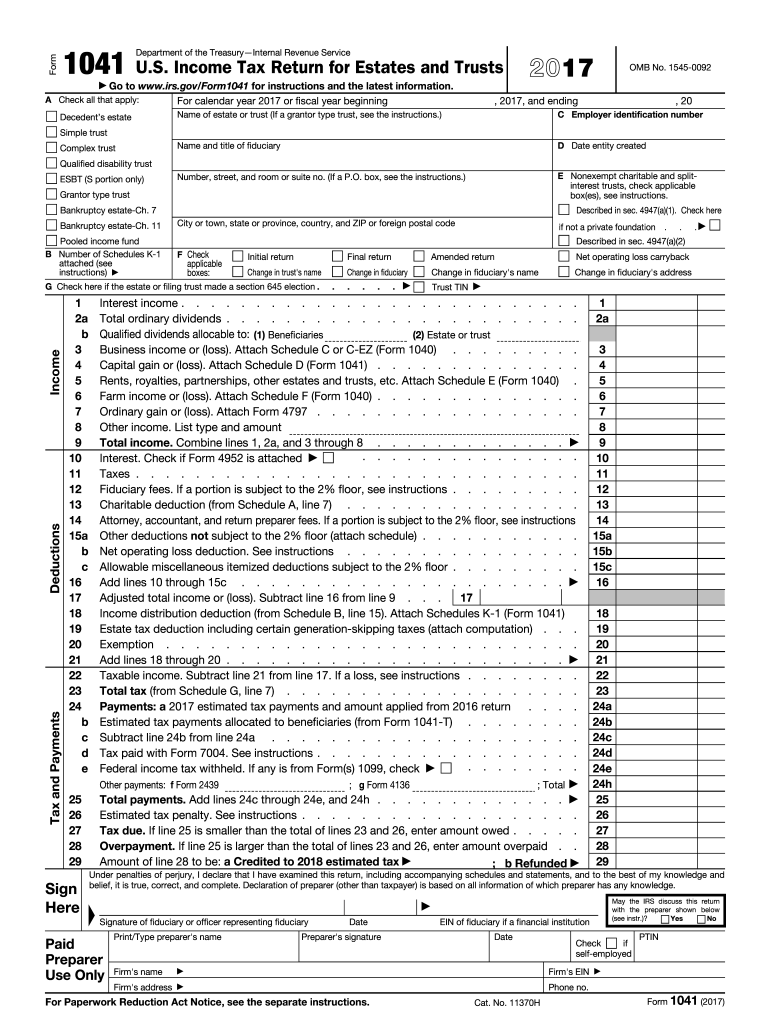
To the 2% floor, see instructions . . . . . . . . . Charitable deduction (from Schedule A, line 7) . . . . . . . . . . . . . . . . Attorney, accountant, and return preparer fees. If a portion is subject to the 2% floor, see instructions Other deductions not subject to the 2% floor (attach schedule) . . . . . . . . . . . Net operating loss deduction. See instructions . . . . . . . . . . . . . . . . Allowable miscellaneous itemized deductions subject to the 2% floor . . . . . . . . . Add lines 10.

Open form follow the instructions

Easily sign the form with your finger

Send filled & signed form or save
How to fill out the IRS 1041 online
The IRS 1041 is the U.S. income tax return for estates and trusts. Completing this form online can simplify the process and help ensure accuracy. This guide provides detailed, step-by-step instructions to assist you in filling out the IRS 1041 accurately.
Follow the steps to complete the IRS 1041 online.
- Click ‘Get Form’ button to obtain the form and open it in the editor.
- Begin with Section A, where you need to indicate whether you are filing for a decedent's estate. Enter the name of the estate or trust, employer identification number, and other required details.
- In fields C through E, provide the name and title of the fiduciary, the date the entity was created, and address details including city, state, and ZIP code. Check any applicable boxes for the type of trust.
- For Section B, list the number of Schedules K-1 attached. Here, check any additional boxes that apply.
- Proceed to Section Income, where you will fill in the sources of income such as interest, dividends, and business income. Ensure you attach relevant schedules as instructed for each income source.
- In the Deductions section, provide information on deductions for taxes, fiduciary fees, and charitable contributions. Calculate the total and enter it in the appropriate fields.
- Next, take note of the Tax and Payments section. Here, enter the tax due, payments made, and any amounts overpaid. Verify the calculations for accuracy.
- Sign the form in the designated area, confirming that the information is complete and correct. If applicable, include preparer details if someone other than the taxpayer completed the form.
- Review your entries for accuracy before finalizing. Once confirmed, you can save changes, download a copy, print, or share the completed form as needed.
Get started on your IRS 1041 form today and file online for a smoother process.
Experience a faster way to fill out and sign forms on the web. Access the most extensive library of templates available.
Related content
Feb 19, 2025 — Use Schedule D (Form 1041) to report gains and losses from the sale or...
26 U.S. Code § 1041 - Transfers of property between spouses or incident to divorce ; (a)...
Jan 4, 2017 — Otherwise, include the amount from line 7 in the total on Form 1040, line...
Get answers to your most pressing questions about US Legal Forms API.
Can I file an estate tax return electronically?
Filing an estate tax return can be done electronically, depending on the form you're using. The IRS provides options for various types of returns, but it's crucial to confirm eligibility first. If you find the process daunting, consider using a service like US Legal Forms to guide and support you through the electronic filing. This can make your experience smoother.
Can I file the IRS form 1041 electronically?
Absolutely, you can file the IRS form 1041 electronically. Many software solutions provide the capabilities needed for e-filing this form. This option is often more efficient, allowing you to receive confirmation of your submission. Utilizing platforms like US Legal Forms can help you navigate this process easily.
What IRS forms cannot be filed electronically?
Several IRS forms currently cannot be filed electronically, including certain amendments and paper forms. Specific forms are designated for manual filing due to their complexity. It's essential to check the latest IRS guidelines for the most accurate information, or consider using platforms that provide filing assistance.
What is the IRS form 1041 for dummies?
The IRS form 1041 represents the income tax return for estates and trusts. It is used to report income, deductions, gains, and losses for a trust or estate. If you're new to this, it’s helpful to seek guidance or use tools designed to assist with tax filing, like US Legal Forms. Understanding the basics can ease your filing experience.
Can an IL 1041 be filed electronically?
Yes, the IL 1041 can also be filed electronically in some cases. Similar to the IRS form, e-filing can streamline the process. It may vary by state regulations, so it’s wise to confirm with your state’s tax authority. Using the right platforms can simplify this process for you.
Who must file the IRS form 1041?
The IRS form 1041 must be filed by fiduciaries of estates and certain trusts that generate gross income of $600 or more. If the beneficiary is a non-resident alien, the form must also be filed. Always check the income details for the estate or trust to determine if filing is necessary.
Do I have to file a 1041 for an estate with no income?
You typically do not need to file an IRS 1041 for an estate with no income. However, if you are unsure, it is always good to consult with a tax professional. They can help clarify your specific situation. Remember, the IRS has specific guidelines regarding income thresholds for filing.
Can an IRS form 1041 be filed electronically?
Yes, you can file the IRS form 1041 electronically. Many tax software programs provide options for e-filing this form. E-filing can be more convenient and faster than mailing a paper form. By using the right platform, you can enjoy a smoother filing experience.
Can I file IRS Form 1041 electronically?
Yes, you can file IRS Form 1041 electronically, provided your situation qualifies under IRS e-filing regulations. My recommendation is to check the IRS website for the specific requirements related to electronic filing. Many taxpayers find using services like uslegalforms beneficial in navigating the electronic filing process. Being proactive about your filing can save you time and stress.
Can I use TurboTax to file form 1041?
You can use TurboTax to file IRS Form 1041, but you need the specific edition that supports estate and trust returns. TurboTax provides tools to guide you through the process of completing Form 1041 effectively. If you encounter challenges, consider reaching out to uslegalforms for tailored support. This option can enhance your overall filing experience.
Use professional pre-built templates to fill in and sign documents online faster. Get access to thousands of forms.
If you believe that this page should be taken down, please follow our DMCA take down process here.
This form is available in several versions. Select the version you need from the drop-down list below.