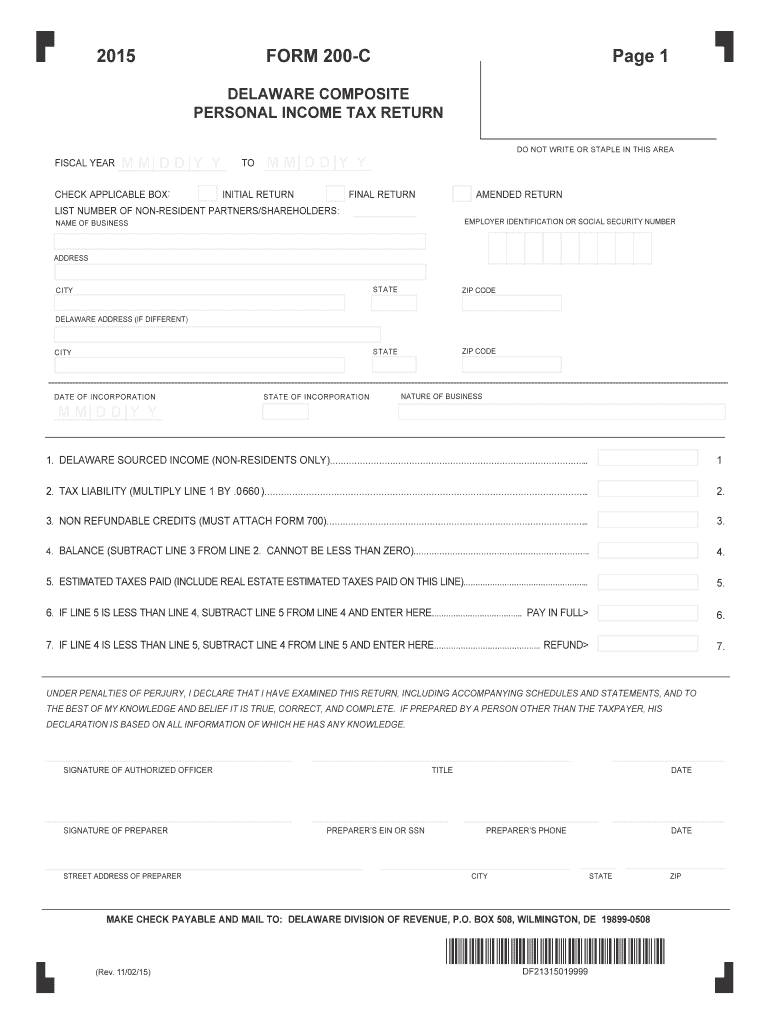
DED RETURN LIST NUMBER OF NON-RESIDENT PARTNERS/SHAREHOLDERS: EMPLOYER IDENTIFICATION OR SOCIAL SECURITY NUMBER NAME OF BUSINESS ADDRESS CITY STATE ZIP CODE STATE ZIP CODE DELAWARE ADDRESS (IF DIFFERENT) CITY DATE OF INCORPORATION STATE OF INCORPORATION NATURE OF BUSINESS 1. DELAWARE SOURCED INCOME (NON-RESIDENTS ONLY)............................................................................................... 1 2. TAX LIABILITY (MULTIPLY LINE 1 BY .0660 ).

Open form follow the instructions

Easily sign the form with your finger

Send filled & signed form or save
How to fill out the DE DoR 200-C online
Filling out the DE DoR 200-C is an essential task for non-resident shareholders and partners in Delaware. This guide will provide comprehensive, step-by-step instructions to assist you in completing the form accurately and efficiently online.
Follow the steps to complete the DE DoR 200-C form online.
- Click 'Get Form' button to obtain the form and open it in the editor.
- Select the applicable fiscal year and check the corresponding box indicating whether this is your initial, final, or amended return.
- List the number of non-resident partners or shareholders in the designated field. This information is crucial for the processing of your return.
- Enter the employer identification number or social security number in the appropriate box. Ensure this number is correct to avoid processing delays.
- Fill in the name and address of the business, including city, state, and ZIP code. If the Delaware address differs, complete the separate Delaware address section.
- Indicate the date of incorporation and the state of incorporation to provide further identification of the business.
- Describe the nature of the business succinctly, ensuring clarity regarding the activities conducted.
- Input the Delaware sourced income amount for non-residents only in line 1.
- Calculate the tax liability by multiplying the amount from line 1 by 0.0660. Enter this total in line 2.
- List any non-refundable credits on line 3, ensuring to attach Form 700 if applicable.
- Subtract line 3 from line 2 to determine the balance owed on line 4. Note that this amount cannot be less than zero.
- Enter any estimated taxes that have been paid on line 5, including real estate estimated taxes.
- If the amount on line 5 is less than line 4, enter the difference on line 6. This represents the amount due.
- If line 5 exceeds line 4, calculate the refund by subtracting line 4 from line 5 and enter this amount on line 7.
- Lastly, ensure the form is signed and dated by an authorized officer or preparer, including their contact information. This final step affirms the accuracy of the submitted information.
- Review all entries for accuracy, save changes, and then download, print, or share the completed form as needed.
Complete your DE DoR 200-C form online today to ensure timely and accurate filing.
Experience a faster way to fill out and sign forms on the web. Access the most extensive library of templates available.
Related content
The Division of Revenue links for online filing options are available at...
by MCB Gazi · 2005 · Cited by 6 — A dor aguda é diferente da dor crônica e a...
O e-SUS AB é uma estratégia do Departamento de Atenção Básica (DAB) para reestruturar...
Get answers to your most pressing questions about US Legal Forms API.
Does Delaware have state income tax for non-residents?
Yes, Delaware imposes state income tax on non-residents who earn income within the state. This includes income from Delaware-based jobs or investments. Non-residents should complete the DE DoR 200-C form to ensure they file their taxes correctly. It's essential to recognize your tax obligations to avoid any penalties.
Who doesn't need to file a state tax return?
Individuals who earn below a specified income amount generally do not need to file a state tax return in Delaware. Additionally, certain groups, such as full-time students not generating taxable income, may also be exempt. To determine your specific situation, examine the guidelines on the DE DoR 200-C form. Understanding your requirements can save you time and stress.
Who is obligated to file a tax return?
You are obligated to file a tax return in Delaware if you earned income above a certain threshold during the tax year. This applies to both residents and non-residents earning income linked to Delaware. Utilizing the DE DoR 200-C form can clarify your requirements, ensuring you meet all necessary obligations. Staying compliant is crucial for avoiding future issues.
What is the withholding tax rate in Delaware?
The withholding tax rate in Delaware depends on your income level and filing status. Generally, the state has a progressive tax system, with rates increasing as income rises. For accurate calculations and necessary forms, such as the DE DoR 200-C, check Delaware’s Department of Revenue resources. Being informed about withholding can help you plan your finances more effectively.
Who has to file a Delaware tax return?
Individuals who meet specific income thresholds are mandated to file a Delaware tax return. This requirement also encompasses businesses operating in Delaware. To simplify your filing process, refer to the DE DoR 200-C form, which can help clarify your obligations. Understanding who must file will help you avoid potential penalties.
Who is required to file a Delaware tax return?
In Delaware, anyone who earns taxable income within the state must file a tax return. This includes residents and non-residents who receive income from Delaware sources. If you're uncertain about your situation, consider using the DE DoR 200-C form for guidance. Remember, it's vital to file correctly to remain compliant with state regulations.
How to fill out a DA Form 200?
Filling out a DA Form 200 requires careful attention to detail and specific financial information. Start by gathering all necessary documents and ensure you follow the instructions provided on the form. It's essential to double-check entries for accuracy to avoid delays in processing. If you need further guidance, USLegalForms offers helpful templates and resources for completing various forms accurately.
Does Delaware allow composite tax returns?
Delaware does allow composite tax returns, which are filed on behalf of non-resident partners. This can simplify tax reporting for partnerships, as it aggregates the individual partners' income and taxes into one return. Understanding the nuances of this process is essential, and you can reference DE DoR 200-C for detailed guidelines. Utilizing USLegalForms can streamline your filing experience.
Does Delaware have a partnership tax return?
Yes, Delaware requires partnerships to file a partnership tax return. The relevant form for reporting partnership income and expenses is the Delaware Form 300. Be sure to comply with the specific requirements for partnerships, as these can differ significantly from individual tax filings. You can explore USLegalForms for more information on forms and filing.
What are the tax regulations in Delaware?
Delaware imposes a personal income tax, and it does not have a state sales tax. The tax regulations include specific guidelines for corporate taxes, partnerships, and individual taxation. Familiarizing yourself with these regulations, especially the DE DoR 200-C, is crucial for accurate tax reporting. Resources from USLegalForms can help simplify this process.
Use professional pre-built templates to fill in and sign documents online faster. Get access to thousands of forms.
If you believe that this page should be taken down, please follow our DMCA take down process here.
This form is available in several versions. Select the version you need from the drop-down list below.