Loading
Get Fl 12.994(b) 2018-2026
How it works
-

Open form follow the instructions
-

Easily sign the form with your finger
-

Send filled & signed form or save
How to fill out the FL 12.994(b) online
Filling out the FL 12.994(b) form online can be straightforward with the right guidance. This guide provides clear, step-by-step instructions tailored to users who may have little legal experience, ensuring you can complete the form accurately and efficiently.
Follow the steps to complete the FL 12.994(b) online.
- Click the ‘Get Form’ button to obtain the FL 12.994(b) document and open it in your browser.
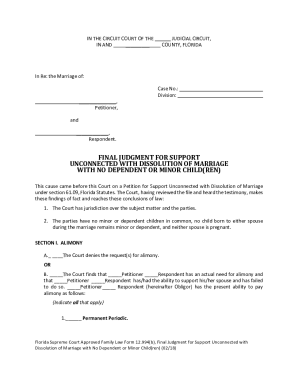
- Begin by filling in the title section with the name of your case, including the petitioner and respondent names, as well as the case number and division where the case is filed.
- In Section I, clearly indicate whether the alimony request is being denied or granted, and provide the necessary details regarding the requesting party.
- For the alimony calculations, choose the appropriate categories such as permanent periodic, bridge-the-gap, rehabilitative, durational, lump sum, or retroactive and fill out the corresponding amounts and terms.
- In Section II, specify the method of payment for the ordered alimony, detailing how payments will be made and identifying the appropriate parties to receive the payments.
- Proceed to Section III to outline any requests for attorney’s fees and costs, specifying amounts and providing detailed justifications for these fees.
- In Section IV, include any additional provisions relevant to your case, as well as a signature and date indicating the completion of this document.
- Finally, save your changes, and options will be available to download, print, or share the completed FL 12.994(b) form as necessary.
Start completing your FL 12.994(b) form online today for efficient document management.
A court clerk gives you a Contempt Summons. A Contempt Summons is a court order that tells the defendant: to come to court, ... to explain why he or she should not be held in contempt, and. if the court decides the defendant is in contempt, the court may send him or her to jail.