Loading
Get Fl 12.903(d) 2018-2026
How it works
-

Open form follow the instructions
-

Easily sign the form with your finger
-

Send filled & signed form or save
How to fill out the FL 12.903(d) online
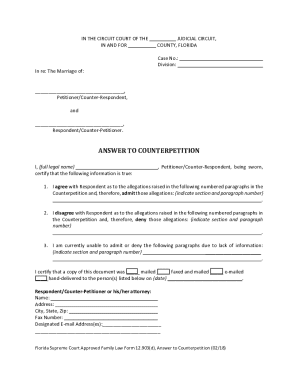
Filling out the FL 12.903(d) form is an important step for petitioners who need to respond to a counterpetition in family law cases. This guide provides clear and supportive instructions for users at all legal experience levels, ensuring a smooth process in completing the form online.
Follow the steps to fill out the FL 12.903(d) form effectively.
- Click the ‘Get Form’ button to access and open the FL 12.903(d) form in an online editing tool.
- Begin by filling in the header section. Indicate the circuit court, county, case number, and division where your case is filed.
- In the ‘Petitioner/Counter-Respondent’ section, enter your full legal name as the individual responding to the counterpetition.
- Under the main body of the form, you will address the allegations from the counterpetition. Indicate agreement or disagreement with the numbered paragraphs by referring to them in the sections provided.
- For any allegations you cannot admit or deny due to lack of information, fill in the corresponding paragraph number in the designated section.
- Complete the certification section by providing information about how you served the document to the respondent or their attorney, indicating the method used and the date of service.
- Sign the form at the designated area to affirm the truthfulness of your statements. Ensure your printed name, address, and contact information are correctly included.
- Lastly, if applicable, if someone assisted you in filling out the form, they must provide their details in the section for nonlawyer assistance.
- After completing the form, save your changes. You can download, print, or share the form based on your preferences.
Complete the FL 12.903(d) form online to ensure an efficient filing process for your family law case.
Related links form
If you do not respond to a civil summons, the court can grant the other party judgment against you in the underlying case. This means the other side will automatically win. Failing to honor a criminal summons, by contrast, could lead to your arrest and even time in jail.