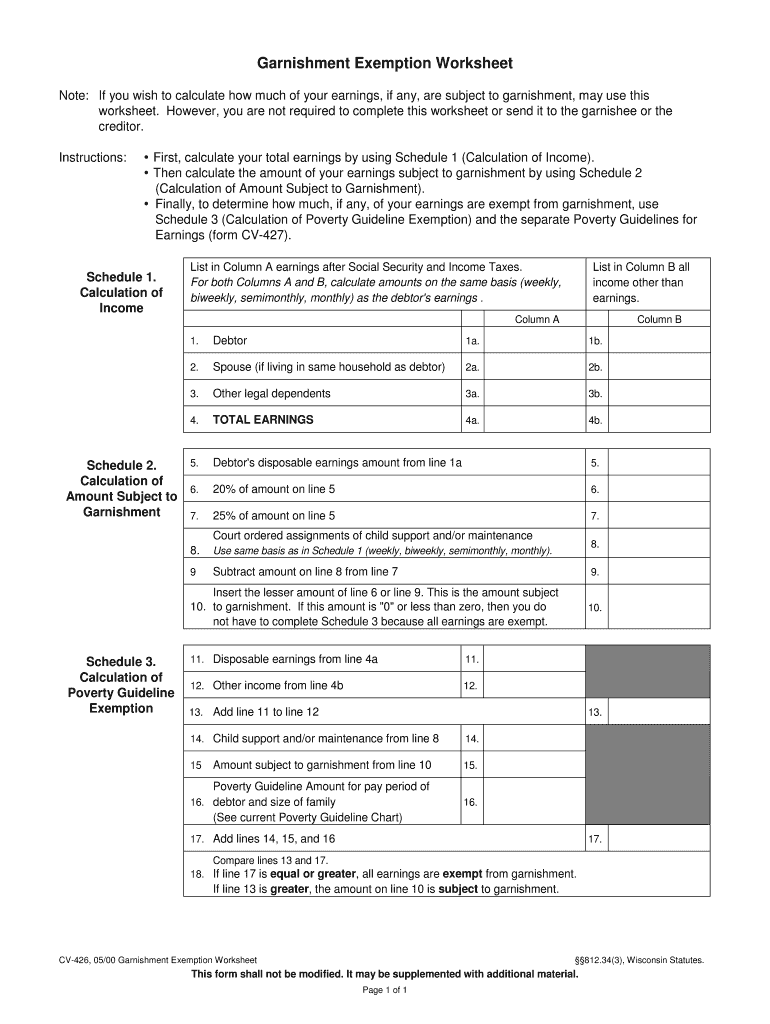
Worksheet. However, you are not required to complete this worksheet or send it to the garnishee or the creditor. Instructions: First, calculate your total earnings .
Loading

Open form follow the instructions

Easily sign the form with your finger

Send filled & signed form or save
How to fill out the WI CV-426 online
The WI CV-426, also known as the Garnishment Exemption Worksheet, is an essential document for individuals seeking to calculate the portion of their earnings that may be subject to garnishment. This guide provides step-by-step instructions on how to accurately complete the form online.
Follow the steps to fill out your Garnishment Exemption Worksheet online.
- Press the ‘Get Form’ button to access the Garnishment Exemption Worksheet and open it in your digital platform.
- Begin with Schedule 1, where you will calculate your total earnings. In Column A, enter your earnings after Social Security and income taxes. In Column B, list any additional income other than earnings. Make sure you record these amounts based on the same payment frequency as your earnings — whether that is weekly, biweekly, semimonthly, or monthly.
- Move to Schedule 2, where you will determine the amount of your earnings that is subject to garnishment. Start by entering the necessary information for yourself, your spouse (if applicable), and any other legal dependents. Calculate the total earnings and identify your disposable earnings amount, then calculate 20% and 25% of that amount. Account for any court-ordered child support or maintenance amounts and, ultimately, determine the lesser amount that represents what is subject to garnishment.
- Proceed to Schedule 3 to assess potential exemptions based on poverty guidelines. Here, combine your disposable earnings and any other income. Then, compare this total to the sum of the child support, garnishment amount, and the current poverty guideline amount for your household size. If your total earnings exceed the poverty guideline, you may be exempt from garnishment.
- Once you have completed all sections, ensure that your entries are accurate. You can then choose to save your changes, download a copy, print the completed form, or share it as necessary.
Take control of your financial situation by filling out the WI CV-426 online today.
Experience a faster way to fill out and sign forms on the web. Access the most extensive library of templates available.
Related content
Finally, to determine how much, if any, of your earnings are exempt from garnishment, use...
FACULTY APPOINTMENTS: 06/1987 - 06/1988 Chief Medical Resident & Instructor in Medicine...
Podem ser utilizado para um projeto específico ou localmen- te para nova aplicação ou...
Get answers to your most pressing questions about US Legal Forms API.
Can you stop a wage garnishment in Wisconsin?
Yes, you can stop a wage garnishment in Wisconsin through various legal avenues. You can negotiate with your creditor or file a motion with the court, especially if you believe the garnishment is unjust. Utilizing resources found in WI CV-426 can assist you in understanding your rights and finding a viable solution.
How many garnishments can you have at one time?
In Wisconsin, you can have multiple garnishments against your wages simultaneously; however, your total garnishments must not exceed 25% of your disposable earnings. It's essential to keep track of any wage garnishments to ensure compliance with the law. Familiarizing yourself with information from WI CV-426 can provide additional clarity on this topic.
How much of your wages can be garnished in Wisconsin?
In Wisconsin, a creditor can typically garnish up to 20% of your disposable earnings after taxes and other mandatory deductions. The amount may vary based on your specific financial circumstances, as outlined in laws like WI CV-426. Understanding the limits of wage garnishment helps you better plan your finances.
How to stop a wage garnishment in WI?
To stop a wage garnishment in WI, you can file a motion with the court to contest the garnishment or negotiate a settlement with your creditor. Providing supporting documents and reasoning aligned with WI CV-426 can bolster your argument. Using services like US Legal Forms can simplify this process, offering templates and legal guidance.
What makes you exempt from garnishment in Wisconsin?
In Wisconsin, certain income types are generally exempt from garnishment, including Social Security benefits, unemployment compensation, and public assistance. Additionally, if your disposable income falls below a specific threshold, you may also qualify for exemption. Consulting resources like WI CV-426 can further clarify your situation regarding garnishment exemptions.
What is the best way to stop wage garnishment?
The best way to stop wage garnishment often involves negotiating directly with the creditor to create a payment plan. You could also file a motion in court, citing valid reasons, which can be guided by the information in WI CV-426. For many, seeking legal advice through platforms like US Legal Forms can provide crucial insights into effective methods tailored to your situation.
How do I write a letter to stop wage garnishment?
To write a letter to stop wage garnishment, begin by addressing the creditor or the company responsible for the garnishment. Include your account information, a clear statement requesting cessation of the garnishment, and the reason for your request. You may refer to legal guidelines, such as those indicated in WI CV-426, to support your case and increase your chances of a favorable outcome.
What is the maximum garnishment in Wisconsin?
In Wisconsin, the maximum wage garnishment allowed is typically 20% of disposable income or the amount by which your weekly earnings exceed 40 times the federal minimum wage, whichever is less. Understanding the limits under WI CV-426 can help you protect your income better. This ensures you have enough left for essential living expenses while still addressing your debts.
Can you go to jail for not paying court judgment?
In most cases, not paying a court judgment does not lead to jail time. However, failing to appear in court or disobeying a court order could result in penalties. It’s essential to stay informed and act according to legal requirements. Utilizing tools like WI CV-426 can aid you in understanding your obligations and potential repercussions.
How long can a judgment be enforced in Wisconsin?
In Wisconsin, a judgment can typically be enforced for up to 20 years. This means that a creditor may legally pursue collection actions for this duration. However, it is crucial to review specific circumstances that can affect this timeframe. Documents like WI CV-426 can help clarify your options should you find yourself facing a judgment.
Use professional pre-built templates to fill in and sign documents online faster. Get access to thousands of forms.
If you believe that this page should be taken down, please follow our DMCA take down process here.
This form is available in several versions. Select the version you need from the drop-down list below.