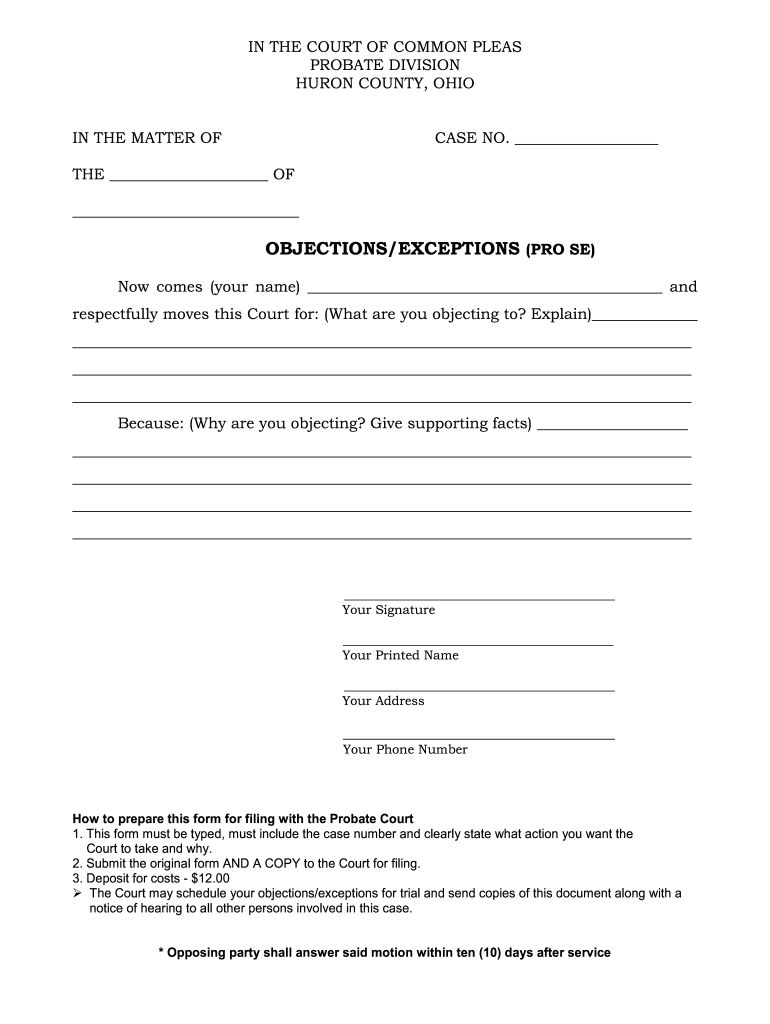
S (PRO SE) Now comes (your name) and respectfully moves this Court for: (What are you objecting to? Explain) Because: (Why are you objecting? Give supporting facts).
Loading

Open form follow the instructions

Easily sign the form with your finger

Send filled & signed form or save
How to fill out the OH Objections/Exceptions online
Filling out the OH Objections/Exceptions form is a vital step in addressing concerns related to probate cases. This guide will help you navigate the process of completing the form accurately and effectively.
Follow the steps to complete the OH Objections/Exceptions online
- Press the ‘Get Form’ button to access the OH Objections/Exceptions document and open it for editing.
- Begin filling out the form by entering your name in the designated field, clearly identifying yourself as the individual submitting the objections/exceptions.
- In the area labeled ‘What are you objecting to?’, provide a concise explanation of the specific matters or actions you are challenging. Be as clear and detailed as possible.
- Following that, detail the reasons for your objections in the section titled ‘Because:’. Include supporting facts and any evidence you deem important to substantiate your claims.
- Insert your signature in the designated area, followed by your printed name and contact address to ensure proper identification.
- Include your phone number in the appropriate field so that the court can reach you if necessary.
- Ensure that the form is typed and includes the case number, providing a complete record of your objections. Prepare to submit both the original form and a copy to the court.
- Be prepared to pay the filing deposit of $12.00 when submitting your documents to the court.
- After submission, you may be notified by the court regarding a hearing or trial related to your objections, and they will send the necessary documents to all involved parties.
Take the first step now and complete the OH Objections/Exceptions form online.
Experience a faster way to fill out and sign forms on the web. Access the most extensive library of templates available.
Related content
These rules govern proceedings in the courts of this state, subject to the exceptions...
The following are not excluded by the rule against hearsay, regardless of whether the...
Dec 27, 2022 — In the digital age, information and communication technology (ICT)...
Get answers to your most pressing questions about US Legal Forms API.
What is an exception to an objection?
An exception to an objection occurs when a party in a legal proceeding raises an issue against the admissibility of evidence but acknowledges that certain circumstances allow for that evidence to be presented anyway. This concept is particularly relevant in the context of OH Objections/Exceptions, showcasing the nuances involved in legal arguments and courtroom procedures. Understanding these exceptions can help ensure that your legal rights are effectively upheld.
What is the 408 rule in Ohio?
The 408 rule in Ohio concerns the admissibility of certain statements during legal proceedings, specifically relating to compromises and offers of settlement. It is designed to encourage settlement discussions without fear of prejudice in court. Integrating this rule with concepts around OH Objections/Exceptions can enhance one’s understanding of legal negotiations and plea discussions.
What is the rule 37 in Ohio?
Rule 37 in Ohio pertains to the procedures regarding the appeals process, particularly concerning the filing of motions and the handling of appeals. It offers guidelines for parties wishing to contest decisions made by the trial courts. Although distinct from OH Objections/Exceptions, understanding Rule 37 can assist individuals in navigating their legal rights more effectively.
What is the rule 11 in Ohio?
In Ohio, Rule 11 specifies the processes for entering a guilty plea, emphasizing the necessity for a defendant's clear understanding of their rights. This particular rule intends to prevent misunderstandings that could lead to improper pleas and ensures that any OH Objections/Exceptions are adequately addressed. Therefore, it serves a critical purpose in protecting the legal rights of defendants.
What is rule 11 in simple terms?
Rule 11, in simple terms, is a rule designed to ensure that a person knows what they are doing when they plead guilty in court. It outlines what information the judge must provide, as well as what the defendant should understand about their case. In the context of OH Objections/Exceptions, it allows the court to address any issues that might arise related to the plea.
What does a rule 11 hearing mean?
A Rule 11 hearing is a critical court session where a judge verifies that a defendant understands both their rights and the implications of their plea. During this hearing, the judge checks for any potential OH Objections/Exceptions that could affect the plea's validity. This process is vital to ensure fair treatment and informed decision-making for all parties involved.
What is the purpose of order #11?
Order #11 aims to provide a clear framework for ensuring that defendants are fully informed before entering a plea. This order protects the integrity of the legal process and allows for OH Objections/Exceptions to ensure that guilty pleas are made knowingly and voluntarily. Essentially, it safeguards the rights of individuals involved in the Ohio criminal justice system.
What is Ohio criminal Rules 11?
Ohio Criminal Rule 11 outlines the requirements for a defendant's plea in criminal cases. It ensures that the defendant understands their rights and the consequences of their plea. This rule is crucial for protecting defendants from making uninformed decisions, particularly concerning OH Objections/Exceptions during court proceedings.
What is an example of an exception?
An example of an exception is a statement that qualifies as a present sense impression, where a person describes an event as it occurs. In the realm of OH Objections/Exceptions, having clear examples helps lawyers illustrate why certain evidence should be admitted, improving the chances of a favorable outcome in court.
How do you get around hearsay objections?
To circumvent hearsay objections, present evidence or testimony that falls under an exception to hearsay rules, such as admissions against interest or excited utterances. Also, ensure that your witness is offering firsthand knowledge rather than repeating statements made by others. Mastering these techniques is important to handle OH Objections/Exceptions effectively.
Use professional pre-built templates to fill in and sign documents online faster. Get access to thousands of forms.
If you believe that this page should be taken down, please follow our DMCA take down process here.