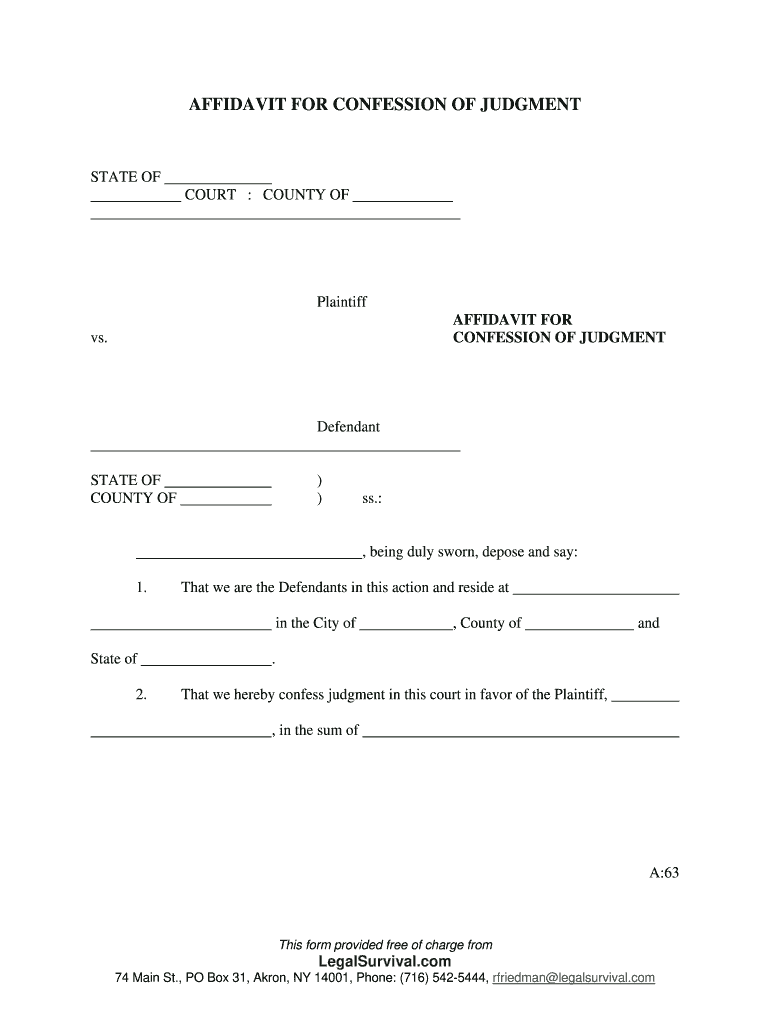
AFFIDAVIT FOR CONFESSION OF JUDGMENT STATE OF COURT COUNTY OF Plaintiff CONFESSION OF JUDGMENT vs. Defendant COUNTY OF ss. being duly sworn depose and say That we are the Defendants in this action and reside at in the City of State of County of and. That we hereby confess judgment in this court in favor of the Plaintiff in the sum of A 63 This form provided free of charge from LegalSurvival*com 74 Main St* PO Box 31 Akron NY 14001 Phone 716 542-5444 rfriedman legalsurvival*com Dollars together w.

Open form follow the instructions

Easily sign the form with your finger

Send filled & signed form or save
How to fill out the NY Affidavit Confession Judgment online
The NY affidavit confession judgment is a legal document that allows defendants to acknowledge their debt in court. This guide provides clear and concise instructions on how to complete the form online, ensuring an efficient and accurate submission process.
Follow the steps to complete your NY affidavit confession judgment online.
- Press the ‘Get Form’ button to access the form and open it in your preferred document editor.
- In the first section, indicate the state and county where the affidavit is being filed. Input the name of the court handling the case.
- Provide the names of the plaintiff and defendant in the relevant fields.
- Enter the defendants' residence details, including the city, state, and county.
- In the next section, enter the total amount owed to the plaintiff, ensuring to specify the dollar amount in parentheses.
- Record the date from which interest will accrue, citing the relevant day and month clearly.
- Clarify the nature of the debt by identifying the facts leading to the judgment, including details of any agreements related to the debt.
- Have a notary public witness the affidavit and sign in the appropriate space once the form has been completed.
- After completing the form, ensure to save your changes. You may then download, print, or share the completed form as needed.
Complete your documents online today for a seamless filing experience.
Experience a faster way to fill out and sign forms on the web. Access the most extensive library of templates available.
Related content
The defendant is deceased. You will need to submit an affidavit of Defendant for Judgment...
CPLR 3218: Affidavit of debtor in judgment by confession must state detailed information...
Jan 28, 2021 — 1.1. This final report of the independent IBU External Review Commission...
Get answers to your most pressing questions about US Legal Forms API.
What happens after a confession of judgement?
After a confession of judgment is recorded, it leads to the creditor being able to enforce the debt without court intervention. This may include actions like garnishing wages or placing liens on property. It's crucial to understand these outcomes to prepare for the financial implications.
What is an affidavit of judgment?
An affidavit of judgment is a document that formally declares a judgment has been entered against a debtor. This affidavit is used to confirm the judgment in further collection processes. It's an important step for creditors seeking to enforce their rights.
How to file confession of judgment in New York?
To file a confession of judgment in New York, you must complete the appropriate form and submit it to the court. You will also need to follow strict guidelines regarding notarization and filing fees. Using services like USLegalForms can simplify this process and ensure you meet all legal requirements.
What happens after an affidavit is filed?
Once an affidavit is filed, it becomes part of the court's official record. This filing may initiate further legal proceedings or enhance the creditor's ability to enforce their judgment. Staying informed about your case's status is critical to navigating the process effectively.
What happens after a judge signs judgement?
After a judge signs a judgment based on a confession, it becomes a legal order that the debtor must comply with. This order can lead to various collection actions, such as wage garnishment, asset seizure, or property liens. It's important to understand your rights and potential options at this stage.
What is the purpose of an affidavit?
The purpose of an affidavit is to provide a sworn statement that can be used as evidence in legal proceedings. In the context of an NY Affidavit Confession Judgment, it supports the creditor's claim and establishes the terms of agreement. This document helps streamline the process for both parties involved.
What is the form of confession of Judgement?
The form of confession of judgment is a written document that includes specific language indicating the debtor's agreement to a judgment without the need for trial. This form must be correctly filled out and signed to be valid. It's vital to ensure that all details are accurate and that you understand the implications.
What is a judgement affidavit?
A judgment affidavit is a legal document that confirms the existence of a judgment in favor of a creditor. It serves as evidence and can be used to enforce payment through various collection methods. Understanding this document is crucial in navigating debts and legal obligations.
What does a confession of judgment do?
A confession of judgment simplifies the process for creditors to collect debts. By signing this document, the debtor agrees to forfeit the right to dispute the debt in court. It's a powerful tool that allows creditors to quickly secure a judgment, making it essential to understand your rights before signing.
What happens after the confession?
After you submit an NY Affidavit Confession Judgment, the creditor may initiate collection actions. This typically leads to the creditor seeking a judgment from the court, which can result in wage garnishment or property liens. You should be prepared for the potential consequences, as these actions can affect your financial standing.
Use professional pre-built templates to fill in and sign documents online faster. Get access to thousands of forms.
If you believe that this page should be taken down, please follow our DMCA take down process here.