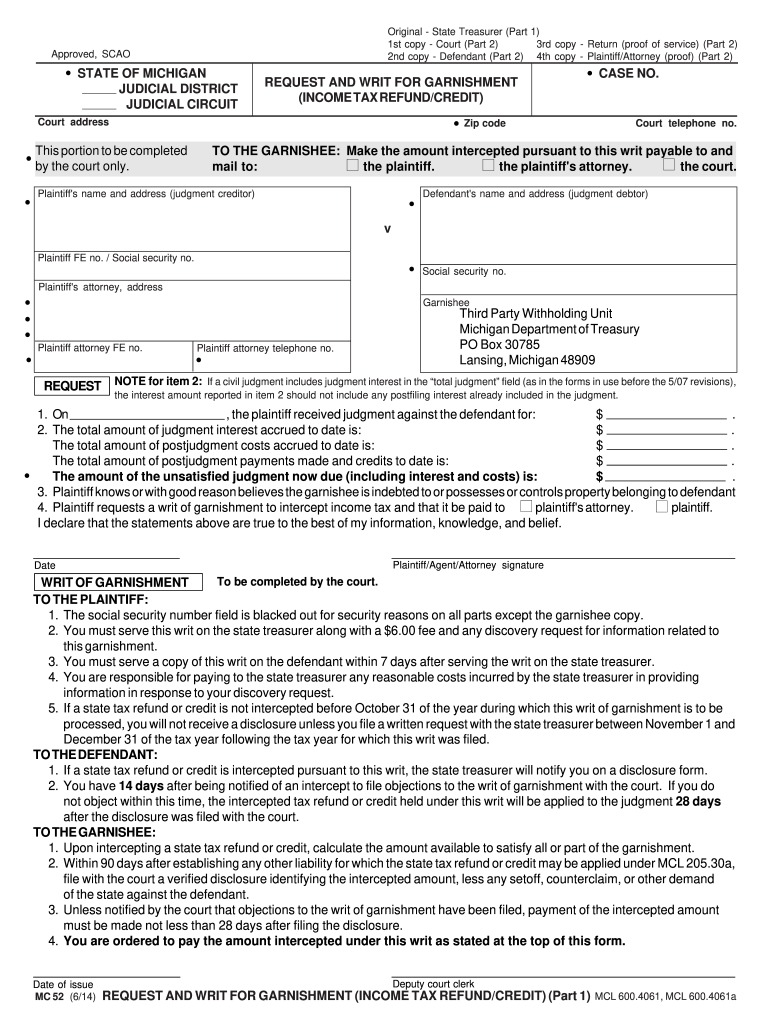
SCAO STATE OF MICHIGAN JUDICIAL DISTRICT JUDICIAL CIRCUIT REQUEST AND WRIT FOR GARNISHMENT (INCOME TAX REFUND/CREDIT) Zip code Court address This portion to be completed CASE NO. Court telephone no. TO THE GARNISHEE: Make the amount intercepted pursuant to this writ payable to and mail to: the plaintiff. the plaintiff's attorney. the court. by the court only. Plaintiff's name and address (judgment creditor) Defendant's name and address (judgment debtor) v.
Loading

Open form follow the instructions

Easily sign the form with your finger

Send filled & signed form or save
How to fill out the MI MC 52 online
The MI MC 52 is a crucial form used in Michigan for requesting and issuing a writ of garnishment related to income tax refunds or credits. This guide provides clear, step-by-step instructions to help you complete the form online, ensuring accuracy and compliance with legal requirements.
Follow the steps to fill out and submit the MI MC 52 online.
- Click the ‘Get Form’ button to access the MI MC 52 and open it in the editor.
- Begin by entering the court address and zip code, ensuring that all contact information is accurate.
- In the case number and court telephone fields, provide the necessary details related to your case.
- Complete the section for the plaintiff's name and address, identifying them as the judgment creditor.
- Fill in the defendant's name and address, designating them as the judgment debtor.
- Use the provided fields to document the amount of judgment, accrued interest, postjudgment costs, and any payments or credits made to date.
- Indicate whether the plaintiff believes the garnishee is indebted to or possesses property belonging to the defendant.
- Specify where the intercepted amount should be mailed (to the plaintiff, the plaintiff's attorney, or the court).
- Review the information entered for accuracy before signing the form as the plaintiff or their agent.
- Once all fields are complete, save your changes. You may then download, print, or share the completed MI MC 52 as needed.
Complete the MI MC 52 online today to efficiently manage your garnishment requests.
Experience a faster way to fill out and sign forms on the web. Access the most extensive library of templates available.
Related content
MC 52 (3/23) REQUEST AND WRIT FOR GARNISHMENT (INCOME TAX REFUND/CREDIT) (Part 1) MCL...
The Model International Mobility Convention (MIMC) was developed by an International...
Informações sobre marcas comerciais. • Microsoft, Windows e Windows Vista são marcas...
Get answers to your most pressing questions about US Legal Forms API.
Does my child need to file a Michigan tax return?
Yes, your child may need to file a Michigan tax return based on their income. If they earn at or above the filing threshold, it's essential to ensure compliance with state laws. Furthermore, filing can enable them to collect potential refunds. Gain further insights by checking out MI MC 52.
Who can garnish tax refunds?
Generally, creditors with a court judgment or certain government agencies can garnish tax refunds. This might include child support agencies or the IRS for unpaid taxes. Understanding the intricacies of garnishment procedures can be complex, so consider exploring MI MC 52 for comprehensive insights.
Do minors need to file a tax return?
Yes, minors must file a tax return if their income exceeds the minimum threshold set by Michigan law. This applies to both earned and unearned income. Additionally, filing can provide them with valuable tax credits or refunds. For accurate information, refer to MI MC 52.
Who needs to file a Michigan tax return?
Individuals need to file a Michigan tax return if their income exceeds a specified amount. This includes employed individuals, self-employed persons, and certain minors with earned income. Staying informed about the requirements through MI MC 52 can clarify if you or someone in your family must file.
Does my child have to file a tax return if I claim them?
If you claim your child as a dependent, they may still need to file a tax return if they earn above a certain income level. Filing can help them access potential tax refunds, even if they fall under your dependent status. Additionally, consult MI MC 52 for guidance on specific regulations that apply to your unique situation.
Does my child have to file a Michigan tax return?
Yes, your child may need to file a Michigan tax return depending on their income level. Generally, if they earn more than the filing threshold, it's mandatory. Additionally, you should consider any potential tax benefits if they do file. You can find more information on this topic through MI MC 52.
What is the process of garnishment in Michigan?
The garnishment process in Michigan begins when a creditor files a complaint with the court, outlining the debt owed. If the court rules in favor of the creditor, they will issue a garnishment order that your employer or bank must follow. You will receive notification and have the chance to respond when garnishment occurs against your wages or accounts. For more details on this process, resources like US Legal Forms can guide you effectively.
What is the new garnishment law in Michigan?
The new garnishment law in Michigan, which took effect in 2021, provides greater protections for debtors. It limits the amount that creditors can garnish from wages to 25% of disposable earnings, ensuring that individuals can retain enough funds for living expenses. The law also introduces additional requirements for creditors to follow, making the process more transparent. Stay informed about these changes through MI MC 52 to protect your financial rights.
When to file Michigan taxes?
In Michigan, the tax filing deadline usually falls on April 15th unless it lands on a weekend or holiday, in which case it extends to the next business day. It's important to file your taxes on time to avoid penalties and interest on any owed amount. Furthermore, ensuring that your tax return is accurate can help prevent issues, such as wage garnishment, later on. Consider using MI MC 52 resources for guidance on filing correctly.
How to garnish a tax refund?
To garnish a tax refund in Michigan, creditors typically need to obtain a court order. The court will review the case and assess whether the garnishment is justified based on the outstanding debt. Once granted, the creditor can then file a notice with the state department that manages tax refunds. This process can be complex, so consulting with a legal expert or using US Legal Forms can simplify your experience.
Use professional pre-built templates to fill in and sign documents online faster. Get access to thousands of forms.
If you believe that this page should be taken down, please follow our DMCA take down process here.