Get Mi Foc 39 2017-2026
How it works
-

Open form follow the instructions
-

Easily sign the form with your finger
-

Send filled & signed form or save
How to fill out the MI FOC 39 online
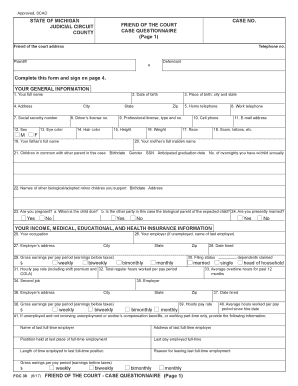
Filling out the MI FOC 39 is an essential step for individuals involved in family court matters in Michigan. This guide will lead you through the process of completing the Friend of the Court Case Questionnaire online, ensuring that you provide all necessary information accurately.
Follow the steps to effectively complete the MI FOC 39 form online.
- Click ‘Get Form’ button to begin the process of accessing the MI FOC 39 questionnaire.
- Fill out your general information in Section 1. Include details such as your full name, address, date of birth, and social security number. Ensure all information is accurate and current.
- Provide your income, medical, educational, and health insurance information in Section 2. This includes your occupation, employer details, gross earnings, and any spousal support you may be involved with.
- Complete the child-care information in Section 3 if applicable. Indicate whether you incur child-care expenses related to minor children, along with details about the provider and reason for needing child care.
- Fill out the information regarding the other parent in this case in Section 4, including their full name, date of birth, and other personal details to help the court understand the situation thoroughly.
- Review all information filled out in the form to ensure accuracy. Make necessary corrections before finalizing your submission.
- Once all sections are complete, save your changes, and select the option to download or print the form. Make sure to keep a copy for your records before submission.
Start completing the MI FOC 39 online today to facilitate your court process.
Related links form
A support enforcement order in Michigan is a court directive that compels a non-custodial parent to adhere to child support payments. The MI FOC 39 plays a critical role in enforcing such orders, ensuring compliance and protecting children's rights. Understanding this process can equip you to handle discrepancies effectively, ensuring that support obligations are met for the benefit of your child's welfare.