Loading
Form preview
  • US Legal Forms
  • Other Templates
  • Legal Forms
  • Multi-State Legal Forms
  • Tx How To Take An Effective Post-judgment Deposition 2014

Get Tx How To Take An Effective Post-judgment Deposition 2014

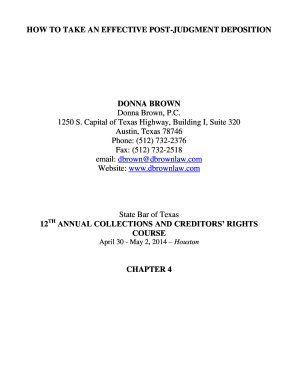
8 email: dbrown dbrownlaw.com Website: www.dbrownlaw.com 12 TH State Bar of Texas ANNUAL COLLECTIONS AND CREDITORS RIGHTS COURSE April 30 - May 2, 2014 Houston CHAPTER 4 How to Take an Effective Post-Judgment Deposition Chapter 4 Table of Contents I. II. III. IV. INTRODUCTION. ............................................................................................................................1 FORMS AND PROCEDURE FOR THE TAKING AND ENFORCEMENT OF THE DEPOSITION A. Initial.

How it works

  1. Open form

    Open form follow the instructions

  2. Easily sign form

    Easily sign the form with your finger

  3. Share form

    Send filled & signed form or save

How to fill out the TX How to Take an Effective Post-Judgment Deposition online

Filling out the TX How to Take an Effective Post-Judgment Deposition form can be a straightforward process when approached systematically. This guide will walk you through each step required to successfully complete the form and provide valuable insights into the deposition process.

Follow the steps to complete the form effectively.

  1. Press the ‘Get Form’ button to acquire the form and open it in your preferred editor.
  2. Begin with the introductory section, providing a brief overview of the purpose of the deposition and any relevant details pertaining to the case.
  3. Fill out the 'Initial Notice or Subpoena' section, ensuring that the appropriate parties' names and contact information are included. This is critical to maintain compliance with Texas Rules of Civil Procedure.
  4. Complete the 'Areas of Examination' section, detailing the specific topics that will be addressed during the deposition. This may encompass financial records, real property, and personal property, among others.
  5. Proceed to fill out any forms related to 'Document Requests.' Specify the types of documents the debtor is required to bring to the deposition.
  6. If necessary, complete the motion forms, such as the 'Motion to Compel,' to ensure that all parties are aware of their obligations and the consequences of non-compliance.
  7. Review all filled sections for accuracy, ensuring that no detail is overlooked and that all parts are completed as per procedural requirements.
  8. Finalize by saving the form. Users can choose to download, print, or share the completed form based on their specific needs.

Take the next step in your legal process by completing your documents online.

Get form

Experience a faster way to fill out and sign forms on the web. Access the most extensive library of templates available.

Related content

Collecting a Judgment - Small Claims Cases
Post-judgment discovery does not require the justice court's approval. Court rules state...
Learn more
The Practitioner's Guide to Properly Taking and...
Aug 1, 2016 — can take the deposition by notice in the same manner as provided by Texas...
Learn more
Chapter 6 Judicial Actions - Regulatory Procedures...
are effective and do not adversely affect the finished device; implementing and recording...
Learn more

Related links form

CA CH-120 2018 CA CH-120 2014 CA CH-140 2007 CA CH-200 2014

Questions & Answers

Get answers to your most pressing questions about US Legal Forms API.

Contact support

To enforce a judgment in Texas, a creditor can take various legal actions, including garnishments and property liens. Initiating a post-judgment deposition can be beneficial, as it helps reveal the debtor’s assets. Understanding the enforcement process is crucial for those looking to learn TX how to take an effective post-judgment deposition. Through proper enforcement techniques, creditors can maximize their chances of recovering owed funds.

In Texas, certain assets are exempt from seizure in a judgment, including a primary residence, retirement accounts, and personal items necessary for a standard living. Texas law protects these assets to ensure creditors cannot impose undue hardships. Recognizing what cannot be seized is vital for anyone involved in TX how to take an effective post-judgment deposition, as it informs what assets may remain available for collection.

In Texas, a creditor generally has ten years to collect on a judgment. This period may be extended under certain conditions, such as filing for renewal. It is important to act within this timeframe to ensure the collection of debts, particularly when considering TX how to take an effective post-judgment deposition. Keeping track of this timeline can significantly affect the creditor's ability to enforce the judgment.

The post-judgment discovery rule in Texas ensures that a creditor can request information from a debtor regarding their finances after a judgment. This rule helps creditors identify assets, income, and other resources that can satisfy a judgment. By complying with this rule, individuals can better understand TX how to take an effective post-judgment deposition. It empowers creditors to pursue the necessary information to enforce their rights.

judgment deposition is a legal process where a creditor questions the debtor after the judgment has been issued. This allows the creditor to gather information about the debtor's assets and financial situation. The deposition can provide valuable insights, making it critical for those interested in TX how to take an effective postjudgment deposition. Using this tool helps enforce the judgment effectively.

In Texas, the rules for post-judgment discovery allow creditors to obtain necessary information to enforce a judgment. This includes interrogatories and depositions. Specifically, a creditor can request documents and testimony to uncover assets. Understanding these rules is essential for anyone looking to learn TX how to take an effective post-judgment deposition.

Post-judgment remedies in Texas refer to the legal options available to a creditor after a judgment is entered. These can include wage garnishment, bank account levies, and property liens. To effectively utilize these remedies, understanding the rules surrounding post-judgment depositions is crucial. Resources from USLegalForms can help you learn how to take effective post-judgment depositions to support your claims.

After a judgment is issued in Texas, the winning party may seek to enforce the judgment through various methods, including post-judgment discovery. This means that you can pursue collections depending on the debtor's financial standing. Additionally, the debtor has a limited time to appeal the judgment. Knowing how to navigate this process can be complex, but tools available on USLegalForms can provide much-needed clarity.

To take an effective deposition, prepare thoroughly by listing relevant questions and conducting research on the witness's background. It is vital to create a comfortable environment to encourage open testimony. Practice active listening and remain adaptable to the direction of the conversation. These skills will significantly enhance your efforts on how to take an effective post-judgment deposition.

To enforce a civil judgment in Texas, you can pursue various actions, including filing for garnishment or seizing non-exempt assets. You may also consider a turnover order, which forces the debtor to comply with the judgment. Each method has specific legal requirements and processes to follow. Familiarizing yourself with these aspects will enhance your approach on how to take an effective post-judgment deposition.

Get This Form Now!

Use professional pre-built templates to fill in and sign documents online faster. Get access to thousands of forms.
If you believe that this page should be taken down, please follow our DMCA take down processhere.
Get TX How to Take an Effective Post-Judgment Deposition
  • Adoption
  • Bankruptcy
  • Contractors
  • Divorce
  • Home Sales
  • Employment
  • Identity Theft
  • Incorporation
  • Landlord Tenant
  • Living Trust
  • Name Change
  • Personal Planning
  • Small Business
  • Wills & Estates
  • Packages A-Z
  • Affidavits
  • Bankruptcy
  • Bill of Sale
  • Corporate - LLC
  • Divorce
  • Employment
  • Identity Theft
  • Internet Technology
  • Landlord Tenant
  • Living Wills
  • Name Change
  • Power of Attorney
  • Real Estate
  • Small Estates
  • Wills
  • All Forms
  • Forms A-Z
  • Other Templates
  • Legal Hub
  • About Us
  • Help Portal
  • Legal Resources
  • Blog
  • Affiliates
  • Contact Us
  • Delete My Account
  • Site Map
  • Industries
  • Forms in Spanish
  • Localized Forms
  • State-specific Forms
  • Forms Kit
  • Real Estate Handbook
  • All Guides
  • Notarize
  • Incorporation services
  • For Consumers
  • For Small Business
  • For Attorneys
  • USLegal
  • FormsPass
  • pdfFiller
  • signNow
  • altaFlow
  • DocHub
  • Instapage
Form Packages
  • Adoption
  • Bankruptcy
  • Contractors
  • Divorce
  • Home Sales
  • Employment
  • Identity Theft
  • Incorporation
  • Landlord Tenant
  • Living Trust
  • Name Change
  • Personal Planning
  • Small Business
  • Wills & Estates
  • Packages A-Z
Form Categories
  • Affidavits
  • Bankruptcy
  • Bill of Sale
  • Corporate - LLC
  • Divorce
  • Employment
  • Identity Theft
  • Internet Technology
  • Landlord Tenant
  • Living Wills
  • Name Change
  • Power of Attorney
  • Real Estate
  • Small Estates
  • Wills
  • All Forms
  • Forms A-Z
  • Other Templates
Customer Service
  • Legal Hub
  • About Us
  • Help Portal
  • Legal Resources
  • Blog
  • Affiliates
  • Contact Us
  • Delete My Account
  • Site Map
  • Industries
  • Forms in Spanish
  • Localized Forms
  • State-specific Forms
  • Forms Kit
Legal Guides
  • Real Estate Handbook
  • All Guides
Prepared for you
  • Notarize
  • Incorporation services
Our Customers
  • For Consumers
  • For Small Business
  • For Attorneys
Our Sites
  • USLegal
  • FormsPass
  • pdfFiller
  • signNow
  • altaFlow
  • DocHub
  • Instapage
Social Media
Call us now toll free:
+1 833 426 79 33
As seen in:
© Copyright 1999-2026 airSlate Legal Forms, Inc. 17 Station Street, Ste. 203, Brookline, MA 02445
  • Your Privacy Choices
  • Terms of Service
  • Privacy Notice
  • Content Takedown Policy
  • Bug Bounty Program
TX How to Take an Effective Post-Judgment Deposition
This form is available in several versions.
Select the version you need from the drop-down list below.
2017 TX How to Take an Effective Post-Judgment Deposition
Select form
  • 2017 TX How to Take an Effective Post-Judgment Deposition
  • 2014 TX How to Take an Effective Post-Judgment Deposition
Select form