Loading
Form preview
  • US Legal Forms
  • Other Templates
  • Legal Forms
  • Multi-State Legal Forms
  • Declaration And Revocation Of Trust

Get Declaration And Revocation Of Trust

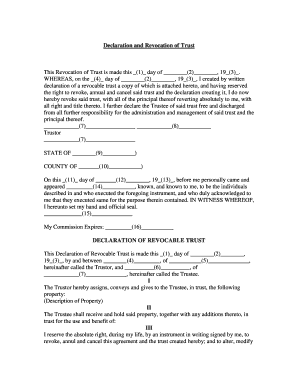
, Pledges and Deeds of Trust To enforce any and all mortgages, pledges and deeds of trust held by the trust and to purchase at any sale thereunder any such real estate or personal property subject to any mortgage, pledge or deed of trust. Litigation To initiate or defend, at his discretion, any litigation affecting the trust. Attorneys, Advisors and Agents To employ and to pay from the trust reasonable compensation to such attorneys, accountants, brokers, and investment, tax and other advisors a.

How it works

  1. Open form

    Open form follow the instructions

  2. Easily sign form

    Easily sign the form with your finger

  3. Share form

    Send filled & signed form or save

How to fill out the Declaration and Revocation of Trust online

Filling out the Declaration and Revocation of Trust online can seem daunting, but with clear guidance, it becomes a straightforward process. This guide will walk you through each section of the form, ensuring you complete it accurately and efficiently.

Follow the steps to complete the Declaration and Revocation of Trust online.

  1. Click ‘Get Form’ button to obtain the form and open it in your preferred online editor.
  2. Fill in the date of revocation in the first section. This includes the day, month, and year indicated for when the revocation takes effect.
  3. In the next part, refer to the original trust's creation date and complete the required fields that outline your decision to revoke that trust.
  4. Certify that all principal and property will revert to you and indicate the responsibilities that are now discharged from the trustee.
  5. Include your name as the Trustor in the designated area, as well as any other parties involved in the agreement.
  6. Proceed to the Declaration of Revocable Trust section, filling out the date, Trustor's name, and Trustee's name along with their addresses.
  7. Outline the property being assigned to the trust, providing clear descriptions for each item.
  8. Review the detailed powers of the trustee and ensure you understand their responsibilities and your reserved rights as the Trustor.
  9. Fill out any remaining sections regarding compensation, liability, and income definitions.
  10. Finalize by signing the document and obtaining necessary witness or notary signatures, as required.
  11. Once completed, save the changes securely, and consider downloading or printing the document for your records.

Start completing your Declaration and Revocation of Trust online today for peace of mind and effective management of your assets.

Get form

Experience a faster way to fill out and sign forms on the web. Access the most extensive library of templates available.
Get form

Related content

§ 64.2-751. Revocation or amendment of revocable...
The settlor may revoke or amend a revocable trust: 1. By substantial compliance with a...
Learn more
TRUSTS - WHAT CONSTITUTES REVOCATION WHEN ...
by DM Saunders · 1943 — The trust deed was revocable with reserved power in the settlor...
Learn more
Professional Trust Entity Tax Residency...
This declaration must be completed by a controlling person of the entity. The definition...
Learn more

Related links form

AK CIV-543 1989 AK CIV-545 2010 AK CIV-546 2010 AK CIV-555 2015

Questions & Answers

Get answers to your most pressing questions about US Legal Forms API.

Contact support

One potential downfall of having a trust is the complexity it can introduce to an estate plan. If not properly managed, misunderstandings about the trust's terms can arise among beneficiaries. To avoid confusion, maintaining an updated Declaration and Revocation of Trust is essential, ensuring clear communication of your wishes to avoid disputes in the future.

A trust revocation declaration typically states your intent to revoke the existing trust and outlines your reasons for doing so. It should be concise and include relevant details such as the date of the original trust and the new provisions, if any. Using a well-structured Declaration and Revocation of Trust can help clarify intentions for all parties involved.

While trusts offer many advantages, there are downsides to consider. For instance, there may be costs associated with setting up and maintaining a trust. Additionally, if parents fail to keep their Declaration and Revocation of Trust updated, it could lead to confusion about asset distribution and intentions, which can complicate matters for loved ones.

One common mistake is failing to properly fund the trust after its creation. Parents often overlook transferring assets into the trust, which can lead to complications in executing their wishes. By drafting a clear Declaration and Revocation of Trust, they can better understand the importance of funding and properly managing the trust from the start.

Yes, placing assets in a trust can provide significant benefits for your parents. A trust allows for organized management and distribution of assets, ensuring their wishes are honored after they pass away. Additionally, using a Declaration and Revocation of Trust enables them to maintain control over their assets while benefiting from potential tax advantages.

Revoking a revocable trust is typically straightforward. You can create a Declaration and Revocation of Trust document that outlines your intentions clearly. Simply follow the guidelines you set when making the original trust. Most people find the process quick and manageable, allowing for flexibility in their estate planning.

A deed of trust in California may be deemed invalid if it was created under fraudulent circumstances, lacks necessary signatures, or does not meet statutory requirements. Any ambiguity regarding the terms can also lead to its invalidation. Both clarity and compliance are crucial, hence drafting a clear Declaration and Revocation of Trust helps.

Generally, trust documents do not need to be notarized, but notarization can add a layer of security and legitimacy. Notarization helps confirm the identity of the signers and can prevent future disputes about the trust's validity. Given the importance of trust documents, consider utilizing platforms like US Legal Forms for guidance.

A revocable trust in California does not specifically require notarization to be valid. However, having the trust document notarized can help ensure its authenticity and may prevent potential legal issues down the line. It is often wise to consult legal resources, like US Legal Forms, to ensure all requirements are met.

For a trust document to be legal, it must meet specific requirements outlined by state law. Typically, it should include the settlor's intent, identified beneficiaries, and the terms of the trust. Formulating a proper Declaration and Revocation of Trust, complete with the necessary details, is crucial in establishing its legality.

Get This Form Now!

Use professional pre-built templates to fill in and sign documents online faster. Get access to thousands of forms.
Get form
If you believe that this page should be taken down, please follow our DMCA take down processhere.
Get Declaration and Revocation of Trust
Get form
  • Adoption
  • Bankruptcy
  • Contractors
  • Divorce
  • Home Sales
  • Employment
  • Identity Theft
  • Incorporation
  • Landlord Tenant
  • Living Trust
  • Name Change
  • Personal Planning
  • Small Business
  • Wills & Estates
  • Packages A-Z
  • Affidavits
  • Bankruptcy
  • Bill of Sale
  • Corporate - LLC
  • Divorce
  • Employment
  • Identity Theft
  • Internet Technology
  • Landlord Tenant
  • Living Wills
  • Name Change
  • Power of Attorney
  • Real Estate
  • Small Estates
  • Wills
  • All Forms
  • Forms A-Z
  • Other Templates
  • Legal Hub
  • About Us
  • Help Portal
  • Legal Resources
  • Blog
  • Affiliates
  • Contact Us
  • Delete My Account
  • Site Map
  • Industries
  • Forms in Spanish
  • Localized Forms
  • State-specific Forms
  • Forms Kit
  • Real Estate Handbook
  • All Guides
  • Notarize
  • Incorporation services
  • For Consumers
  • For Small Business
  • For Attorneys
  • USLegal
  • FormsPass
  • pdfFiller
  • signNow
  • altaFlow
  • DocHub
  • Instapage
Form Packages
  • Adoption
  • Bankruptcy
  • Contractors
  • Divorce
  • Home Sales
  • Employment
  • Identity Theft
  • Incorporation
  • Landlord Tenant
  • Living Trust
  • Name Change
  • Personal Planning
  • Small Business
  • Wills & Estates
  • Packages A-Z
Form Categories
  • Affidavits
  • Bankruptcy
  • Bill of Sale
  • Corporate - LLC
  • Divorce
  • Employment
  • Identity Theft
  • Internet Technology
  • Landlord Tenant
  • Living Wills
  • Name Change
  • Power of Attorney
  • Real Estate
  • Small Estates
  • Wills
  • All Forms
  • Forms A-Z
  • Other Templates
Customer Service
  • Legal Hub
  • About Us
  • Help Portal
  • Legal Resources
  • Blog
  • Affiliates
  • Contact Us
  • Delete My Account
  • Site Map
  • Industries
  • Forms in Spanish
  • Localized Forms
  • State-specific Forms
  • Forms Kit
Legal Guides
  • Real Estate Handbook
  • All Guides
Prepared for you
  • Notarize
  • Incorporation services
Our Customers
  • For Consumers
  • For Small Business
  • For Attorneys
Our Sites
  • USLegal
  • FormsPass
  • pdfFiller
  • signNow
  • altaFlow
  • DocHub
  • Instapage
Social Media
Call us now toll free:
+1 833 426 79 33
As seen in:
© Copyright 1999-2026 airSlate Legal Forms, Inc. 17 Station Street, Ste. 203, Brookline, MA 02445
  • Your Privacy Choices
  • Terms of Service
  • Privacy Notice
  • Content Takedown Policy
  • Bug Bounty Program