T having jurisdiction, the result of action taken on any petition, application or motion? (1) First petition, etc. Yes G No G (2) Second petition, etc. Yes G No G (d) If you did not appeal from the adverse action on any petition, application or motion, explain briefly why you did not: 12. State concisely every ground on which you claim that you are being held in violation of the constitution, laws or treaties of the United States. Summarize briefly the facts supporting each ground. If necessar.
Loading

Open form follow the instructions

Easily sign the form with your finger

Send filled & signed form or save
How to fill out the AO 243 online
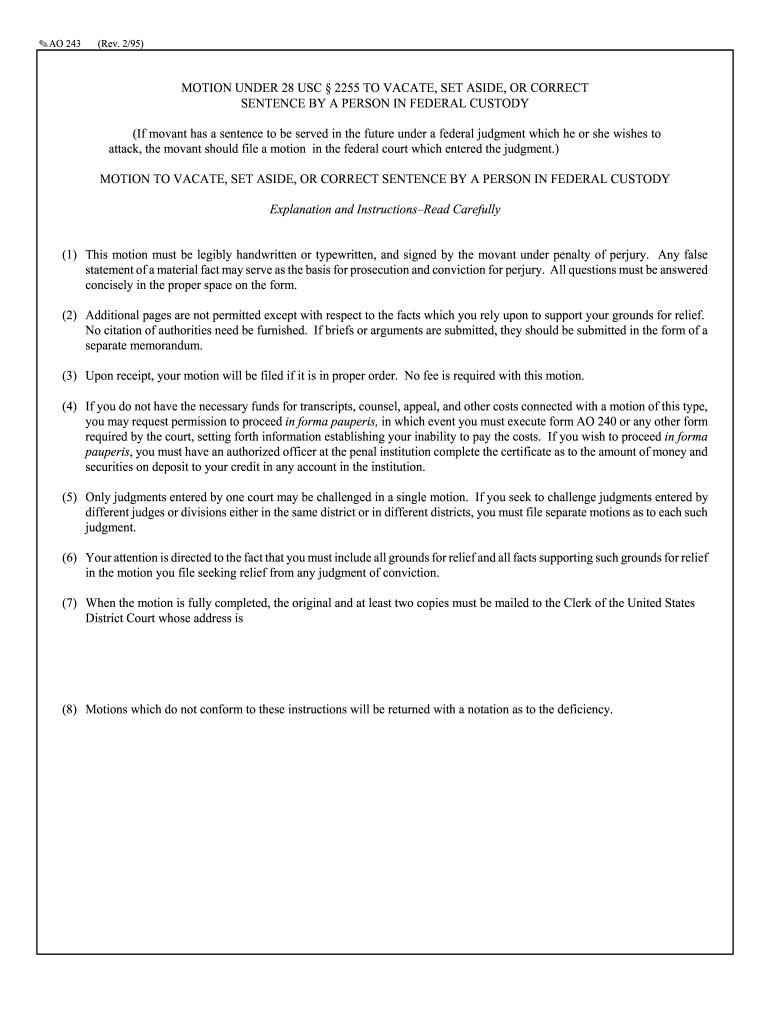
The AO 243 form is a motion under 28 USC § 2255, designed for individuals in federal custody who wish to challenge their sentences. This guide provides clear and supportive instructions on how to complete the form accurately and effectively.
Follow the steps to successfully complete the AO 243 form online.
- Press the ‘Get Form’ button to obtain the AO 243 form and open it in the online editor.
- Enter the district and name of the United States District Court where the judgment was entered. Make sure to provide accurate details.
- Indicate the place of confinement. This ensures that your current location is noted accurately.
- Fill out the ‘MOTION’ section, beginning with the name and location of the court that issued your judgment of conviction.
- Enter the date of your conviction and the length of the sentence. Each response should be entered in the designated space clearly.
- Select your plea by checking the appropriate box for not guilty, guilty, or nolo contendere. If applicable, provide additional details on your plea.
- Indicate whether you had a jury trial or a judge-only trial by marking the appropriate box.
- For any prior appeals, provide the name of the court, results, and the date of the outcome.
- Detail any previous petitions, applications, or motions filed related to the same judgment, including their results and dates.
- Clearly state the grounds on which you claim your conviction violates law or constitutional rights. Be concise and to the point.
- Once all sections are completed, review the information for accuracy. Save your progress regularly.
- When fully completed, ensure to save, download, print, or share the form as required by your legal strategy.
Take action today and complete the AO 243 form online to assert your rights.
Experience a faster way to fill out and sign forms on the web. Access the most extensive library of templates available.
Related content
AO 243 (Rev. 2/95). 9. If you did appeal, answer the following: (a) Name of court. (b)...
AO 243 (Rev. 5/85) SDNY Web 5/99. MOTION UNDER 28 USC § 2255 TO VACATE, SET ASIDE, OR...
CUIDADO. • Não bloqueie as aberturas ou passagens de ventilação. (Se as aberturas de...
Get answers to your most pressing questions about US Legal Forms API.
Does vacate mean cancel?
Yes, vacate can be understood as a synonym for cancel, especially in legal terminology. When a court vacates a sentence, it effectively cancels the previous judgment, allowing for reconsideration of the case. This action is a key aspect of ensuring justice, as highlighted by issues surrounding AO 243.
What is the simple meaning of vacate?
The simple meaning of vacate is to cancel or make void something that has been previously established. In legal contexts, it specifically refers to setting aside a judgment, leaving the case open for further action. Understanding this term is crucial, particularly when navigating processes related to AO 243.
What is a motion to vacate sentence in federal court?
A motion to vacate sentence in federal court is a formal request asking the court to nullify an existing sentence. This motion can be based on legal errors, ineffective assistance of counsel, or other significant issues affecting the fairness of the sentence. In cases involving AO 243, such motions may arise to address potential injustices that occurred during the original ruling.
What happens when a ruling is vacated?
When a ruling is vacated, it essentially removes the legal effect of that ruling, allowing for a fresh examination of the case. The court may determine that a rehearing or retrial is necessary, often resulting in a new judgment or sentence. In the context of AO 243, this process ensures that any judicial errors can be amended, promoting justice and accuracy in legal proceedings.
Why would a sentence be vacated?
A sentence may be vacated for a variety of reasons, including procedural errors during the original trial or the discovery of new evidence. Additionally, changes in law or sentencing guidelines, such as those highlighted in AO 243, can lead to the vacating of a sentence to ensure fairness and justice. This process allows the legal system to correct mistakes and uphold the rights of individuals.
What does vacate a sentence mean?
To vacate a sentence means to cancel or set aside a legal judgment or ruling. In the context of criminal law, this action nullifies the sentence imposed on an individual, often allowing for a review or new sentencing process. The term is particularly relevant in discussions surrounding AO 243, which may address cases where a sentence is reconsidered.
What is a motion to amend a sentence?
A motion to amend a sentence asks the court to modify an existing sentence after it has been issued. Such motions could address issues like changes in the defendant's circumstances or new legal standards. Leveraging the format and guidelines outlined in AO 243 can make this process more straightforward and organized.
What is a motion to correct a sentence?
A motion to correct a sentence involves requesting the court to fix a legal error in a sentencing order. This could be in response to a calculation mistake or misapplication of the law. By referencing AO 243, individuals can access resources to guide them in crafting an effective motion aimed at rectifying any sentencing issues.
What is a motion for reconsideration of sentence?
A motion for reconsideration of sentence is a request to a judge to review and potentially change a previously imposed sentence. This motion allows individuals to present new evidence or highlight significant factors that may have been overlooked. Utilizing AO 243 guidelines can help ensure that your motion is appropriately structured for the best chance of success.
What is a motion to correct?
A motion to correct seeks to amend an error in a court document or prior ruling. This type of motion can be crucial for ensuring that legal documents reflect the accurate intentions and agreements of the parties involved. Under AO 243, this motion can clarify misunderstandings that might arise from unclear language or discrepancies.
Use professional pre-built templates to fill in and sign documents online faster. Get access to thousands of forms.
If you believe that this page should be taken down, please follow our DMCA take down process here.
This form is available in several versions. Select the version you need from the drop-down list below.