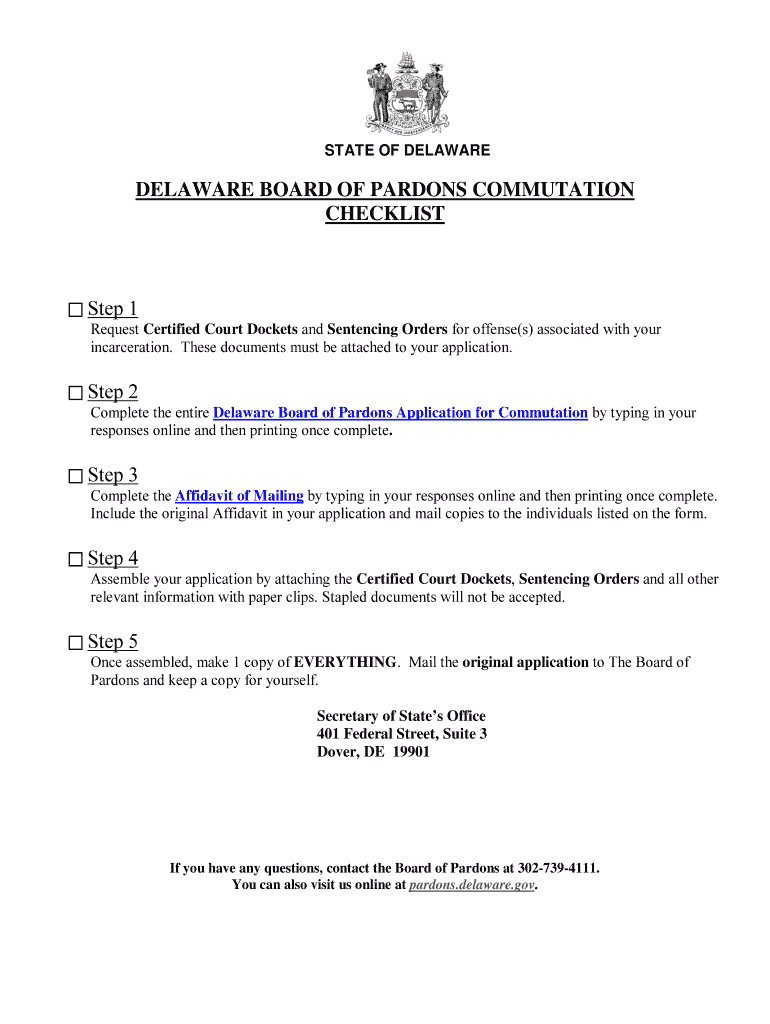
Ust be attached to your application. Step 2 Complete the entire Delaware Board of Pardons Application for Commutation by typing in your responses online and then printing once complete. Step 3 Complete the Affidavit of Mailing by typing in your responses online and then printing once complete. Include the original Affidavit in your application and mail copies to the individuals listed on the form. Step 4 Assemble your application by attaching the Certified Court Dockets, Sentencing Orders.
Loading

Open form follow the instructions

Easily sign the form with your finger

Send filled & signed form or save
How to fill out the DE Commutation Checklist online
Filling out the DE Commutation Checklist online is a crucial step in the process of applying for a commutation with the Delaware Board of Pardons. This guide will provide you with clear, step-by-step instructions to ensure a smooth and efficient application experience.
Follow the steps to complete the DE Commutation Checklist accurately.
- Click the ‘Get Form’ button to access the DE Commutation Checklist. This will allow you to open the form in your preferred online editing tool.
- Begin filling out the entire Delaware Board of Pardons Application for Commutation by entering your information directly into the online form. Ensure all fields are completed accurately before proceeding.
- Proceed to complete the Affidavit of Mailing by typing your responses into the online form. Once completed, print the Affidavit and include the original document in your application package. Make sure to mail copies to the individuals listed in the form.
- Assemble your application by attaching the Certified Court Dockets and Sentencing Orders along with any other relevant documents. Use paper clips to secure your application, as stapled documents will not be accepted.
- After assembling everything, create one copy of your complete application. Mail the original documents to the Board of Pardons at the Secretary of State’s Office located at 401 Federal Street, Suite 3, Dover, DE 19901. Retain a copy for your records.
Start completing your DE Commutation Checklist online today to ensure your application is submitted correctly and on time.
Experience a faster way to fill out and sign forms on the web. Access the most extensive library of templates available.
Related content
All forms listed in this checklist can be found in the Commutation Application Packet or...
Complete the new student checklist, including setting up your UD email, registering for...
Warning notice system. This manual contains notices you have to observe in order to ensure...
Get answers to your most pressing questions about US Legal Forms API.
What are examples of commutation?
Examples of commutation can include reducing a life sentence to a fixed term or lowering a multi-year prison sentence by several years. Each case is unique and often reflects the individual’s efforts towards rehabilitation. These examples highlight the potential for positive change in one’s legal standing. The DE Commutation Checklist offers specific examples and guidance to help navigate your situation.
What is order of commutation?
An order of commutation is a formal directive issued by a governing body, approving the reduction of a sentenced individual’s term. This order outlines the specific changes made to the original sentence and the reasons behind them. Understanding this process is vital for individuals seeking relief from lengthy sentences. Use the DE Commutation Checklist to learn about the order of commutation and related procedures.
What does it mean to receive a commutation of sentence?
Receiving a commutation of sentence means that a person's original prison term has been shortened or adjusted. This change can lead to earlier release or reduction in penalties, positively impacting an individual’s life. It signifies recognition of good behavior or rehabilitation efforts. The DE Commutation Checklist can help you determine eligibility and the next steps.
How does a commutation work?
A commutation works through a formal process where an individual applies to the state for sentence reduction. The state reviews the application, considering factors like behavior and rehabilitation efforts. Once approved, the individual's sentence may then be shortened or modified. For detailed guidance on navigating this process, consult the DE Commutation Checklist.
What is the difference between a pardon and a commutation?
The primary difference between a pardon and a commutation lies in their effects on a person’s record. A pardon erases the legal consequences of a conviction, while a commutation only alters the length or terms of imprisonment. These legal tools can profoundly impact an individual's future. To assess your situation better, the DE Commutation Checklist could provide valuable insights.
What's the difference between commuting a sentence and a pardon?
Commuting a sentence and a pardon serve different purposes in Delaware law. A commutation reduces the severity of a sentence, while a pardon absolves an individual of their conviction entirely. Understanding these distinctions is crucial for those exploring their legal options. Utilizing the DE Commutation Checklist can guide you through the complexities of your choices.
What is a commutation of sentence in Delaware?
A commutation of sentence in Delaware is the process of reducing a person's prison sentence. It is typically granted to individuals who have demonstrated good behavior while incarcerated. This reduction can provide opportunities for early release or lesser penalties. When considering this option, refer to the DE Commutation Checklist to understand the necessary steps.
How is a commutation different from a pardon?
While both a commutation and a pardon offer relief from legal penalties, they serve different purposes. A commutation shortens a sentence, yet the original conviction remains in place; conversely, a pardon clears the record of the crime. This clarity can profoundly affect your future opportunities. Consult a DE Commutation Checklist to see how each option fits your legal needs.
What is an order of commutation?
An order of commutation is an official decision made by the Board of Pardons or the Governor that formally reduces a sentenced term. This order is a legal document that authorizes the change in the duration of punishment. Once granted, it significantly impacts the individual’s status and future. For clarity on the process, refer to a DE Commutation Checklist that outlines the steps and necessary documents for securing this order.
What is a commutation form?
A commutation form is a specific document that individuals must fill out to request a reduction in their sentence. This form requires comprehensive information about the individual’s case, behavior while incarcerated, and reasons for seeking a commutation. Completing this form accurately is crucial for the process. Utilize a DE Commutation Checklist to ensure you gather all required information for your application.
Use professional pre-built templates to fill in and sign documents online faster. Get access to thousands of forms.
If you believe that this page should be taken down, please follow our DMCA take down process here.