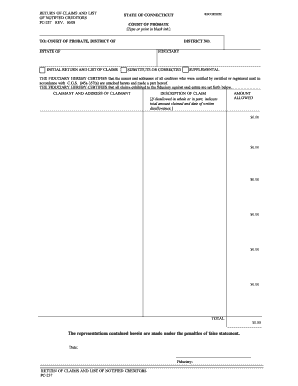
RETURN OF CLAIMS AND LIST OF NOTIFIED CREDITORS PC-237 REV. 10/08 RECORDED: STATE OF CONNECTICUT COURT OF PROBATE Type or print in black ink. TO: COURT OF PROBATE, DISTRICT OF DISTRICT NO. ESTATE.

How it works
  • Open form

    Open form follow the instructions

  • Easily sign form

    Easily sign the form with your finger

  • Share form

    Send filled & signed form or save

How to fill out the CT PC-237 online

The CT PC-237 is an essential form in various legal contexts. This guide will help you navigate the process of completing it online, ensuring you understand each section and field.

Follow the steps to successfully complete the form online.

  1. Click ‘Get Form’ button to access the CT PC-237 form.
  2. Begin by entering your personal information in the designated fields, including your full name and contact details. Ensure accuracy to avoid processing delays.
  3. Next, provide any required case information. This may include the case number and the nature of the case. Double-check this section for correctness.
  4. Move on to specify the details regarding the matter at hand. Fill in any relevant information that pertains to the current legal situation you are addressing with this form.
  5. Review all entries made in the form carefully. Confirm that each section is filled out correctly and completely.
  6. Once satisfied, you can save your changes, download a copy for your records, print the form, or share it with involved parties.

Start filling out the CT PC-237 online today and ensure your legal needs are met!

Get form

Experience a faster way to fill out and sign forms on the web. Access the most extensive library of templates available.

Related content

Form PC-237

Instructions: 1) A claim is a debt incurred during the decedent's lifetime and unpaid at...

Learn more
Course Description

AUTO 237 — Toyota T-Port Lab I (12 cr). This is the students' first dealership...

Learn more
Instalação Operação Manutenção

Software Trane Drive Utility - possui fácil acesso ao PC via porta USB para fácil...

Learn more
Questions & Answers

Get answers to your most pressing questions about US Legal Forms API.

Contact support

Who can be an executor in Connecticut?

In Connecticut, any person who is 18 years of age or older and is considered of sound mind can serve as an executor. This includes family members, friends, or professional fiduciaries. By understanding CT PC-237, you can learn more about who is eligible to take on this significant role.

While having a lawyer is not a requirement for probate in Connecticut, it can be advantageous. A skilled attorney can navigate the complexities of estate laws and ensure compliance with CT PC-237. This support can save you time and help avoid potential pitfalls during the process.

To become an executor in Connecticut, the designated individual must be named in the will. After the will is admitted to probate, the court formally appoints the executor. Utilizing CT PC-237 can help streamline this process, making it easier for you to understand your responsibilities.

To serve as an executor in Connecticut, you must be at least 18 years old and of sound mind. Additionally, you should not have any felony convictions. Using CT PC-237 can provide you with insights into the legal requirements and duties associated with being an executor.

Not every estate in Connecticut must go through probate. This process usually depends on the value of the estate and the type of assets involved. In some cases, CT PC-237 allows for simplified procedures, helping families avoid the lengthy probate process.

The ideal executor is someone trustworthy, organized, and capable of managing finances. Often, people choose a close family member or a trusted friend. However, considering professional help, like using CT PC-237, can clarify the responsibilities and legal obligations of being an executor.

In Connecticut, creditors typically have four months from the date of the notice to creditors to collect debts from an estate. This timeframe is crucial, as it allows creditors to come forward and make claims. However, with CT PC-237, executors can ensure that all debts are handled properly and within this legal timeline.

For a will to be valid in Connecticut, it must be in writing, signed by the testator, and witnessed by two individuals. These witnesses should not be beneficiaries to prevent potential conflicts. Additionally, the testator must be of sound mind when creating the will. Resources like CT PC-237 can guide you in meeting these essential requirements.

In Connecticut, having a will does not exempt you from the probate process. Instead, the will must be validated in probate court. This process ensures that the decedent’s wishes are honored while also addressing the estate's debts. Understanding the nuances of CT PC-237 can prepare you for this necessary step.

To avoid probate fees in Connecticut, consider establishing a revocable living trust. By transferring assets into the trust, they can bypass the probate process entirely. Additionally, designating beneficiaries on accounts may help. Leveraging CT PC-237 guidelines can provide insights into effective strategies to minimize costs.

Get This Form Now!

Use professional pre-built templates to fill in and sign documents online faster. Get access to thousands of forms.

If you believe that this page should be taken down, please follow our DMCA take down process here.

Get CT PC-237