Loading
Get Ct Jd-jm-58 2015-2026
How it works
-

Open form follow the instructions
-

Easily sign the form with your finger
-

Send filled & signed form or save
How to fill out the CT JD-JM-58 online
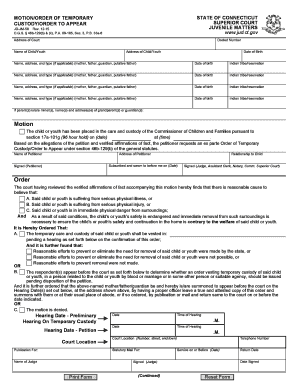
The CT JD-JM-58 form is a critical document used in juvenile matters in the state of Connecticut. This guide provides clear instructions on how to effectively complete the form online, ensuring all necessary information is accurately recorded.
Follow the steps to successfully fill out the JD-JM-58 form.
- Click ‘Get Form’ button to access the form and open it in your preferred document editor.
- Enter the address of the court where the case is being filed. This information is typically found at the top of the form.
- Input the docket number associated with the case, as it helps to identify the specific court matter.
- Fill in the name of the child or youth involved. Ensure you spell the name correctly and use the full name.
- Provide the address of the child or youth. This address should be current and accurate.
- Enter the date of birth of the child or youth in the designated field.
- Include the name, address, and relationship of the people involved (mother, father, guardian, or putative father) in the corresponding sections. Each person’s date of birth should also be entered.
- If the parents are minors, include the names and addresses of their grandparents or guardians.
- Specify the time and date concerning the motion for temporary custody if applicable.
- Complete the motion section detailing the reasons for requesting custody, including any pertinent statutes.
- Sign the form where indicated as the petitioner, confirming that all information is accurate to the best of your knowledge.
- Review the entire document for accuracy and completeness before submitting.
- Once all fields are filled, save your changes, and download or print the completed form for your records.
- Share the form as necessary, ensuring it is filed with the appropriate court.
Complete your CT JD-JM-58 form online today!
An emergency custody order can be denied if the court feels that there is insufficient evidence of immediate danger to the child. Additionally, if you fail to demonstrate that the situation requires urgent intervention, the request may not be granted. Courts are stringent when it comes to altering custody arrangements without clear justification. Ensuring your evidence is robust can positively influence the outcome.