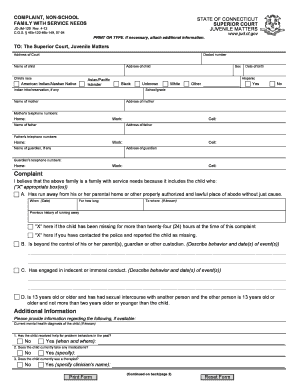
Attach additional information. TO: The Superior Court, Juvenile Matters Address of Court Docket number Name of child Address of child Child's race Asian/Pacific Islander American Indian/Alaskan Native Sex Date of birth Hispanic Black Indian tribe/reservation, if any Unknown White Other Yes No School/grade Name of mother Address of mother Mother's telephone numbers: Home: Work: Name of father Cell: Address of father Father's telephone numbers: Home: Work: Name of guar.

How it works
  • Open form

    Open form follow the instructions

  • Easily sign form

    Easily sign the form with your finger

  • Share form

    Send filled & signed form or save

How to fill out the CT JD-JM-120 online

This guide provides clear instructions on how to effectively fill out the CT JD-JM-120 online. Whether you are new to this form or have some experience, we aim to support you in completing it accurately.

Follow the steps to complete the form successfully.

  1. Press the ‘Get Form’ button to access the CT JD-JM-120 form and open it in your web browser.
  2. Fill in the details for the court information at the top of the form, including the address of the court and the docket number.
  3. Provide information about the child, such as their name, address, race, sex, and date of birth. Ensure all fields are completed accurately.
  4. In the section for parental details, enter the names, addresses, and contact numbers for both the mother and father. Include the contact information for any guardian, if applicable.
  5. Complete the complaint section by indicating the specific reasons that qualify the family as having service needs. Mark the appropriate boxes and provide any relevant details such as dates and descriptions.
  6. Fill out the additional information section regarding the child’s mental health diagnosis, therapy, medication, and any other relevant background information.
  7. Provide any necessary comments or explanations that may assist the court in processing the complaint. This is important for context.
  8. Review all entries for accuracy and completeness before finalizing. Ensure the date is signed and include the relationship to the child or title if applicable.
  9. Once all sections are complete, you may save the changes, download, print, or share the completed form as needed.

Complete your CT JD-JM-120 online today for efficient document management.

Get form

Experience a faster way to fill out and sign forms on the web. Access the most extensive library of templates available.

Related content

ERASURE OF RECORD/PETITION/ORDER

Instruções ao requerente da exclusão de registros. Preencher a Seção I abaixo...

Learn more
Ultra-low dose whole-body CT for attenuation...

by JM Marti-Climent · 2021 — Purpose: To investigate within phantoms the minimum CT...

Learn more
RENAL MASS AND LOCALIZED RENAL CANCER: AUA ...

by S Campbell · 2017 · Cited by 1430 — Purpose. This AUA Guidelines focuses primarily...

Learn more
Questions & Answers

Get answers to your most pressing questions about US Legal Forms API.

Contact support

Who pays for civil lawsuit?

In a civil lawsuit, the party that loses typically pays the legal costs of the other party. However, costs can vary widely based on how the case unfolds and any agreements made during settlement discussions. Understanding these financial aspects before proceeding can save you surprises later. Using resources like CT JD-JM-120 can help clarify these responsibilities and prepare you for any expenses.

Filing a civil lawsuit without a lawyer involves a few key steps. First, familiarize yourself with the court procedures, and complete the necessary forms accurately. Resources like CT JD-JM-120 can be beneficial, as they guide you on what to include in your filing. Ensure you understand service requirements, as this step is critical to your lawsuit's success.

In CT, the time allowed to file a lawsuit generally depends on the type of claim you are making. Most personal injury cases must be filed within two years of the incident. However, specific situations may have different deadlines. To stay informed about your timeline, consider referring to CT JD-JM-120 for relevant guidelines.

You should file the certificate of closed pleadings in CT after all parties have completed their pleadings and there are no outstanding motions. This document signals that your case is ready for further proceedings, such as trial or settlement negotiations. Checking the local rules is crucial, as deadlines may vary. Utilizing CT JD-JM-120 can provide the structure you need for this process.

To file Connecticut taxes online, you need to gather your tax documents and access the state's e-filing system. It's important to complete all sections accurately, including any relevant credits or deductions that may apply to your situation. There are various certified software options to facilitate electronic filings. While this is slightly apart from the CT JD-JM-120, ensuring your taxes are correctly filed can contribute to smoother overall legal and financial experiences.

A petition in juvenile justice is a formal request submitted to the court to initiate a case concerning a minor. This document outlines the specific allegations and requests for legal relief. Filing the CT JD-JM-120 petition requires clarity and detailed information to effectively convey your circumstances to the court. Platforms like UsLegalForms simplify the process by providing easy-to-follow templates and guidance.

A juvenile can be sent to a facility, commonly known as 'Juvi', following a court decision based on delinquent behavior. The seriousness of the offense and the minor's history are essential factors in these decisions. If a minor is involved in repeated misconduct or severe offenses, the court may opt for placement in a juvenile facility. Understanding this process can help you navigate the nuances of completing a CT JD-JM-120 form.

The juvenile justice process generally includes four main steps: intake, adjudication, disposition, and aftercare. During intake, officials review the case to determine the appropriate action. Adjudication follows, where the court hears evidence and makes a ruling. Finally, disposition outlines the consequences or interventions for the juvenile, and aftercare provides ongoing support. Knowing these steps will aid you when dealing with issues relating to the CT JD-JM-120.

Juvenile court typically handles delinquency, status offenses, and dependency cases. Delinquency involves minors committing criminal acts, while status offenses refer to behaviors that are only illegal due to the individual's age, such as truancy. Dependency cases arise when a child's welfare is in question, often due to neglect or abuse. Understanding these distinctions is essential when preparing your CT JD-JM-120 filing.

Filing a petition in juvenile court involves preparing and submitting the necessary documentation to the court. You will need to ensure that your petition meets all local requirements and includes relevant details about the juvenile's situation. Resources such as USLegalForms can provide you with templates and detailed guidance, particularly for cases involving CT JD-JM-120.

Get This Form Now!

Use professional pre-built templates to fill in and sign documents online faster. Get access to thousands of forms.

If you believe that this page should be taken down, please follow our DMCA take down process here.

Get CT JD-JM-120