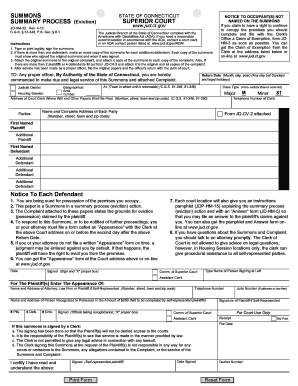
Nstructions pamphlet (JDP-HM-15) explaining the summary process (eviction) action and with an "Answer" form (JD-HM-5) so that you may file an answer to the plaintiff's claims against you. You can also get the pamphlet and Answer form online at www.jud.ct.gov. 8. If you have questions about the Summons and Complaint, you should talk to an attorney promptly. The Clerk of Court is not allowed to give advice on legal questions; however, in Housing Session locations only, the clerk can give.

How it works
  • Open form

    Open form follow the instructions

  • Easily sign form

    Easily sign the form with your finger

  • Share form

    Send filled & signed form or save

How to fill out the CT JD-HM-32 online

Filling out the CT JD-HM-32 form online can be a straightforward process when you follow the correct steps. This guide provides detailed instructions to help you complete the form accurately and efficiently.

Follow the steps to successfully complete the form.

  1. Click ‘Get Form’ button to access the online version of the CT JD-HM-32 document.
  2. Begin by filling in the return date, ensuring that it is a day other than Sundays and legal holidays. This is critical for processing timelines.
  3. Enter the geographical area and housing session number, which will specify the court venue for your case.
  4. Provide the name and complete address of each party involved in the case. Make sure to confirm the details for accuracy.
  5. If there is more than one defendant, duplicate the summons for each additional person. Each copy must indicate who signed the original summons and the date it was signed.
  6. Attach the original summons to the original complaint. Also, ensure you attach a copy of the summons to each copy of the complaint.
  7. If there are more than two plaintiffs or four defendants, complete form JD-CV-2 and attach it to both the original and all copies of the complaint.
  8. After the summons has been served by a proper officer, file the original documents along with the officer's return at the clerk of court.
  9. Review all entered information to ensure it is correct before saving any changes. You can choose to download, print, or share the filled form according to your needs.

Complete the CT JD-HM-32 online today to ensure your eviction process is initiated smoothly.

Get form

Experience a faster way to fill out and sign forms on the web. Access the most extensive library of templates available.

Related content

SUMMONS SUMMARY PROCESS (EVICTION)

This summons is for an eviction. To respond, file an Appearance form by the second day...

Learn more
Pediatric Radiology Normal Measurements

Normal measurements in pediatric radiology is being compiled by pediatric radiologists...

Learn more
Primary Urethral Carcinoma - Cloudfront.net

Imaging work-up should include computed tomography of the chest, abdomen and pelvis for...

Learn more
Questions & Answers

Get answers to your most pressing questions about US Legal Forms API.

Contact support

How hard is it to evict a tenant in Connecticut?

Evicting a tenant in Connecticut can be complex and prolonged, depending on the circumstances. The process requires following legal procedures outlined in the CT JD-HM-32 form, which involves proper notice and possible court hearings. Consulting legal resources can provide clarity and support throughout this journey.

In Vermont, landlords must provide a specific notice period, typically 30 days, before eviction proceedings can begin. Tenants have the right to dispute the eviction in court. Familiarizing yourself with forms like the CT JD-HM-32 may offer insights into your situation and help you navigate this challenging process.

Yes, you can stop an eviction in Connecticut if you take timely action. Engaging with the legal system using the CT JD-HM-32 form can help you present your case. Options such as negotiating with your landlord or addressing any lease violations may be available, so staying informed is crucial.

Eviction rules in Mississippi require landlords to provide tenants with a written notice before taking legal action. This notice must detail the reasons for eviction and specify a timeframe for remedy. For comprehensive information on your rights and obligations, consider utilizing legal resources or platforms like uslegalforms that simplify understanding these processes.

In Mississippi, a landlord can typically start the eviction process after one month of unpaid rent. However, this timeframe can be influenced by your lease agreement. To protect your rights, you might want to familiarize yourself with the CT JD-HM-32 form if you’re facing eviction issues.

A notice to quit in Connecticut can be deemed invalid if it lacks essential information as outlined in the CT JD-HM-32 requirements. For example, if the notice does not specify the reason for eviction or fails to provide proper time frames, it may not hold up in court. Always ensure that any notice you receive meets legal standards or consult with a legal expert.

In Connecticut, even if you are making partial payments, a landlord can still initiate eviction proceedings under the CT JD-HM-32 form. It's important to communicate with your landlord to clarify your payment situation. Consider reaching out to legal professionals who specialize in landlord-tenant disputes to explore your options.

A notice to quit can be considered invalid in Connecticut if it does not comply with state laws regarding the required information, proper notice period, or incorrect delivery to the tenant. For instance, if a landlord fails to state the specific reason for the eviction or misses the appropriate time frame, the notice could be challenged in court. The US Legal Forms platform can provide you with the CT JD-HM-32 form to ensure your eviction notices comply with legal standards.

In Connecticut, the lapse of time for eviction can vary based on the specific circumstances of the eviction case. Typically, the process begins with a notice, followed by a court hearing and can take anywhere from a few weeks to several months. To understand the timeline better, consider using the CT JD-HM-32 form available on the US Legal Forms platform to guide you through each step.

You can appeal an eviction decision in Connecticut, but it is essential to act quickly. The appeal process typically requires you to file your appeal within a specific timeframe after the judgment. The US Legal Forms platform provides important forms, such as the CT JD-HM-32, to help you manage this process effectively.

Get This Form Now!

Use professional pre-built templates to fill in and sign documents online faster. Get access to thousands of forms.

If you believe that this page should be taken down, please follow our DMCA take down process here.

CT JD-HM-32 Form

This form is available in several versions. Select the version you need from the drop-down list below.

Get CT JD-HM-32