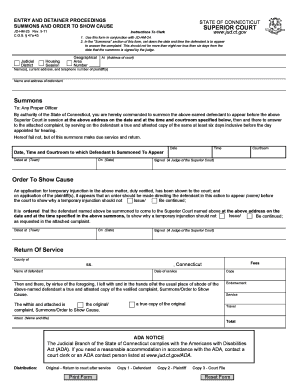
Use this form in conjunction with JD-HM-24. 2. In the "Summons" section of this form, set down the date and time the defendant is to appear to answer the complaint. This should not be more than eight nor less than six days from the date that the summons is signed by the judge. Geographical Area Number Housing Session At (Address of court) Name(s), current address, and telephone number of plaintiff(s) Name and address of defendant Summons To: Any Proper Officer By authority of the State.
Open form follow the instructions
Easily sign the form with your finger
Send filled & signed form or save
How to fill out the CT JD-HM-23 online
The CT JD-HM-23 is a critical document used in entry and detainer proceedings in Connecticut. This guide will provide you with step-by-step instructions on how to accurately complete the form online, ensuring a smooth filing process.
Follow the steps to successfully complete the CT JD-HM-23 form.
- Click the ‘Get Form’ button to access the CT JD-HM-23 document and open it in your preferred editing tool.
- Begin by entering the Judicial District and the geographical area number where the case will be filed. Ensure this information corresponds with the appropriate court jurisdiction.
- Input the name(s), current address, and telephone number of the plaintiff(s) in the designated section. This information must be accurate to facilitate proper communication.
- Next, provide the name and address of the defendant in the specified field. It is essential that this information is complete and correct to ensure effective service.
- In the 'Summons' section, specify the date and time the defendant is required to appear in court. Remember, the appearance date must not be less than six days or more than eight days from the date on which the summons is signed by the judge.
- Complete the 'Order to Show Cause' section based on the allegations presented in the complaint. This includes requesting a temporary injunction, if applicable.
- Fill out the county where service will take place, along with the name of the defendant and the date service is completed. Be sure to follow the guidelines for service of process outlined by the court.
- Last, review the document thoroughly for any errors or omissions. Once you’re satisfied with the accuracy, you can save your changes, download, print, or share the completed form as needed.
Complete your CT JD-HM-23 form online for a streamlined filing experience.
Experience a faster way to fill out and sign forms on the web. Access the most extensive library of templates available.
Related content
This form is a summons and order to show cause for entry and detainer proceedings...
Connecticut Insurance Law Journal (ISSN 1081-9436) is published at least twice a year by...
Introduction. Benign prostatic hyperplasia (BPH) is a histologic diagnosis that refers to...
Get answers to your most pressing questions about US Legal Forms API.
What is an order to show cause in CT?
In Connecticut, an order to show cause is a court directive that mandates an individual to come forward and explain certain actions or decisions. Often used in civil cases, this order ensures that the court can address urgent matters without the typical waiting period for a hearing. Navigating this type of order can be complex, and resources like the UsLegalForms platform can help simplify the process. Understanding CT JD-HM-23 can empower you to act effectively and confidently.
What is the purpose of the show cause?
The purpose of a show cause order is to require an individual to present a valid explanation to the court regarding their actions or lack thereof. This legal tool ensures that everyone involved has the opportunity to voice their position before a judgment is made. It streamlines the legal process and promotes fairness in court procedures. CT JD-HM-23 exemplifies this principle in Connecticut law.
What are the consequences of notice to show cause?
Receiving a notice to show cause can lead to significant legal consequences. If you fail to comply, the court may issue a ruling against you, which could include penalties or modifications in your case. Additionally, your case may move forward without your input, impacting your legal rights. Therefore, understanding the implications of CT JD-HM-23 is vital.
What is an Order to Show Cause CT?
An Order to Show Cause in Connecticut, or CT JD-HM-23, is a legal document requiring a party to appear in court. This order compels the individual to explain why the court should not take a requested action. Often, these orders arise in family law cases, such as custody disputes or support modifications. It's crucial to respond to avoid adverse outcomes.
What is the maximum I can claim in the small claims court?
In Connecticut, the maximum amount you can claim in small claims court is $5,000. This limit helps streamline the process and makes it more accessible. It's important to ensure your claim falls within these limits while considering CT JD-HM-23 provisions. If you need help with claim preparation, US Legal Forms provides resources tailored for small claims cases.
How to postpone jury duty in CT?
To postpone jury duty in Connecticut, you need to submit a written request to the court, explaining your reasons for rescheduling. The court will evaluate your request and inform you of their decision. Timing is key, so make sure to act promptly under the CT JD-HM-23 guidelines. Platforms like US Legal Forms can assist you in preparing the necessary request.
How to file pro se in CT?
Filing pro se in Connecticut means representing yourself without an attorney. You begin by filling out the appropriate forms, which can often be found on state court websites or through resources like US Legal Forms. Make sure you’re following CT JD-HM-23 regulations when preparing your case. The court also provides guidance on handling your documentation and procedures.
Is it worth taking someone to small claims court?
Taking someone to small claims court can be worthwhile if the amount in dispute is significant to you. The process is generally quicker and less expensive than other legal avenues. You should weigh the potential outcomes and costs involved, particularly under the framework of CT JD-HM-23. Resources like US Legal Forms can assist you in assessing your situation effectively.
Who pays lawyer fees in small claims court?
In small claims court, each party typically pays their own lawyer fees, unless the court orders otherwise. However, if you win your case, you might be able to have your fees reimbursed. It’s important to understand this aspect when considering legal action under the CT JD-HM-23 guidelines. Consulting platforms like US Legal Forms can provide clarity on specific costs and guidelines.
What happens if I don't show up for jury duty in CT?
Not showing up for jury duty in Connecticut can lead to serious penalties, including fines and potential legal repercussions. The court may issue a bench warrant or take further action against you. If you missed your duty, reach out to the court immediately to explain your situation. The CT JD-HM-23 resources can provide valuable information on how to address this lapse.
Use professional pre-built templates to fill in and sign documents online faster. Get access to thousands of forms.
If you believe that this page should be taken down, please follow our DMCA take down process here.