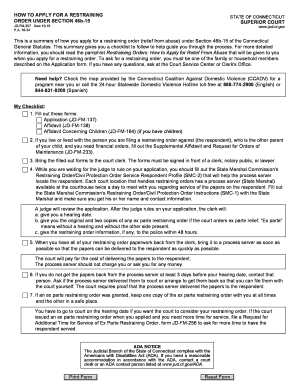
(relief from abuse) under Section 46b-15 of the Connecticut General Statutes. This summary gives you a checklist to follow to help guide you through the process. For more detailed information, you should read the pamphlet Restraining Orders: How to Apply for Relief From Abuse that will be given to you when you apply for a restraining order. To ask for a restraining order, you must be one of the family or household members described on the Application form. If you have any questions, ask at the.

How it works
  • Open form

    Open form follow the instructions

  • Easily sign form

    Easily sign the form with your finger

  • Share form

    Send filled & signed form or save

How to fill out the CT JD-FM-257 online

Filling out the CT JD-FM-257 form, also known as the application for a restraining order, is an important step in seeking relief from abuse. This guide provides you with a step-by-step approach to help you complete this document accurately and efficiently online.

Follow the steps to fill out the form online.

  1. Click ‘Get Form’ button to obtain the form and open it in the online editor.
  2. Begin by entering your personal information in the designated fields. Ensure that your name, address, and contact information are accurate to prevent any delays in the application process.
  3. In the next section, describe the nature of the abuse or harassment you are experiencing. Be as detailed and specific as possible to help the judge understand your situation.
  4. If you have children involved, complete the relevant sections regarding them, including their names and any safeguarding concerns.
  5. If applicable, include any requests for financial orders by filling out the Supplemental Affidavit and Request for Orders of Maintenance section, making sure to provide the necessary documentation.
  6. Review all entered information for accuracy and completeness before proceeding. False information can lead to complications in your application.
  7. Once satisfied with the completed form, save your changes. You will have the option to download or print the form for submission.
  8. After printing, sign the form in front of a clerk, notary, or lawyer as required. This step is crucial before submitting it to the court.
  9. Submit the completed and signed form to the court clerk. Keep a copy for your records.
  10. Make sure to fulfil any additional requirements outlined by the court, such as notifying the respondent, and preparing for your hearing date.

Complete your documents online today and take the first step towards securing your safety.

Get form

Experience a faster way to fill out and sign forms on the web. Access the most extensive library of templates available.

Related content

HOW TO APPLY FOR A RESTRAINING ORDER UNDER ...

JD-FM-257 Rev. 10-21. C.G.S. § 46b-15; P.A. 21-78. This is a summary of how you apply for...

Learn more
LAW REVIEW

by I Ayres · 2021 · Cited by 1 — Temporary Restraining Orders ("TROs") provide victims...

Learn more
FBT CONTROLE REMOTO

Feb 26, 2013 — CT-6390 6250 LC3251FDA LED LE4052i. 432,. LCD TV. SEMP TOSHIBA. CT 6250...

Learn more
Questions & Answers

Get answers to your most pressing questions about US Legal Forms API.

Contact support

What is the burden of proof for a restraining order in CT?

In Connecticut, the burden of proof for obtaining a restraining order requires the petitioner to show credible evidence of threats, harm, or intimidation. This standard is established under CT JD-FM-257, ensuring the court has sufficient basis for granting the order. The petitioner must clearly demonstrate the need for protection through testimony or documentation. This process underscores the importance of providing a safe environment for individuals facing potential harm.

The primary difference between an ex parte order and a restraining order lies in the process and urgency. An ex parte order, as specified in CT JD-FM-257, is granted immediately and without notifying the other party, which is essential in emergencies. On the other hand, a restraining order requires a hearing, where both parties can present their sides. This distinction helps in addressing immediate threats while ensuring due process.

An ex parte order refers to a legal decision made by a court without the other party being present. In the context of CT JD-FM-257, this order is vital for ensuring timely intervention in situations where there is a clear risk of harm. It allows individuals to obtain necessary protection swiftly and effectively. Such orders are designed to prevent escalation of violence or threats.

The purpose of an ex parte order is to provide immediate protection to an individual without the presence of the other party. Under CT JD-FM-257, this is crucial in situations where waiting for a hearing could result in harm. The court grants this request based on the immediate need for safety, ensuring that the most vulnerable can obtain relief quickly. It reflects the serious nature of the threats involved.

The three types of protection available in Connecticut under the CT JD-FM-257 are: protective orders, restraining orders, and civil protection orders. Each of these serves a unique purpose to safeguard individuals from harm. Protective orders typically involve immediate relief, while restraining orders can prevent further contact. Civil protection orders offer additional options for those facing domestic violence or threats.

The Connecticut General Statute concerning violations of a protective order is found under Section 53a-223. Violating a protective order can lead to severe legal penalties, including imprisonment. If you are navigating these issues, be sure to reference forms like CT JD-FM-257 for guidance on your legal options.

To legally keep a person away from you, you must file a restraining order or protective order in court. This process involves filling out necessary documents and presenting your case to a judge. Utilizing forms such as CT JD-FM-257 can help ensure you take the right steps toward securing your safety.

An order to keep people away from you is typically known as a restraining order, and it legally restrains individuals from contacting you or coming near you. This order can provide essential protection if you feel threatened. For effective protection, delve into comprehensive resources such as CT JD-FM-257 to guide your actions.

If a victim violates an order of protection, the consequences can be serious and may include criminal charges, fines, or even jail time. It's essential for all parties to adhere to the orders in place to maintain safety and legal integrity. Engaging with the right legal documents, such as CT JD-FM-257, can help clarify these responsibilities.

The longest restraining order in Connecticut can last up to several years, depending on the judge's decision and the circumstances surrounding the case. If an ongoing threat exists, the court may issue an extended order to ensure your continued safety. Familiarizing yourself with legal forms, including CT JD-FM-257, can provide insights into the process.

Get This Form Now!

Use professional pre-built templates to fill in and sign documents online faster. Get access to thousands of forms.

If you believe that this page should be taken down, please follow our DMCA take down process here.

CT JD-FM-257 Form

This form is available in several versions. Select the version you need from the drop-down list below.

Get CT JD-FM-257